Repair & Restoration
Hardwood Floor Repair in Philadelphia, PA
Repair is the right answer when the damage is local and the rest of the floor is sound. Individual boards get cut out and new ones woven in, so the repair does not read as a rectangle in the middle of the room. The part that takes judgment is not the carpentry: it is deciding whether the cause of the damage has actually stopped.
In short
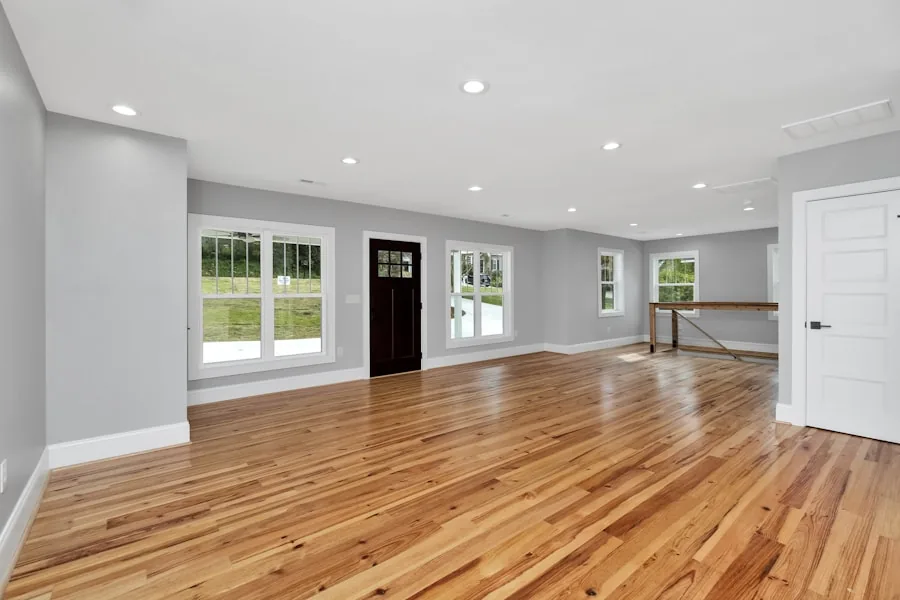
Deco Hardwood Floor repairs hardwood floors for homeowners in Philadelphia and within 50 miles of it, cutting out damaged boards and weaving new wood into the existing floor. Hardwood floor repair covers board replacement, squeaks, gaps, cupping and loose sections, without redoing the whole floor. It is the right call when the damage is local, the cause has stopped and the surrounding boards still have wood left to sand. The result is a floor that is flat, tight and quiet again, with a repair that blends in once the area or the room is refinished.
At a glance
- What it is
- Replacing damaged boards and correcting movement, without redoing the whole floor
- Right when
- Damage is local and the surrounding floor is sound
- Wrong when
- The cause is still active, or the wear layer is spent everywhere
- Weaving
- New boards staggered into the old, so no straight seam is left
- Usually followed by
- Refinishing the area or the room, so the repair disappears
Finding out why it failed before fixing what failed
A repair over an active cause fails again, so the diagnosis comes before the carpentry.
Cupped boards mean moisture came from below. Crowned boards usually mean a cupped floor was sanded flat while still wet. A dark stain at a dishwasher means a slow leak that may still be leaking. Replacing the wood without answering the question buys a few months.
So we look underneath where we can, we meter the surrounding boards, and we say what we find. Sometimes the honest answer is that the floor needs a plumber before it needs us.
Weaving, and why a patch looks like a patch
New boards are staggered into the existing floor rather than set as a block, so the eye never finds a straight line to follow.
A rectangular patch is visible forever, no matter how good the color match, because the human eye finds straight lines instantly. Weaving means cutting back the surrounding boards to different lengths, so the joints between old and new are scattered.
It takes longer, and it is the difference between a repair you stop noticing and one you see every day.
Color, and the fact that new wood keeps moving
New boards start lighter than aged wood and keep changing after the job, so the match is aimed slightly ahead of where the old floor sits today.
Wood darkens with light exposure and old finish ambers. A patch matched perfectly to today's color will read lighter in two years, because the two woods age at different rates.
Where the repair is large or the floor is highly visible, refinishing the whole room afterwards is what makes it genuinely disappear. We tell you when the repair alone will remain visible.
When does a hardwood floor need repair instead of refinishing?
A floor needs repair when the problem is in the boards or under them, not in the finish. Refinishing renews the surface. It does not fix a split board, a loose section, a squeak or wood that moved because of moisture.
A board that is split or cracked
A crack that runs along the grain and catches a sock is a board that has failed. Filler in it breaks loose as the wood moves with the seasons, so the board is replaced.
A squeak in the same spot every time
A squeak that repeats in one place is a board moving against a fastener or the subfloor. The finish has nothing to do with it, and a new coat changes nothing.
Board edges higher than the middle
Boards raised at the edges are cupped, which means moisture is reaching them from below. The source has to be found and stopped before any board is cut or sanded.
Gaps that stay open all year
Gaps that open in winter and close in summer are the wood moving with the season. Gaps that stay open through a humid summer mean boards that shrank or shifted for good.
A dark stain near an appliance
Dark wood around a dishwasher, a refrigerator or a radiator valve is a slow leak that reached the board. The stain is in the wood, and the leak may still be running.
A section that flexes or sounds hollow
Boards that flex, rock or sound hollow underfoot have come loose from the subfloor, or the subfloor itself has moved. It gets checked from below wherever there is access.
How the work runs
We find the cause
Moisture readings, and a look underneath where access allows.Damaged boards cut out
Removed without disturbing the sound wood around them.New boards woven in
Staggered joints, matched species and thickness.Fastened and levelled
Flush with the surrounding floor, because a proud board catches every time.Finished
Blended into the surrounding area, or the room refinished where that is what makes it disappear.
What does a hardwood floor repair include?
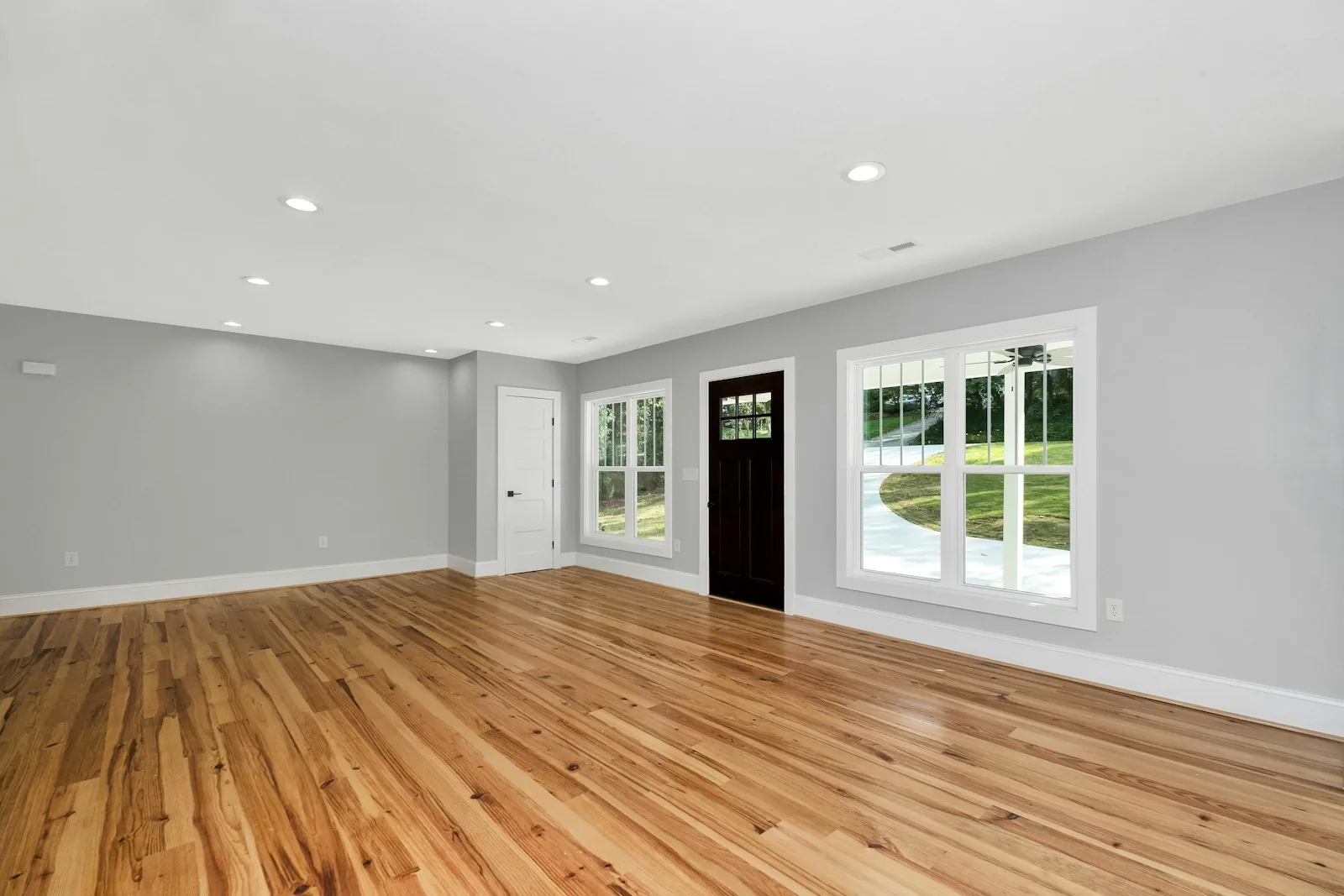
A repair includes finding the cause, removing the damaged boards, weaving in new ones of the same species and thickness, fastening them flush and finishing the area. We supply the wood together with the labor.
Included
- An in-person estimate from the owner, with moisture readings on the surrounding boards
- A look at the subfloor from below, wherever a basement or crawl space gives access
- Removal of the damaged boards without disturbing the sound wood around them
- New boards matched in species, width and thickness, supplied with the labor
- Joints staggered into the existing floor so no straight seam is left
- Sanding and finishing of the repaired area, blended into the floor around it
Not included, or quoted separately
- Plumbing, roofing or any other work to stop the leak that caused the damage
- Framing or joist repair, if the movement turns out to be structural
- Refinishing the whole room, which is often recommended and is quoted as its own line
- A promise that the repair is invisible on day one beside an old finish
What changes the price of a hardwood floor repair?
The price is set after we see the floor, because the visible damage is rarely the whole job. What moves it most is how many boards come out, whether the subfloor is involved, and how much refinishing it takes for the repair to blend.
| What changes it | How it moves the price | Example |
|---|---|---|
| Number of boards replaced | More boards mean more material and more cutting. Weaving adds to the count, because the neighboring boards are cut back too. | A few stained boards at a dishwasher become a wider area once the joints are staggered into the floor. |
| Access from below | An open basement ceiling lets us inspect and fasten from underneath. A finished ceiling means working only from the top. | A squeak over an unfinished basement is a simpler job than the same squeak over a finished ceiling. |
| Species and board width | Common red and white oak strip is easy to source. Old widths, old pine or an unusual species take a search or custom milling. | A wide pine board in an old row house costs more to match than oak strip in a later house. |
| Subfloor condition | A soft, wet or moving subfloor has to be dealt with before new boards go down, and it is only fully visible once the floor is open. | Boards at an old leak come up and the plank subfloor under them is dark and soft. |
| How far the finish goes | Blending a small area costs less than refinishing the room, but a large or central repair may only disappear with the whole room done. | A repair near a wall can be blended locally. One in the middle of a living room usually cannot. |
What to ask before you hire anyone to repair a hardwood floor
These questions apply to any contractor, including us. The useful answers are specific: they name the cause, the method and the limit. Vague answers usually mean nobody looked for the cause.
What caused the damage, and has it stopped?
A good answer names a source and how it was checked, with a moisture reading or a look from below. A contractor who goes straight to the patch is quoting a repair that may fail again.
Will you weave the new boards or cut a rectangle?
Weaving staggers the joints so the repair has no straight edge. A rectangular patch is faster to do and easier to quote, and it stays visible no matter how close the color is.
Where does the replacement wood come from?
The species, width, thickness and grade should be named before the job starts. An answer like whatever the supplier has means the match was not thought through.
Will the repair show, and for how long?
An honest answer says new wood starts lighter and keeps changing. Be careful with anyone who says it will be invisible on day one beside an old finish.
Do you take moisture readings before you start?
Readings on the damaged boards and on the sound ones around them show whether the floor is still wet. New wood fastened over a wet subfloor moves once everything dries.
How do you sand in a house built before 1978?
In a pre-1978 house the federal lead rule governs how old finish is sanded and how the dust is contained. A contractor who has not heard of it should not be sanding your floor.
Why homeowners hire Deco Hardwood Floor
Deco Hardwood Floor is owner operated: the person who quotes hardwood floor repair is the person responsible for it, and the material comes with the labor in one number.
Material and labor in one number
We buy the flooring direct from the distributor and pass the store price through, so you are not sourcing wood on your own between quotes.
Samples come to your house
Samples and larger offcuts come to you, so the color gets chosen in your own light instead of under a showroom lamp.
Stairs and railings built in house
Treads, risers, handrails and newel posts are drawn and built by our own crew. Most flooring crews subcontract stair work or decline it.
The owner quotes the job
The person who measures your floor is the person responsible for the work. There is no salesperson in between.
Measured before it is promised
Remaining thickness is measured at the edge of a board before we say a floor can be sanded, and no price is firm before we have seen the room.
Told straight, including the limits
Vacuum extraction catches most of the sanding dust and not all of it. We tell you that before the job instead of after.
More about who we are and what we will not claim on the About Deco Hardwood Floor page.
Questions about hardwood floor repair
Can you repair just one board?
Often yes. The limit is usually access and matching rather than the carpentry, and a single board in the middle of a room is more visible than the same repair near a wall.
My floor squeaks. Can that be repaired?
Usually. Squeaks come from movement between the floor and the subfloor, and the fix depends on whether we can reach the underside. From above there are fastening methods that work; from below there are better ones.
My floor is cupped. Will it flatten out?
Sometimes, if the moisture source is removed and the floor is given time. Sanding a cupped floor flat while it is still wet is how you turn cupping into crowning, which is worse and permanent.
Will the repair be invisible?
It will be far less visible than a rectangular patch, and it will not be invisible on day one if the surrounding floor is old. Refinishing the room afterwards is what closes that gap.
Is it better to repair a hardwood floor or replace it?
Repair is the right choice when the damage is local and the rest of the floor has wood left to sand. Replacement makes sense when the wear layer is spent across the room, or when moisture damaged the subfloor under most of it. At the estimate, Deco Hardwood Floor measures and looks before recommending either, and hardwood floor repair is the smaller job whenever the floor allows it.
What moves the cost of hardwood floor repair the most?
The number of boards and what is under them. Hardwood floor repair costs more when the species or width is hard to match, when the subfloor is damaged, and when the room has to be refinished for the repair to blend. Deco Hardwood Floor does not quote a firm price before seeing the floor, because the visible damage is rarely the full extent of it.
How long does a hardwood floor repair take?
It depends on the cause more than on the carpentry. Replacing a few dry boards is a short job. A hardwood floor repair after a leak waits until the moisture readings come down, and a repair followed by refinishing the room adds the sanding and the finish coats. We explain the sequence at the estimate, once we have seen the floor.
Can I fill the gaps between boards instead of repairing them?
Usually not with lasting results. Gaps that open in winter and close in summer are seasonal movement, and filler in them cracks and gets pushed out when the boards swell again. Hardwood floor repair is for gaps that stay open all year. Those are dealt with by replacing boards or, where they are narrow, by filling as part of a full refinish.
Can I stay in the house while the floor is being repaired?
Yes, in most cases. A hardwood floor repair is confined to one area, so the rest of the house stays in use. The room being worked on is closed off while boards are cut and sanded, and it stays off limits until the finish has dried enough to walk on. Vacuum extraction on the sander catches most of the dust, not all of it. Keep pets and children out of that room.
What should I do before the crew arrives for a floor repair?
Stop the cause first. If a leak damaged the boards, have it fixed and tell us when it happened. Then clear the area of furniture, rugs and anything fragile. Before a hardwood floor repair it also helps to look in the basement or the attic for boards left over from the original installation, because those are the closest match there is.
Floor Repair by Philadelphia neighborhood
Floor Repair in the towns around Philadelphia
- Radnor, PA
- Wayne, PA
- Malvern, PA
- West Chester, PA
- Ardmore, PA
- Bryn Mawr, PA
- Villanova, PA
- Newtown, PA
- Media, PA
- Broomall, PA
- Upper Darby, PA
- King of Prussia, PA
- Conshohocken, PA
- Willow Grove, PA
- Horsham, PA
- Harleysville, PA
- Montgomeryville, PA
- Warminster, PA
- Doylestown, PA
- Cherry Hill, NJ
- Robbinsville, NJ
- Hamilton, NJ
- West Windsor, NJ
- Pike Creek, DE
- Hockessin, DE
- Greenville, DE
- Wilmington, DE
Floor Repair terms, defined
- board weaving
- A repair method in which the surrounding boards are cut back to different lengths, so the joints between old and new wood are scattered and no straight seam is left.
- cupping
- A moisture condition in which the edges of a board sit higher than its center, because the underside took on more moisture than the top.
- crowning
- The reverse condition, in which the center of a board sits higher than its edges. It usually follows a cupped floor that was sanded flat before it dried.
- squeak
- The noise of a board rubbing against a fastener, a neighboring board or the subfloor when weight comes onto it. It signals movement, not wear.
- subfloor movement
- Deflection or shifting in the layer of plank or plywood under the finished floor. It loosens fasteners over time and shows up as squeaks, gaps or boards that flex.
The rules behind this work
From the blog
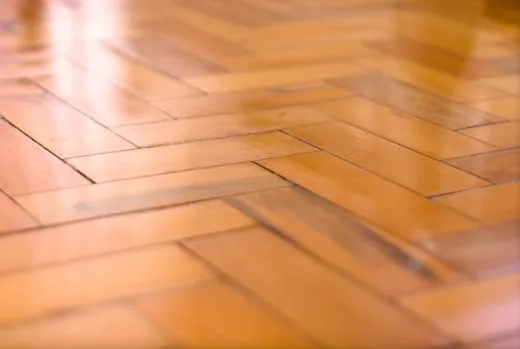
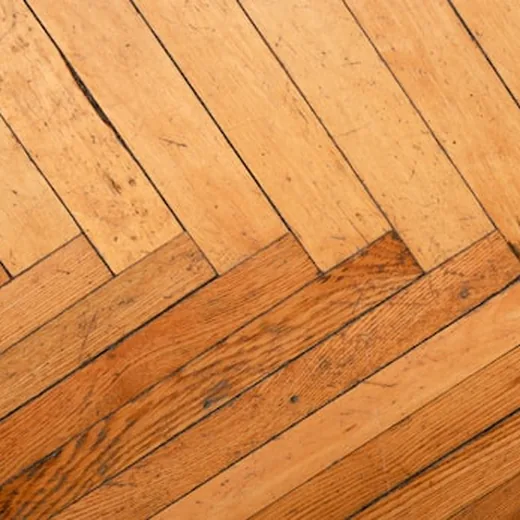
Parquet floor repair and restoration
The floor people find under carpet and are told to cover again. Most of it can be saved, by a crew that sands it differently.Why hardwood floors squeak, and the fixes that last
A squeak is two pieces of the floor moving against each other. Finding which two is the whole job.
Related work
Send a photo and we will tell you what you are looking at
Hardwood Floor Repair starts with someone reading the house. We quote every job ourselves, with no salesperson in between, and a photo of the floor gets you a straight answer faster than a form does.
