What we do
Stair & Railing Work
The part of the house everyone touches and nobody plans for.
In short
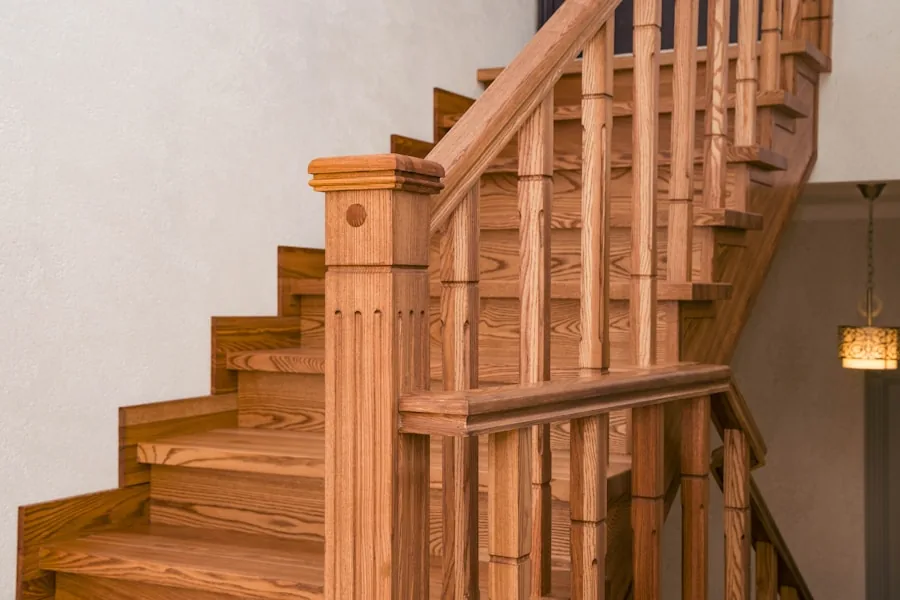
Deco Hardwood Floor draws and builds stairs and railings in house for homeowners in Philadelphia and within 50 miles of it, in Pennsylvania, southern New Jersey and northern Delaware. The category covers four jobs: building a finished stair, refinishing one that is worn, converting a carpeted stair to hardwood, and installing handrails, balusters and newel posts. Which one applies depends on what the stair is made of and how far the wear has gone. Most flooring crews subcontract this work or decline it.
Stairs & Railings: the 4 services
Custom Stair Installation
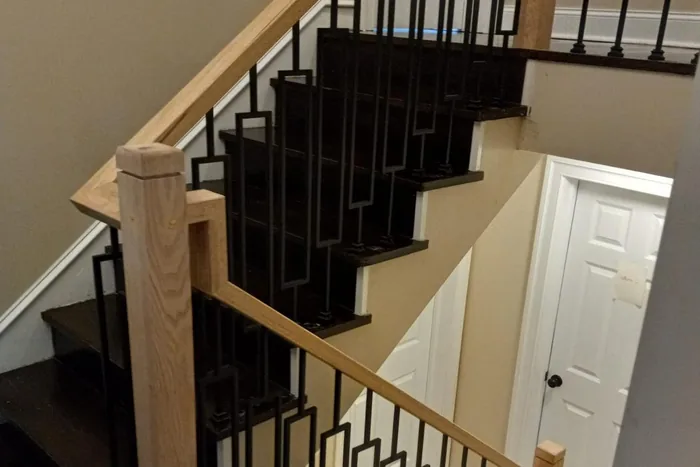
Treads, risers, stringers and skirt board, built to a drawing instead of a catalog page.See stair installation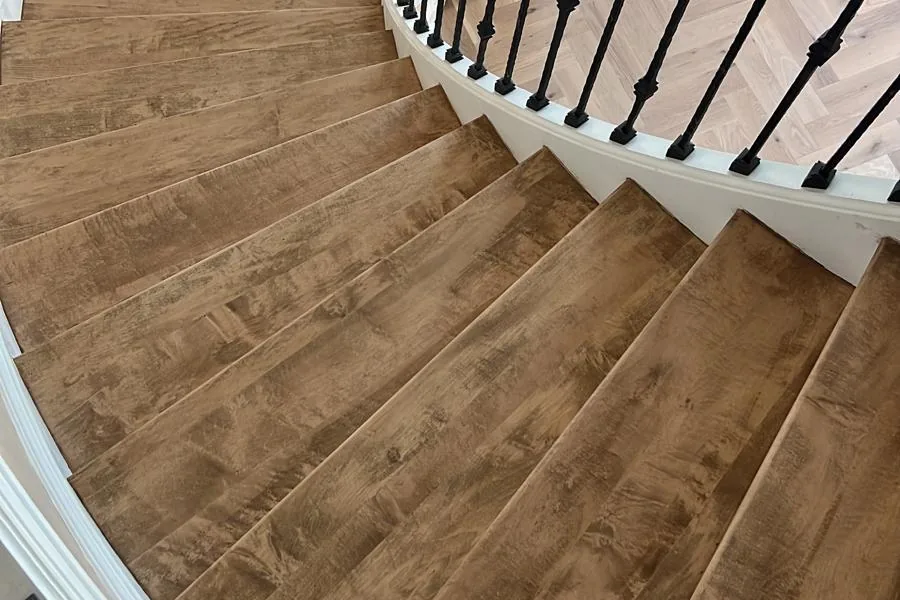
Stair Refinishing
Stairs take more wear per square foot than any floor in the house, and they are sanded almost entirely by hand.See stair refinishing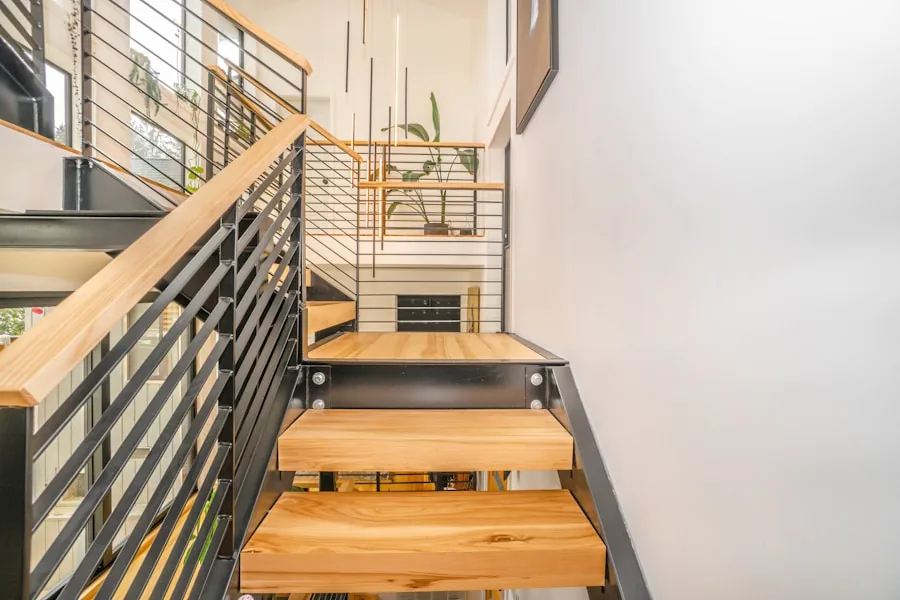
Carpet to Hardwood Stairs
Pulling carpet off a staircase and finding out what is underneath. Sometimes it is a finished stair. Usually it is not.See carpet to wood stairs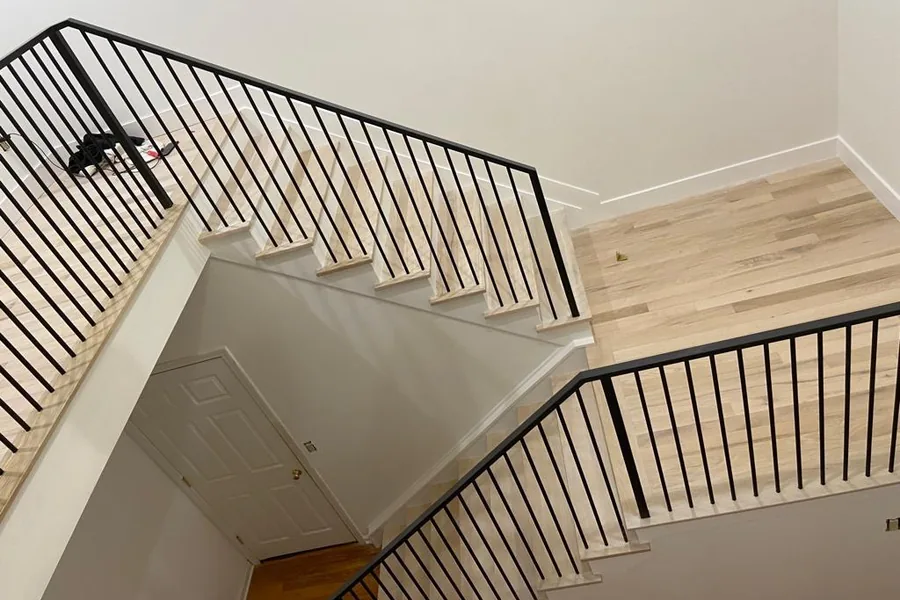
Handrail & Railing Installation
Handrail, balusters, newel posts. Where code stops being a suggestion.See railings
Which stair or railing service do you need?
If the treads are finished hardwood and only the coating is worn, the stair is refinished. If it is carpeted, it is almost always retreaded. If there is no finished stair, one is built. The railing is its own job and can be done alone.
| Service | Who it is for | When it is the right call | What you end up with |
|---|---|---|---|
| Custom Stair Installation | Homeowners with a stair that was never finished, or one being rebuilt in a remodel. | There is no finished stair to keep, or treads, risers and skirt board all need replacing. | Treads, risers and skirt board cut for their own positions, built to an agreed drawing. |
| Stair Refinishing | Homeowners whose hardwood stair is worn at the finish while the treads are still sound. | The nosings are dull or scuffed and the wear has not cut into the wood. | The same stair, sanded mostly by hand and coated again, matched to the floor where they meet. |
| Carpet to Hardwood Stairs | Homeowners taking carpet off a staircase and wanting wood in its place. | The stair under the carpet is construction lumber, which is the usual case. | New hardwood treads and risers over the existing structure, with a nosing and a skirt board. |
| Handrail & Railing Installation | Homeowners with a railing that moves, a stair opened in a remodel, or balusters to change. | The rail moves when you lean on it, a guard is needed, or wood balusters are going to iron. | A handrail and guard built to the code as adopted locally, with the newel posts anchored to structure. |
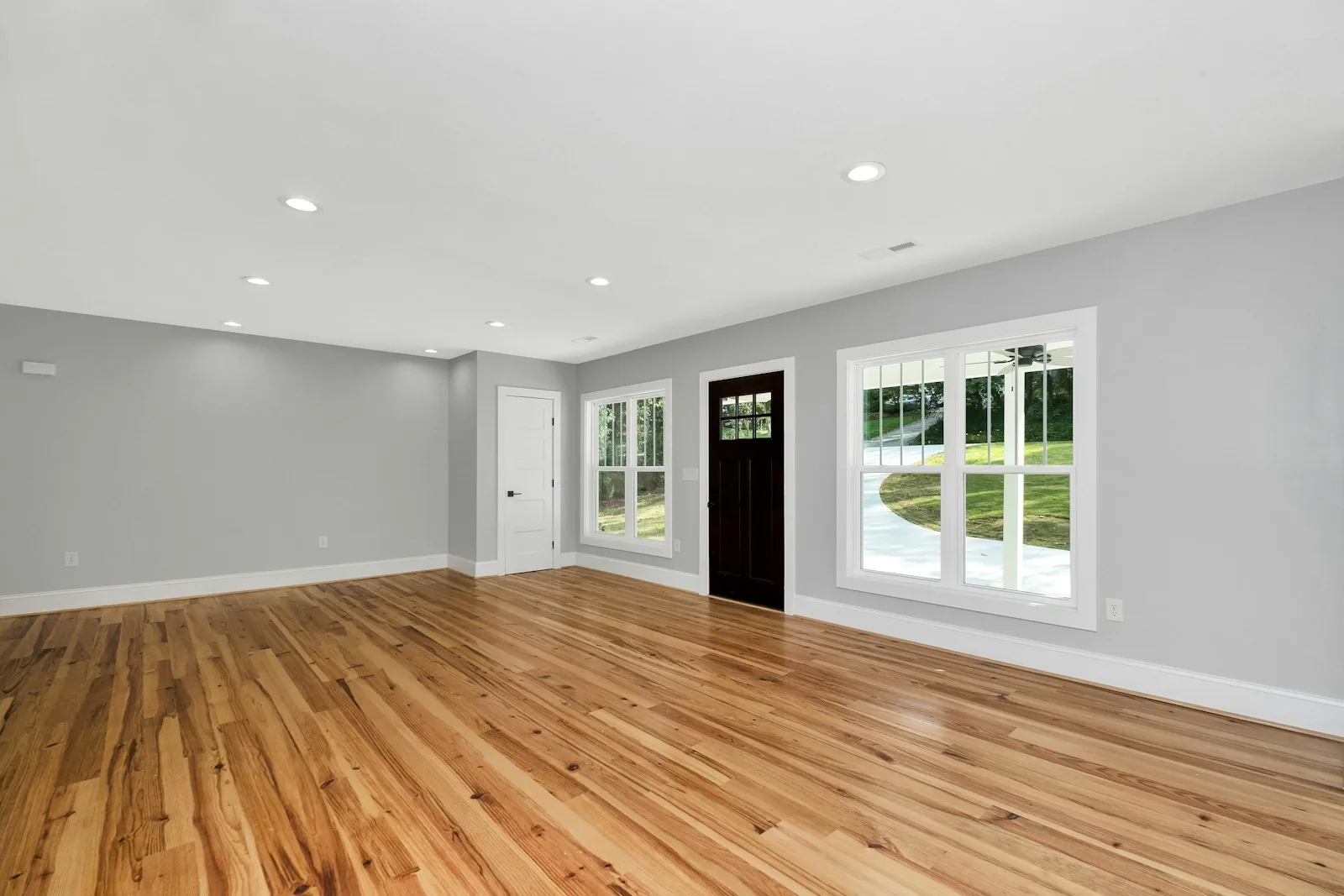
How Deco Hardwood Floor builds stair and railing work
Every stair is measured in person and drawn before material is ordered. The structure is corrected while it is open, each piece is cut for its own position, and the railing is built to the code as adopted locally.
We measure the actual opening
Every riser and every tread, and how far out of square the stair is. On a carpeted stair we lift a corner to see what is underneath.A drawing is agreed
Profile, skirt board, baluster pattern and post positions are drawn before anything is ordered. Where a design conflicts with the code, we say so at this stage.Structure is corrected first
Squeaks, loose treads, separated risers and newel anchoring are dealt with while the stair is open. Finish does not fix movement, and new treads hide it.Each piece is fitted, then finished
Treads, risers and skirt are cut one position at a time. The railing follows, then stain where the floor calls for it, and coats applied by hand.
What homeowners get wrong about stairs and railings
Stairs are joinery, not flooring, and the common mistakes come from treating them like a small floor. The six below change the scope of the job, and most of them cannot be seen from standing height.
Expecting hardwood under the carpet
The wood under stair carpet is usually construction lumber with no nosing and no finish. It can carry a finished stair, but it cannot be sanded into one.
Pricing a stair by the square foot
A flight of fourteen steps is fourteen treads cut for their own positions and sanded mostly by hand. A floor rate per square foot does not describe that work.
Tightening a railing that wobbles
A rail that moves is normally a newel post never anchored to structure. Tightening what is visible buys a few months. The fix is under the finished surface.
Treating handrail and guard as one thing
The handrail is what you grasp. The guard stops a fall on an open side. They have separate requirements, and a railing can pass one and fail the other.
Waiting until the nosing is worn through
Once wear has cut into the wood at the front edge, sanding it flat removes the profile. At that point the stair is retreaded, not refinished.
Covering squeaks with new treads
With the carpet off, squeaks can be fixed from above. Once finished treads go on, reaching the same joint means removing what was just installed.
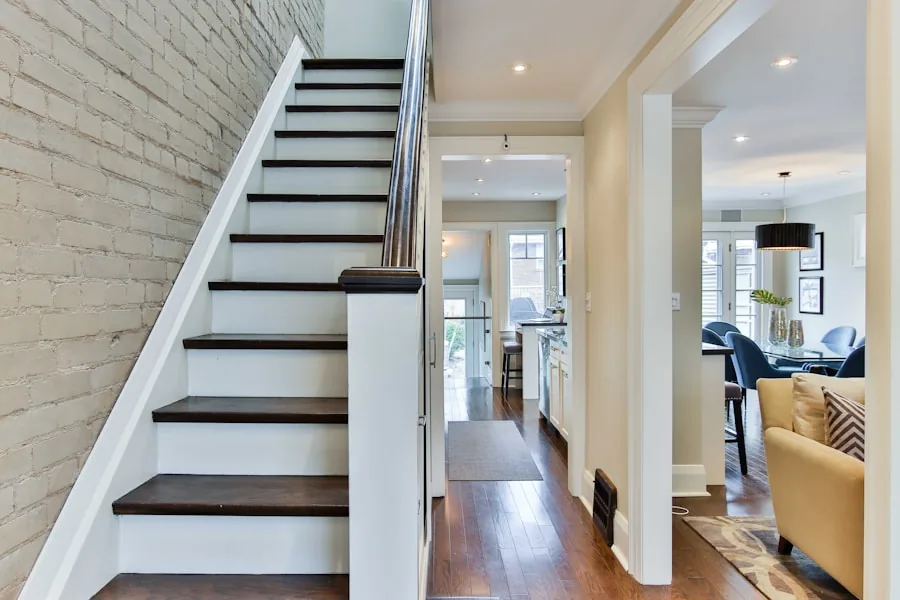
Why homeowners hire Deco Hardwood Floor
Deco Hardwood Floor is owner operated: the person who quotes stairs & railings is the person responsible for it, and the material comes with the labor in one number.
Material and labor in one number
We buy the flooring direct from the distributor and pass the store price through, so you are not sourcing wood on your own between quotes.
Samples come to your house
Samples and larger offcuts come to you, so the color gets chosen in your own light instead of under a showroom lamp.
Stairs and railings built in house
Treads, risers, handrails and newel posts are drawn and built by our own crew. Most flooring crews subcontract stair work or decline it.
The owner quotes the job
The person who measures your floor is the person responsible for the work. There is no salesperson in between.
Measured before it is promised
Remaining thickness is measured at the edge of a board before we say a floor can be sanded, and no price is firm before we have seen the room.
Told straight, including the limits
Vacuum extraction catches most of the sanding dust and not all of it. We tell you that before the job instead of after.
More about who we are and what we will not claim on the About Deco Hardwood Floor page.
Questions about stairs & railings
Should I refinish my stairs or replace the treads?
Refinish them if the treads are finished hardwood and the wear stops at the coating. Replace or retread them if the wear has cut into the wood at the nosing, or if the stair under the carpet was never a finished one. Deco Hardwood Floor looks at the nosings first, because that is where the difference between the two jobs shows.
Is it worth converting carpeted stairs to hardwood?
It is worth it if you want a stair that matches the floor, and if you accept that it is a building job and not a sanding job. A finished stair is built over the existing structure. It is harder underfoot than carpet, which is worth thinking about with small children or an older dog, and a runner can go over it.
What moves the price of stair work?
The number of risers, whether the stair is open on one side, and how much of the work is new material move it most. An open side means the balusters come out and the treads get returned ends. Refinished balusters or a new railing add hand work. Deco Hardwood Floor prices a stair after measuring it, by the stair and not by the square foot.
Can I replace the railing without redoing the stairs?
Usually yes. How invasive it is depends on where the balusters land. If they sit in a shoe rail, the assembly can often come out without touching the treads. If they sit in holes in the treads, the treads are involved. Swapping wood balusters for iron is one of the least invasive changes available on an existing stair.
Why do most flooring contractors not do stairs?
Because stairs are joinery. Nothing in the opening is square, each tread is cut for its own position, and the railing has code requirements attached. Most flooring crews subcontract the work or decline it. Deco Hardwood Floor draws and builds stairs and railings in house, so the floor, the stair and the railing are planned together instead of between two crews.
How long are the stairs out of use?
It depends on the job and the finish, and the schedule comes after the stair is measured. Coats need cure time, and waterborne products return the stair sooner than oil-modified polyurethane. A stair open on one side takes longer than one between two walls. Where the house has only one staircase, the work is staged around that and you get the schedule first.
Can the stairs match my hardwood floor?
Usually, and it is tested on a sample, not promised from a species name. Tread stock is thicker than flooring, and rail and baluster stock is often a different species, so each can take stain differently. The sample is made from the actual tread material. We match the stair to the floor where the two meet, at the top and the bottom.
Do the risers and balusters have to be refinished too?
No. Many homeowners paint the risers and balusters and refinish only the treads and the handrail. Balusters are refinished one at a time by hand, which adds real time, so painting them moves the job along much faster. On an open stair being retreaded, the balusters normally come out and go back whichever way they are finished.
Do stairs and railings have to meet building code?
Yes. Handrail height, graspability, guard height and the opening between balusters are all specified, and stairs are where inspectors look hardest. Deco Hardwood Floor builds to the version of the code adopted locally, not to a number remembered from another job. Where a design conflicts with it, the code wins, and we say so at the drawing stage.
Who is stair refinishing not right for?
Stair refinishing is not right for a stair that was built to be carpeted, a tread worn into the wood at the nosing, or a stair that moves underfoot. The first two need new treads, and the third needs the structure corrected before any finish goes on. Refinishing only renews a stair that is already a finished, sound hardwood stair.
From the blog
Refinishing and staining hardwood stairs
A staircase is the smallest floor in the house and the slowest one to refinish. What is under the carpet decides whether it can be done at all.Stair railing height: the code in PA, NJ and Delaware
Handrail and guard are two requirements on one railing, and the edition of the code that applies depends on which side of the river the house is on.
Send a photo and we will tell you what you are looking at
Stairs & Railings starts with someone reading the house. We quote every job ourselves, with no salesperson in between, and a photo of the floor gets you a straight answer faster than a form does.
