Repair & Restoration
Parquet & Herringbone Restoration in Philadelphia, PA
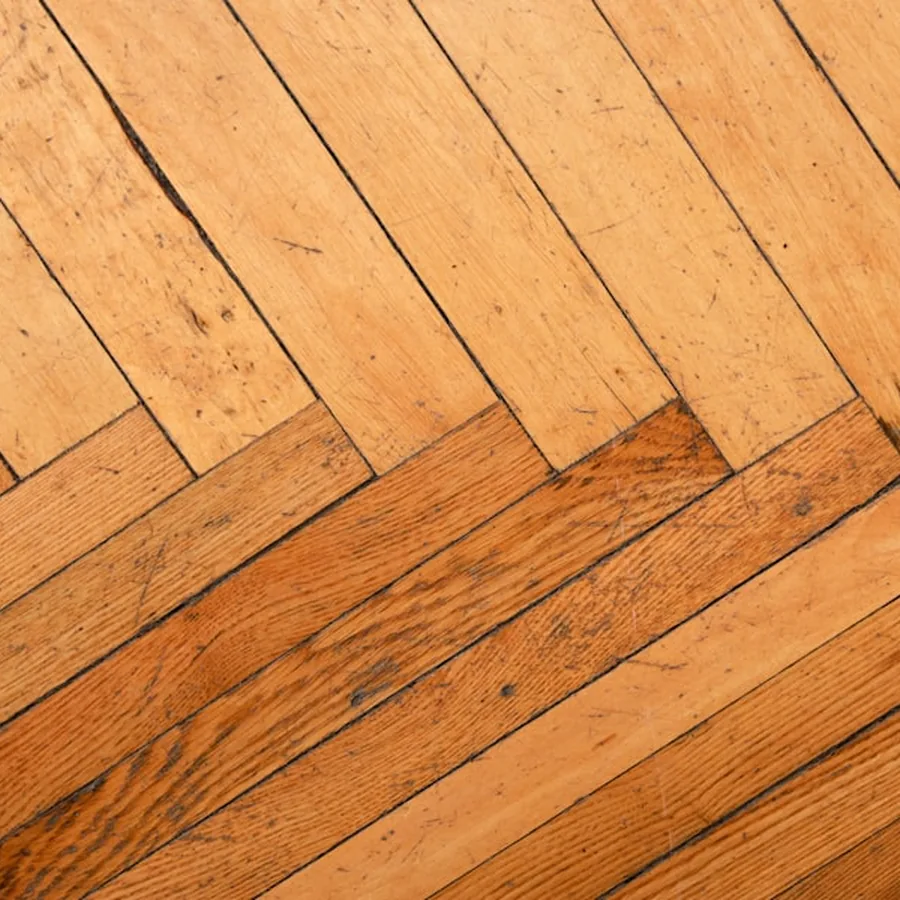
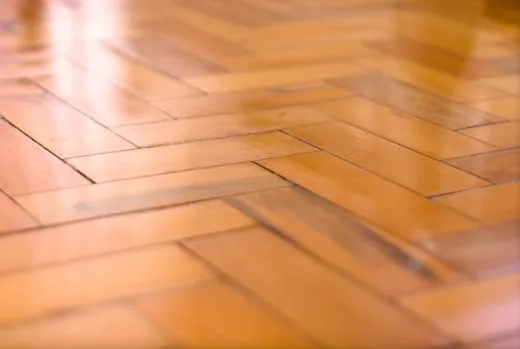
Parquet and herringbone are the floors that keep turning up under carpet in this housing stock, and they are the ones a general sanding crew is most likely to ruin. The grain runs in two directions at once, so a drum sander driven the normal way tears one direction while it cuts the other. These floors are sanded diagonally, in stages, and often finished largely by hand.
In short
Deco Hardwood Floor restores parquet and herringbone floors for homeowners in Philadelphia and within 50 miles of it, sanding on the diagonal and measuring the remaining wood before any machine runs. Parquet floor restoration covers refastening loose pieces, replacing missing ones, sanding the pattern in stages and finishing it as one surface. It is the right call when the blocks still have enough thickness to take a sanding. Where they do not, the options are a screen and recoat or replacing a section, and we say which before starting.
At a glance
- What makes it different
- Grain runs two directions at once
- Why crews decline it
- A drum sander used the normal way tears half the pattern
- How it is sanded
- Diagonally, in stages, then by hand at the field
- Common in
- Prewar houses here, usually under carpet
- The risk
- Thin blocks and old adhesive. There is less margin than on strip oak
You cannot sand it in one direction, because there is no one direction
Every piece meets its neighbour at ninety degrees, so any single pass cuts with the grain on half the floor and against it on the other half, and against the grain tears the surface.
On a strip floor the sander runs with the boards and the whole room is one grain direction. A herringbone or parquet floor does not offer that. Whatever line you take, half the pattern is going to be cross cut.
The way around it is to work diagonally, at forty five degrees to both directions, so no piece is ever cut fully against its grain. Then the direction is changed and the pass repeated the other way, which evens out what the first pass left.
It is slower per square foot than any other sanding job in this trade, and it is the reason most flooring crews either decline these floors or hand them off.
If someone quotes a herringbone floor at the same rate as a strip floor, they are either doing something else or they have not looked.
There is less wood there than you think
Parquet blocks and herringbone pieces are frequently thinner than strip flooring, and many have already been sanded once, so the remaining thickness gets measured before anyone commits.
Some parquet is solid and thick. Plenty of it, particularly the mid century tile parquet, is thin and glued down, and a full sanding is something it can survive once, not repeatedly.
The other thing under old parquet is old adhesive, and it varies from a modern glue to a bituminous mastic. What is under there matters for how the floor is treated and, in the oldest housing, is one more reason not to make dust carelessly.
So the measurement comes first. Where a floor cannot take a full sanding we say so, and the conversation turns to a screen and recoat or to replacing a section rather than to a refinish that would end the floor.
Missing pieces, and why matching is a hunt
Individual blocks and pieces come loose or go missing, and replacing them means matching species, width, thickness and pattern, which is a search rather than an order.
A herringbone piece is a specific length to width ratio. Get the ratio wrong and the pattern does not close, which shows from across the room even when the species matches.
Where pieces are missing we look for salvage first, including from a closet or under an appliance in the same house, which is the most reliable match available and costs nothing.
Where nothing can be salvaged, new pieces are milled or sourced to the ratio and then finished with the floor, and the joint disappears in the finish rather than in the carpentry.
When does a parquet or herringbone floor need restoration?
A patterned floor needs restoration when pieces are loose or missing, when the finish is worn to bare wood, or when it has just come out from under carpet. Whether it can be sanded is a separate question, answered by measuring.
Blocks that rattle or lift out
A piece that clicks underfoot or lifts out by hand has let go of its adhesive or its nails. Loose pieces are secured before sanding, or the machine pulls them up.
Gaps where pieces are missing
Empty spots in the pattern need a piece of the same species, thickness and length to width ratio. With the wrong ratio the pattern does not close, and it shows.
Finish worn down to gray wood
Gray, dry wood in the walking paths means the finish is gone and the wood itself is taking the wear. A screen and recoat no longer helps at that stage.
Tack holes and staples from old carpet
A floor that sat under carpet has tack strip holes at the edges and staples across the field. They are pulled, filled and sanded as part of the restoration.
Scratches running across the pattern
Swirls or torn grain on half the pieces are the mark of a past sanding run straight across the pattern. Taking them out costs thickness the floor may not have.
Black adhesive showing in the joints
Dark, tarry material between or under the blocks is an old bituminous adhesive. It changes how the floor is handled, and it should be tested before anyone disturbs it.
How a patterned floor is sanded
Measure what is left
Thickness first. Thin parquet survives one full sanding, not several.Look at what is under it
Old adhesive changes how the floor is handled.Refasten what is loose
Blocks and pieces get secured before anything is cut.Sand diagonally, both ways
Forty five degrees to both grain directions, in stages.Source or salvage missing pieces
Ratio and species, matched from the same house where possible.Finish as one surface
The repairs disappear in the coat, not in the carpentry.
What does parquet and herringbone restoration include?
It includes measuring the remaining thickness, refastening loose pieces, replacing missing ones, sanding on the diagonal in stages and finishing the floor as one surface. We supply the replacement wood together with the labor.
Included
- Measurement of the remaining thickness before anything is sanded
- A look at the adhesive and the subfloor under the pattern
- Loose blocks and pieces refastened before any sanding
- Missing pieces salvaged from the same house, or milled or sourced to the pattern ratio
- Sanding at 45 degrees to both grain directions, in stages, with vacuum extraction
- Stain if chosen, and finish coats applied across the whole floor as one surface
Not included, or quoted separately
- Laboratory testing or abatement of old adhesive that may contain asbestos
- A full sanding on a floor too thin to survive it. We say so and discuss a recoat
- Subfloor or framing repair found under the pattern, which is quoted once it is visible
- A promise that sanding leaves the house without dust. Vacuum extraction catches most of it, not all
What changes the price of parquet floor restoration?
The price is set after we see the floor and measure it. What moves it most is the pattern, which makes the sanding slower than on a strip floor, the number of loose or missing pieces, and what the old adhesive turns out to be.
| What changes it | How it moves the price | Example |
|---|---|---|
| Pattern and piece size | Small pieces in two directions mean diagonal passes and more hand work at the borders and corners. The smaller the piece, the slower the floor. | A herringbone field with a border takes longer than block parquet of the same area without one. |
| Loose and missing pieces | Every loose piece is refastened and every missing one matched in species, thickness and ratio before sanding starts. | A hallway where a few pieces rattle, against a room where a radiator leak lifted a whole corner. |
| Remaining thickness | A floor with wood to spare takes a full sanding. A thin one limits the job to a lighter process and changes what is quoted. | Thick solid blocks, against thin mid century tile parquet that was already sanded once. |
| Old adhesive under the floor | Bituminous adhesive that has come up into the joints or sits under loose pieces adds testing and careful handling before any repair there. | Black mastic exposed where several blocks came up near a doorway. |
| Source of replacement wood | Salvage from a closet in the same house adds almost nothing. Pieces milled to an old size cost more and take time to arrive. | Blocks lifted from under an appliance, against a custom run milled to match. |
What to ask before hiring anyone to restore a parquet floor
These questions apply to any contractor, including us. A patterned floor is easy to ruin with the method that works on strip oak, so the answers should describe a different process and not only a different rate.
How will you run the sander across this pattern?
The answer should be on the diagonal, in more than one direction, in stages. Straight along the room means half the pieces get cut against their grain.
How much wood is left, and how did you measure it?
A good answer points to a place where the edge of a piece is visible and gives a thickness. Sanding without that number risks going through the floor.
What will you do about the loose pieces before sanding?
They should be refastened first, by a method the contractor can name. A sander running over loose blocks lifts them, chips their edges and leaves the pattern uneven.
What is the adhesive under this floor?
In an old house the answer may be a black bituminous adhesive, and some of those contained asbestos. Someone who shrugs at the question plans to sand through it.
Where will the replacement pieces come from?
Salvage from the same house is the closest match. If new pieces are milled, ask for the ratio and the species to be confirmed before the order is placed.
How do you sand in a house built before 1978?
Approximately 82.8% of Philadelphia housing predates 1978, and the federal lead rule governs how old finish is sanded there. The answer should cover containment, extraction and cleanup.

Why homeowners hire Deco Hardwood Floor
Deco Hardwood Floor is owner operated: the person who quotes parquet & herringbone restoration is the person responsible for it, and the material comes with the labor in one number.
Material and labor in one number
We buy the flooring direct from the distributor and pass the store price through, so you are not sourcing wood on your own between quotes.
Samples come to your house
Samples and larger offcuts come to you, so the color gets chosen in your own light instead of under a showroom lamp.
Stairs and railings built in house
Treads, risers, handrails and newel posts are drawn and built by our own crew. Most flooring crews subcontract stair work or decline it.
The owner quotes the job
The person who measures your floor is the person responsible for the work. There is no salesperson in between.
Measured before it is promised
Remaining thickness is measured at the edge of a board before we say a floor can be sanded, and no price is firm before we have seen the room.
Told straight, including the limits
Vacuum extraction catches most of the sanding dust and not all of it. We tell you that before the job instead of after.
More about who we are and what we will not claim on the About Deco Hardwood Floor page.
Questions about parquet & herringbone restoration
Can herringbone be sanded like a normal floor?
No. The grain runs two directions at once, so any single pass tears half the pattern. It is sanded diagonally, in stages, and it takes longer per square foot than any other sanding job we do.
We pulled up carpet and found parquet. Is it worth saving?
Frequently yes, and it is worth measuring before deciding. What settles it is remaining thickness, because a lot of parquet is thinner than strip flooring.
Some blocks are missing. Can you match them?
Usually. We look for salvage in the same house first, which is the best match there is, and mill or source to the pattern ratio where nothing can be salvaged.
Why did another crew turn this down?
Because it is slow, it needs a different technique, and doing it the normal way ruins the floor. Declining it is the honest answer from a crew that only does strip floors.
Can the floor be refinished if it is too thin to sand?
Sometimes a screen and recoat is the right answer: it renews the finish without taking wood off. We measure before recommending either.
Is it better to restore old parquet or replace it with new flooring?
Restore it if the pieces have thickness left and most of them are still down. Original parquet and herringbone in a prewar house is hard to reproduce, and parquet floor restoration keeps the pattern the house was built with. Replacement makes sense when the blocks are too thin to sand and too worn to recoat, or when water has lifted most of the field.
How long does parquet or herringbone restoration take?
Longer than a strip floor of the same size. Parquet and herringbone restoration is sanded on the diagonal in stages, and loose or missing pieces are dealt with first. The total depends on how many pieces need work, whether replacements have to be milled, and the finish chosen. Deco Hardwood Floor explains the sequence at the estimate, after measuring the floor.
What can go wrong when a parquet floor is sanded?
Three things, mostly. Sanding straight across the pattern tears the grain on half the pieces. Sanding a thin floor too hard goes through the wear layer and ends the floor. Sanding over loose blocks lifts them and chips their edges. A proper parquet floor restoration measures first, refastens first and works on the diagonal, which is why it is slower.
Can a parquet or herringbone floor be stained a different color?
Yes, with more care than on a strip floor. Stain shows every scratch that crosses the grain, and on a patterned floor some scratches always cross it, so the final sanding steps have to be finer and more even. During a parquet and herringbone restoration, Deco Hardwood Floor puts a color sample on the actual floor before the stain goes down across the room.
Can we stay in the house during parquet floor restoration?
Yes, if the room can be closed off. Parquet floor restoration means several sanding stages and then finish coats, and the room stays out of use until the finish has dried enough to walk on. Vacuum extraction catches most of the dust, not all of it. In a house built before 1978 the federal lead rule adds containment, and children and pets stay out of the work area.
Parquet Restoration terms, defined
- multi-directional grain
- The condition of a patterned floor in which neighboring pieces run at an angle to each other, so no single sanding direction follows the grain of every piece.
- buffer sanding
- A sanding step done with a rotary floor buffer and an abrasive screen or disc, used after the main passes to even out the scratch pattern across pieces that run in different directions.
- wear layer
- The usable thickness of wood at the top of a board or block, the part that sanding removes. Once it is gone, the floor cannot be sanded again.
- mastic
- A thick adhesive spread on the subfloor to glue flooring down. Under old parquet it ranges from a modern glue to a black bituminous product.
- cutback adhesive
- An asphalt based black adhesive used under glued flooring through much of the last century. Some older formulas contained asbestos, so it is tested before being sanded or scraped.
The rules behind this work
From the blog
Parquet floor repair and restoration
The floor people find under carpet and are told to cover again. Most of it can be saved, by a crew that sands it differently.Why hardwood floors squeak, and the fixes that last
A squeak is two pieces of the floor moving against each other. Finding which two is the whole job.
Related work

Send a photo and we will tell you what you are looking at
Parquet & Herringbone Restoration starts with someone reading the house. We quote every job ourselves, with no salesperson in between, and a photo of the floor gets you a straight answer faster than a form does.
