Stairs & Railings
Carpet to Hardwood Stairs in Philadelphia, PA
Almost everyone who calls about this has already looked under a corner of the carpet and seen wood. That wood is usually not a finished staircase. In houses of this age the stair under the carpet is construction lumber that was never meant to be seen, and turning it into a hardwood stair means building a finished stair on top of the one you have.
In short
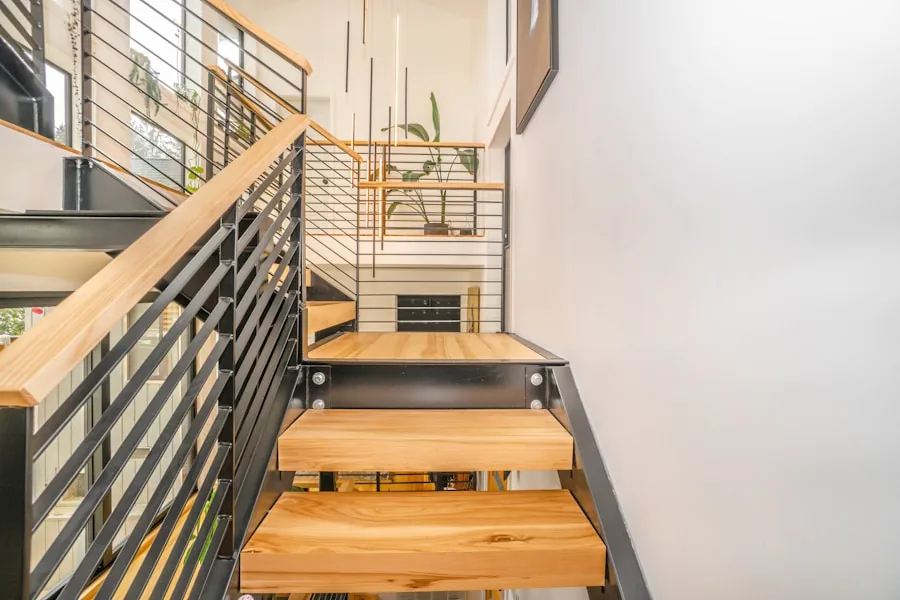
Deco Hardwood Floor replaces carpeted stairs with hardwood for homeowners in Philadelphia and within 50 miles of it, building the finished stair in house over the existing structure. Carpet to hardwood stairs is usually retreading: new hardwood treads, risers and a skirt board fitted over construction lumber that was never meant to be seen. It is the right call when the stair carpet is worn out and the structure under it is sound. The result is a finished wood stair matched to the floors at the top and the bottom, with the squeaks corrected while the stair was open.
At a glance
- What it is
- A finished hardwood stair built over the existing structure
- What it is not
- Refinishing. There is normally nothing finished to sand
- Common trigger
- Carpet coming off, or a dog that cannot get traction on it
- The moment to fix squeaks
- While the carpet is off and the treads are open
- Material
- Supplied by us, matched to the floor at the top and bottom
What is actually under stair carpet
Usually construction grade lumber with no nosing, no finish and no intention of ever being seen, which is why it looks like a stair and does not work as one.
A stair built to be carpeted is built to a different standard than a stair built to be looked at. The treads are plain stock, often plywood or a soft utility grade. There is no nosing, the rounded front edge that a finished tread projects past the riser. The stringer at the wall may be nothing but framing, with the carpet turning the corner to hide it.
None of that is a defect. It was correct for a carpeted stair. It just means the wood you saw under the corner is structure, not surface, and the honest answer to "can we just sand it?" is almost always no.
Occasionally, in the oldest housing here, there is a real finished stair under the carpet, sometimes oak and sometimes heart pine. It happens often enough to be worth lifting a corner before quoting, and rarely enough that we do not build the estimate around hoping for it.
We look under a corner at the estimate. It costs nothing and it decides which of two very different jobs you are buying.
Retreading, and why it is the normal answer
Retreading means fitting new hardwood treads and risers over the existing structure, with a proper nosing and a skirt board closing the line at the wall.
The existing stringers carry the load and they usually stay. What changes is everything you touch and see: a hardwood tread with a nosing, a riser face under it, and a skirt board running the diagonal at the wall so the joint between stair and plaster is a clean line instead of a caulked gap.
Retread thickness matters more than people expect. Adding material to the top of every tread changes the height of every step, and the step at the top and the step at the bottom are the two that change unevenly if nobody is paying attention. That is measured before anything is ordered.
Where the stair is open on one side, the work grows: the balusters come out, the treads are returned on the open end so the end grain does not show, and the balusters go back into new holes. It is the version of this job that takes the longest and it is the one that looks the most like furniture when it is done.
The squeaks will never be this easy to fix again
With the carpet off and before the new treads go down, the structure is open, and that is the only moment when a squeak can be fixed from above without taking anything apart.
Most stair squeaks are movement between the tread and the stringer, or a riser that has separated from the back of the tread. Once a finished tread is on, reaching either of those means removing what was just installed.
So the sequence matters: carpet off, structure inspected and corrected, then finished material. A crew that skips the middle step delivers a stair that looks right and talks to you every morning.
The same window applies to a stair that has always felt springy underfoot. Whether that is a fixable fastening problem or a framing problem is something we can see when it is open, and it is worth knowing before the finished surface hides it again.
A quiet stair is not luck. It is a step in the sequence that costs almost nothing while the stair is open and cannot be bought back afterwards.
When should you replace carpet on stairs with hardwood?
Replace stair carpet with hardwood when the carpet is at the end of its life and you want a stair that matches the floors around it. The carpet itself usually tells you. The signs below are things you can see or feel on the stair today.
Carpet worn through at the edges
The pile is flattened or threadbare on the front edge of each step. New carpet will wear the same way in the same place, because that is where every foot lands.
Squeaks under the carpet
The stair creaks on most trips. With the carpet off and before new treads go on, the structure is open, and that is the moment squeaks can be fixed from above.
Hardwood floors at both ends
The hall upstairs and the room downstairs are wood, and the carpeted stair between them is the one piece that does not belong. A hardwood stair is matched to both.
Carpet that is loose or shifting
The carpet moves underfoot or has pulled away from the back of the step. Loose carpet on a stair is a tripping risk, and it has to come off either way.
Stains and odor that stay
Spills and pet accidents have gone through to the pad, and cleaning no longer helps. A finished wood tread is a coated surface that can be wiped.
Wood showing under a corner
You lifted a corner and saw boards. That is usually construction lumber, not a finished stair, and it means the job is building new treads over it, not sanding.
How the work runs
Carpet lifted at a corner
At the estimate, to see what the stair actually is before quoting it.Carpet, pad, tack strip and staples out
The staples are the slow part and they all have to go.Structure inspected and corrected
Squeaks, movement and loose risers, while everything is still open.Treads and risers fitted
Each one measured for its own position, with a proper nosing.Skirt board and returns
The line at the wall, and the finished end where the stair is open.Finish
Stained if the floor calls for it, then coated. Stairs are coated by hand.
What is included when we convert carpet stairs to hardwood
Converting carpet stairs to hardwood includes taking the carpet out, correcting the structure, and fitting and finishing new treads, risers and skirt board. The material comes with the labor. A new railing design and work on the walls are separate items.
Included
- Lifting a corner of the carpet at the estimate, to see what the stair is.
- Taking out the carpet, the pad, the tack strip and every staple.
- Inspecting and correcting squeaks, movement and loose risers while the stair is open.
- Hardwood treads and risers supplied by us, each measured and fitted for its own position.
- Skirt board at the wall, and returned tread ends where the stair is open.
- Stain tested on the actual tread material, then finish coats applied by hand.
Not included, or quoted separately
- A new railing design. Existing balusters go back in, and a new handrail or posts are a railing job.
- Painting or plaster repair on the walls beside the stair.
- A stair runner. The finished stair is a good base for one, and it is not part of this job.
- A firm price before we have looked under the carpet.
What changes the price of carpet to hardwood stairs
The price is set after we lift a corner of the carpet and measure the stair, because the job is priced by the stair and not by the square foot. It moves most with the number of risers, with whether one side is open, and with what the structure needs.
| What changes it | How it moves the price | Example |
|---|---|---|
| Number of risers | Each step gets its own tread and riser, measured and cut for that position. More steps means more material and more fitting. | A typical rowhouse flight here has fourteen risers, which is fourteen treads cut one at a time. |
| Open side or closed | On an open side the balusters come out, the treads are returned on the open end, and the balusters go back into new holes. | A stair between two walls is the shorter version of this job. A stair open to the living room is the longer one. |
| What is under the carpet | Construction lumber means a full retread. A real finished stair, which turns up occasionally in the oldest housing, is a different and smaller job. | Oak or heart pine treads found under the carpet change the job from building a stair to refinishing one. |
| Structural correction | Squeaks, loose risers and springy treads are dealt with while the stair is open. How much there is depends on how the stair was built. | A fastening problem between tread and stringer is a small correction. A framing problem under the stair is a larger one. |
| Species and stain | The cost of tread stock follows the species, and a stain match to existing floors adds sample work on the actual tread material. | Treads matched to a stained oak floor take more testing than treads finished clear in the same species. |
What to ask before hiring someone to replace stair carpet
Ask every contractor these six questions, us included. Most of what goes wrong when carpet stairs are converted to hardwood is decided before the carpet comes up, and a quote that cannot answer them is a quote for a different job than the one you will get.
Did you look under the carpet before quoting?
Refinishing a real stair and building one over construction lumber are very different jobs. A quote written without lifting a corner is a guess about which one you have.
When do the squeaks get fixed?
The right answer is after the carpet is off and before the new treads go on. Once finished treads are installed, reaching a squeak means removing what was just fitted.
How thick are the new treads, and what does that do to step height?
Added material raises every step, and the top and bottom steps change unevenly. A good contractor measures this before ordering. The Pennsylvania residential code limits the variation between risers in one flight to 3/8 inch.
Is this full tread stock or a thinner tread cap?
Both exist, and they change the step height by different amounts. A contractor should be able to say what the tread is made of, how thick it is and how its nosing is formed.
What happens to the balusters on the open side?
On an open stair the tread is replaced under them, so they normally come out and go back into new holes. A quote that ignores them will grow once work starts.
Will the stain be tested on the actual treads?
Tread stock is thicker than flooring and can take stain differently. The sample should be made from the actual tread material and compared with your floor before anything is installed.
Why homeowners hire Deco Hardwood Floor
Deco Hardwood Floor is owner operated: the person who quotes carpet to hardwood stairs is the person responsible for it, and the material comes with the labor in one number.
Material and labor in one number
We buy the flooring direct from the distributor and pass the store price through, so you are not sourcing wood on your own between quotes.
Samples come to your house
Samples and larger offcuts come to you, so the color gets chosen in your own light instead of under a showroom lamp.
Stairs and railings built in house
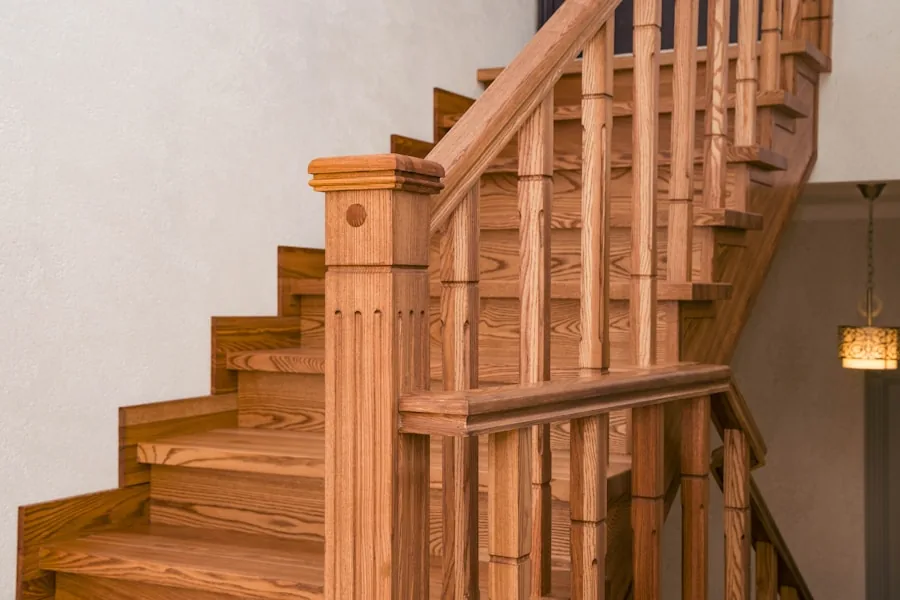
Treads, risers, handrails and newel posts are drawn and built by our own crew. Most flooring crews subcontract stair work or decline it.
The owner quotes the job
The person who measures your floor is the person responsible for the work. There is no salesperson in between.
Measured before it is promised
Remaining thickness is measured at the edge of a board before we say a floor can be sanded, and no price is firm before we have seen the room.
Told straight, including the limits
Vacuum extraction catches most of the sanding dust and not all of it. We tell you that before the job instead of after.
More about who we are and what we will not claim on the About Deco Hardwood Floor page.
Questions about carpet to hardwood stairs
We lifted a corner and there is wood under there. Is that a hardwood staircase?
Almost certainly not a finished one. What is normally under stair carpet is construction grade lumber with no nosing and no finish, built to be covered. It can carry a finished stair, but it is not one yet.
Can you match the new stairs to the floor at the top and bottom?
Usually, and it gets tested on a sample rather than promised from a species name. Tread stock is thicker than flooring and can take stain differently, so the sample is made from the actual tread material.
Do the balusters have to come out?
On a stair that is open on one side, normally yes, because the tread has to be replaced under them. On a closed stair between two walls, usually not.
How long does it take?
It depends on the number of risers and whether the stair is open on one side, so the schedule comes after it has been measured rather than before.
Will the stairs be slippery?
A finished wood stair is harder than carpet underfoot, and that is worth thinking about with small children or an older dog. Runners exist for exactly this, and the finished stair is a better base for one than carpet ever was.
Is it worth replacing carpet on stairs with hardwood?
It is worth it when the carpet needs replacing anyway and the floors around the stair are wood. Carpet to hardwood stairs is more work than new carpet, because a finished stair gets built over the old structure. In return you get a surface that can be refinished later instead of torn out, and one chance to fix the squeaks. It is less worthwhile if the stair is about to be rebuilt in a remodel.
Retreads or tread caps: which is right for carpeted stairs?
It depends on the step heights and on how the stair is built. Full retreads are thicker stock. Tread caps are thinner and add less height to each step, which matters where the top or bottom riser is already close to its limit. On a carpet to hardwood stairs job, Deco Hardwood Floor measures every riser before choosing, because the two options change the steps by different amounts.
Can we convert carpet stairs to hardwood ourselves?
Pulling the carpet, pad and staples is reasonable work for a homeowner. The rest of a carpet to hardwood stairs job is joinery. Each tread is fitted to an opening that is not square, the step heights have to stay within what the building code allows, and the squeaks have to be fixed in the right order. Mistakes show on every step, and they get walked on daily.
Can we live in the house while the stairs are converted?
Yes, with planning. During a carpet to hardwood stairs job the stair is a work area while treads are fitted, and it is closed while stain and finish cure. In a house with one staircase that decides who sleeps where. Deco Hardwood Floor gives you the schedule after measuring the stair, so the closed periods are known before the carpet comes off.
What can go wrong when carpeted stairs are converted to hardwood?
Three things go wrong most often. The step heights end up uneven because nobody measured what the new treads add at the top and bottom. The squeaks get covered instead of fixed. The stain is matched by species name instead of on a sample. On a carpet to hardwood stairs job each of these is decided before the first tread is cut, which is why the sequence matters.
Carpet to Wood Stairs terms, defined
- retread
- A new hardwood tread made to be fitted over an existing stair tread, with its own nosing. As a verb, the work of covering a rough stair with finished treads and risers.
- tread cap
- A thinner tread made to sit on top of an existing tread, with a front edge that wraps down over the old one. It adds less height to the step than full tread stock.
- construction-grade stringer
- A stringer sawn from framing lumber to carry a stair that was going to be carpeted. It is sound as structure and rough as a surface, and it normally stays in place.
- riser cover
- A thin panel of hardwood or paint-grade material fitted over the face of an existing riser, so the vertical part of each step matches the new tread above it.
The rules behind this work
From the blog
Refinishing and staining hardwood stairs
A staircase is the smallest floor in the house and the slowest one to refinish. What is under the carpet decides whether it can be done at all.Stair railing height: the code in PA, NJ and Delaware
Handrail and guard are two requirements on one railing, and the edition of the code that applies depends on which side of the river the house is on.
Related work
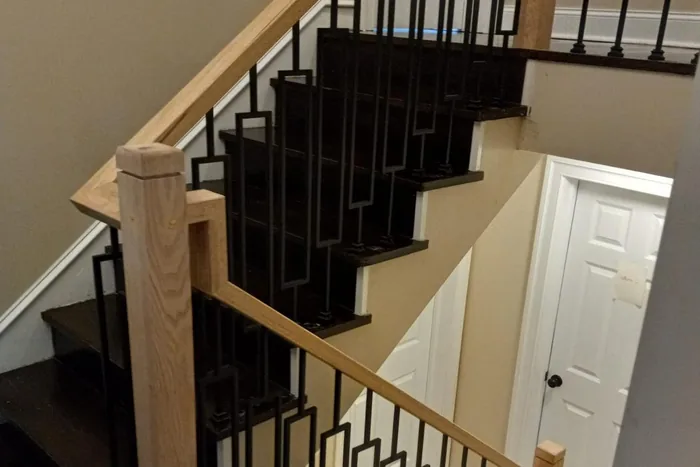
Custom Stair Installation
Treads, risers, stringers and skirt board, built to a drawing instead of a catalog page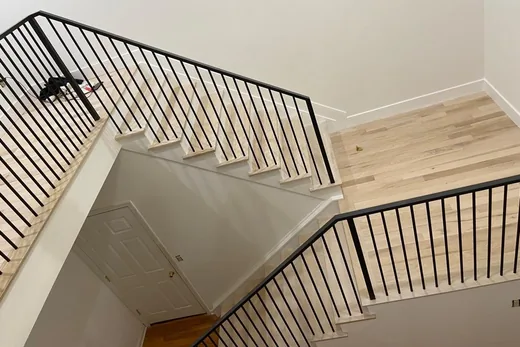
Handrail & Railing Installation
Handrail, balusters, newel posts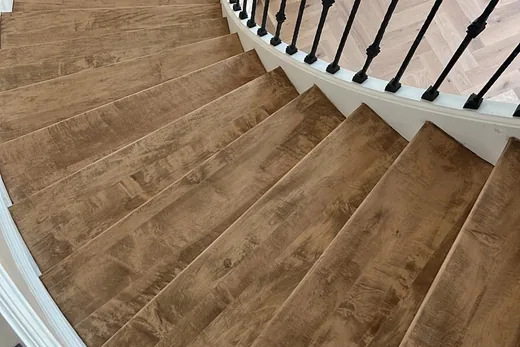
Stair Refinishing
Stairs take more wear per square foot than any floor in the house, and they are sanded almost entirely by hand
Send a photo and we will tell you what you are looking at
Carpet to Hardwood Stairs starts with someone reading the house. We quote every job ourselves, with no salesperson in between, and a photo of the floor gets you a straight answer faster than a form does.
