
Sanding & Refinishing
Floor Staining and Color Matching in Philadelphia, PA
Staining changes the color of a floor after it is sanded and before it is finished. Color matching is the harder version of the same job: making new wood look like wood that has been in the house for decades. Both get decided on sample boards made from your actual floor, not from a fan deck, because the same stain reads differently on red oak, white oak and heart pine.
In short
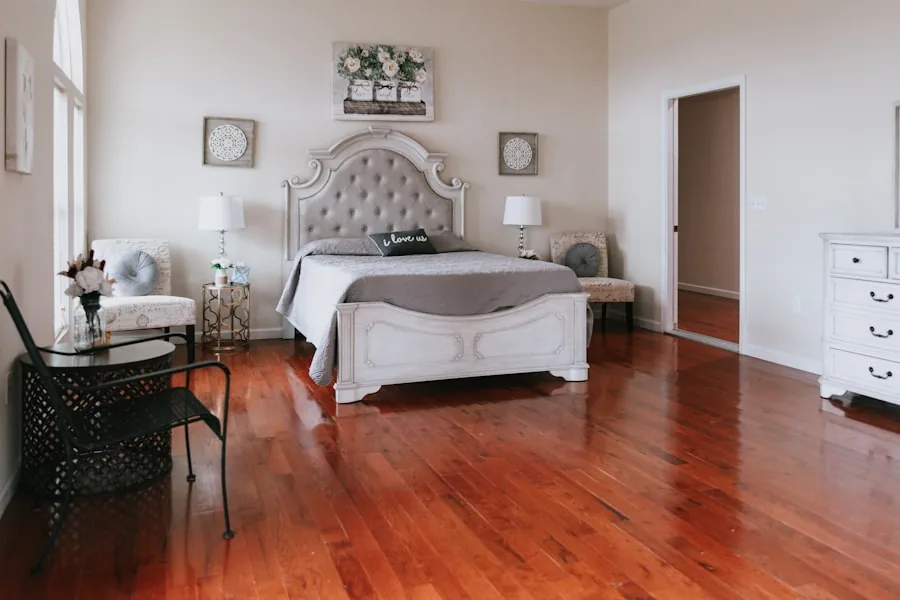
Deco Hardwood Floor stains hardwood floors and matches new wood to old for homeowners in Philadelphia and within 50 miles of it, deciding every color on samples made on the customer's own sanded floor. Stain goes onto bare wood, after the sanding and before the finish. The same stain reads differently on red oak, white oak, maple and pine, and in different light. A match between new boards and an old floor is aimed slightly ahead of today's color, because both keep changing.
At a glance
- What it is
- Applying color to bare sanded wood before the finish goes on
- Decided by
- Sample boards made from your own floor, viewed in your own light
- Species matters
- Red oak, white oak, maple and pine take the same stain differently
- Maple warning
- Dense closed-grain species blotch. Some colors are not achievable
- Material
- Stain and finish
Why we make sample boards in your house
Stain color depends on the species, the age of the wood and the light in the room, so a sample from anywhere else is a guess.
A stain that looks like a warm mid brown on white oak can read distinctly red on the red oak that fills most postwar housing in this region. Old growth heart pine goes somewhere else again. And a north-facing room and a room with afternoon sun will not agree about the same floor.
So we sand a section of your actual floor and put the candidate colors on it, and you look at them in the room, at the time of day you actually live in it. It costs a step and it removes the single most expensive mistake available in this work.
Matching new wood to an old floor
New boards start lighter than aged wood and keep changing after the job is done, so the match is aimed slightly ahead of where the old floor sits today.
Wood darkens with light exposure and with the ambering of old finish. A patch matched perfectly to today's color will be visibly lighter in two years, because the old floor moved and the new wood moved differently.
Where the seam is unavoidable, we weave the new boards into the old rather than butting a rectangle into the floor, so the eye never finds a straight line to follow.
When staining or color matching a hardwood floor makes sense
Staining makes sense when the floor is being sanded to bare wood anyway and you want a different color, or when new wood has to sit next to old wood without showing. These are the common cases.
The floor has gone orange
An old oil-modified finish ambers over the years and the whole floor turns warm and yellow. Sanding removes that, and what goes back on is a choice.
New boards sit next to old ones
A repair, a removed wall or an addition leaves pale new wood beside a floor that has darkened for decades. Without color work the patch stays visible.
Two rooms no longer agree
A wall came down or a doorway was widened, and two floors finished at different times now meet. One color across both needs sanding and staining them together.
The stairs and the floor differ
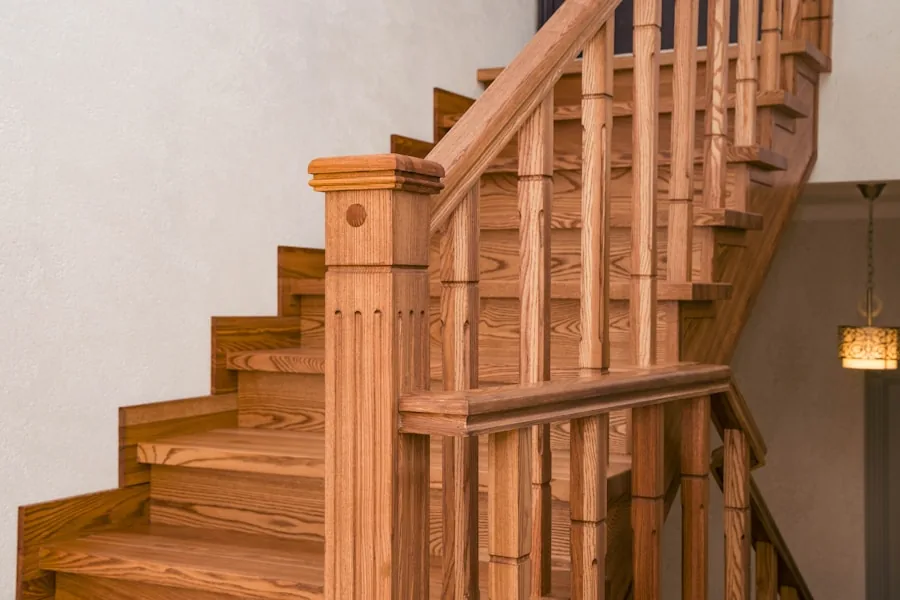
New treads, or a staircase in another species, land on a floor of a different color. The tread wood needs its own samples to reach the same tone.
The floor is being sanded anyway
Bare wood is the only moment a floor can change color. If a refinish is already planned, the color decision belongs to that job and not to a later one.
Boards of different ages or species
Decades of repairs have left boards that take finish differently, and the floor looks patched when left natural. A stain chosen on samples can pull them closer.
How the work runs
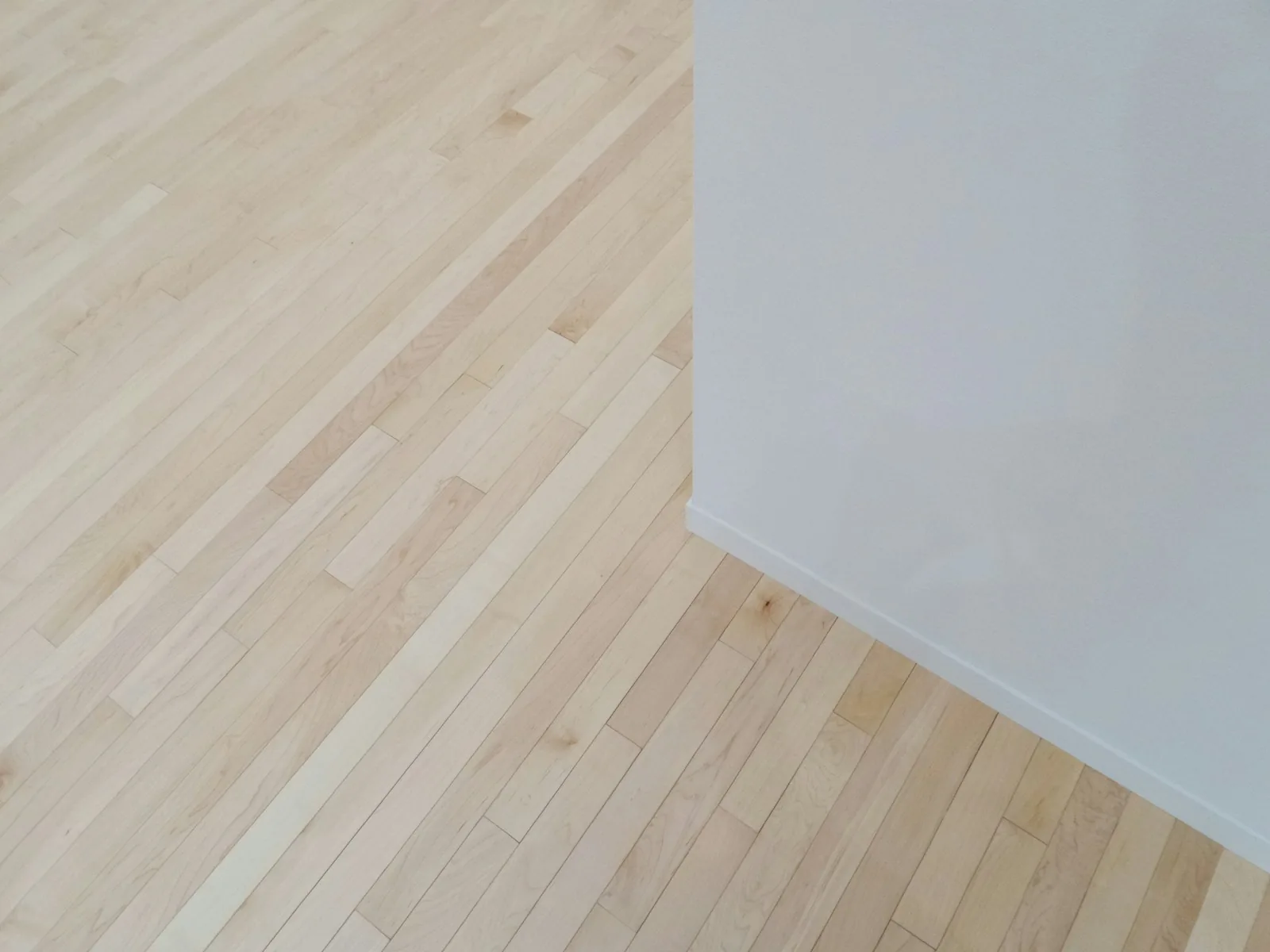
Sand to bare wood
Color cannot be judged over an old finish.Sample boards
Candidate colors on your own floor, viewed in your own light.Water popping if needed
Raising the grain so the wood takes color evenly and deeply.Stain applied and wiped
On schedule, because dwell time changes the depth of color.Finish over the top
Coats on the cure schedule of the specified product.
What is included in hardwood floor staining
The job includes the sanding, the samples on your own floor, the stain and the finish over it. It does not include a color promised from a chart, or a match promised before it has been tested.
Included
- Sanding to bare wood, because color cannot be judged or applied over an old finish.
- Candidate colors applied to a sanded section of your own floor.
- Looking at the samples with you in the room, in the light you live in.
- Water popping where the color calls for it.
- Stain applied and wiped on a consistent dwell time, then finish on the cure schedule.
- On a match, new boards woven into the old floor so no straight seam shows.
Not included, or quoted separately
- A color promised from a fan deck or a photo. The sample on your floor decides.
- A match promised before testing. Species, age and the old finish all affect it.
- Dark colors on maple that the wood will not take without blotching.
- A color change without sanding. Stain needs bare wood.
What changes the cost of staining a hardwood floor
The price is set after we see the floor and know the species. What moves it most is the area, how dark the color is, and whether the job is a new color or a match to wood that is already there.
| What changes it | How it moves the price | Example |
|---|---|---|
| Floor area | Stain is applied and wiped across the whole floor, so more area is more labor and more material on top of the sanding. | A stained first floor is a larger job than one stained bedroom, beyond the extra sanding. |
| Species | Oak takes most colors predictably. Maple and other dense closed-grain woods blotch, need more testing, and rule some colors out. | A dark brown on white oak is routine work. The same color on maple may not be achievable. |
| Depth of color | Dark colors usually call for water popping and show any sanding scratch, so the surface has to be prepared more carefully. | A light natural tone forgives more than a near black, which shows every mark the machines left. |
| Matching an existing floor | A match takes more sample rounds than a new color, and new boards may have to be woven into the old floor. | Tying a new kitchen floor into an old dining room takes more testing than staining both rooms from bare wood. |
| Stairs and railings | Treads, nosings and railings that have to agree with the floor are stained piece by piece, with more hand work. | A staircase in a different species than the floor needs its own samples to land on the same color. |
What to ask before anyone stains your hardwood floor
Stain is the step in a refinish that cannot be undone without sanding again. These six questions show whether the color has been tested on your wood or chosen from a card.
Will you make the samples on my own floor?
The right answer is yes, on a sanded section, in the room. A color picked from a fan deck or a showroom board was made on someone else's wood in someone else's light.
What species is my floor?
A contractor should be able to tell red oak from white oak, maple and pine by looking. One who cannot name the species cannot predict what the stain will do on it.
Will you water pop the floor, and why?
A good answer depends on the color: it matters most on dark stains. A contractor who has never heard the term, or does it on every floor without a reason, is guessing.
How do you sand before a dark stain?
Stain settles into every scratch and makes it darker. You want to hear a full grit sequence with nothing skipped, because marks invisible on bare wood show clearly under a dark color.
For a match, how will it look in two years?
New wood and old wood keep changing at different rates. A contractor who aims slightly ahead of today's color has thought about it. A match to today alone drifts apart.
Which finish goes over the stain, and does it shift the color?
It does. A waterborne finish stays clear and an oil-modified finish adds amber that deepens. The sample you approve should be read with that in mind.
Why homeowners hire Deco Hardwood Floor
Deco Hardwood Floor is owner operated: the person who quotes floor staining & color matching is the person responsible for it, and the material comes with the labor in one number.
Material and labor in one number
We buy the flooring direct from the distributor and pass the store price through, so you are not sourcing wood on your own between quotes.
Samples come to your house
Samples and larger offcuts come to you, so the color gets chosen in your own light instead of under a showroom lamp.
Stairs and railings built in house
Treads, risers, handrails and newel posts are drawn and built by our own crew. Most flooring crews subcontract stair work or decline it.
The owner quotes the job
The person who measures your floor is the person responsible for the work. There is no salesperson in between.
Measured before it is promised
Remaining thickness is measured at the edge of a board before we say a floor can be sanded, and no price is firm before we have seen the room.
Told straight, including the limits
Vacuum extraction catches most of the sanding dust and not all of it. We tell you that before the job instead of after.
More about who we are and what we will not claim on the About Deco Hardwood Floor page.
Questions about floor staining & color matching
Can you make my red oak floor look like white oak?
Partly. Red oak has a pink undertone that shows through most colors, and there are treatments that mute it. We show you on a sample board rather than promising it.
Why did my neighbor's floor come out a different color with the same stain?
Species, age, how the floor was sanded and the light in the room all change the result. The stain name is the least reliable part of the description.
What is water popping?
Wetting the sanded floor to raise the grain before staining, so the wood accepts color more evenly and more deeply. It matters most on darker colors.
Can maple be stained dark?
Maple is dense and closed grain, and it blotches. Some dark colors are simply not achievable on it without a result most people dislike. We will tell you that before taking the job.
Should I stain my hardwood floor or leave it natural?
Leave it natural unless you want a color the wood does not have on its own. A natural floor under a clear finish shows the species as it is and is the simplest to repair and match later. Hardwood floor staining is the right choice when the natural tone is not what you want, or when boards of different ages need pulling together. Deco Hardwood Floor shows both on your floor before you decide.
Can I change the color of my floor without sanding it?
No. Hardwood floor staining works on bare wood, and an existing finish blocks the stain from reaching it. A fresh coat over the old finish changes the sheen, not the color. Changing the color means sanding to bare wood, making samples, staining and finishing. If the floor does not have enough wood left above the tongue for that, the color it has is the color it keeps.
How much time does staining add to a refinishing job?
It adds the sample step at the start and the drying time of the stain before the first coat of finish. How much time hardwood floor staining adds depends on the product, the depth of the color and the humidity in the house. Finish applied over stain that has not dried is a known cause of failure, so this is the part of the schedule that does not get shortened.
What can go wrong with hardwood floor staining?
Four things account for most of it. The color turns out different from what was expected because it was chosen from a card. The wood blotches, which is common on maple. Sanding marks that nobody could see on bare wood show up dark under the stain. Or the finish goes on before the stain is dry. The first three are caught on a sample made on your own floor.
Can you match stair treads and railings to a stained floor?
Usually, with samples made on the tread wood itself. Treads and handrails are often a different species or cut than the floor, so the stain that is right on the floor reads differently on them. Deco Hardwood Floor builds stairs and railings in house, which means the hardwood floor staining and the stair parts are tested side by side before either one is committed.
Will the color of a stained floor change over time?
Yes, slowly. Wood keeps reacting to light after hardwood floor staining is done, and an oil-modified finish adds amber that deepens over the years. A waterborne finish holds the color closer to the day it was applied. Areas under rugs and furniture change at a different rate than the open floor, so moving a rug after a few years can show its outline.
Staining terms, defined
- water popping
- A step before staining in which the sanded floor is wetted evenly and left to dry. The raised grain accepts color more evenly and more deeply, which matters most on dark colors.
- sample board
- A test area or loose board on which candidate stain colors are applied before the floor is committed. Ours are made on a sanded section of your own floor.
- penetrating stain
- A stain that soaks into the wood and colors it from within. It is applied, left for a set dwell time, and the excess is wiped off before the finish goes on.
- reactive stain
- A product that colors wood by chemical reaction with compounds in the wood, such as tannin, instead of depositing pigment. The result varies from board to board.
- tannin
- A natural compound in wood, plentiful in oak. It reacts with water, iron and reactive stains, which is one reason the same treatment colors two species differently.
The rules behind this work
From the blog
How long refinishing takes, and when you can walk on it
Sanding is the predictable part. The calendar is set by the finish, and walkable is not the same day as cured.How to clean hardwood floors without damaging the finish
You are cleaning a coating, not a piece of wood. Most damage we are called to fix was done with a mop and a product that promised shine.
Related work
Send a photo and we will tell you what you are looking at
Floor Staining & Color Matching starts with someone reading the house. We quote every job ourselves, with no salesperson in between, and a photo of the floor gets you a straight answer faster than a form does.
