
Sanding & Refinishing
Screen and Recoat in Philadelphia, PA
A screen and recoat abrades the existing finish with a buffer and puts a fresh coat over it. No sanding to bare wood, no dust of consequence, and the floor is back in service quickly. It is the cheapest thing we do, and on the right floor it buys several years. This page exists partly to tell you when to ask for it instead of a full refinish.
In short
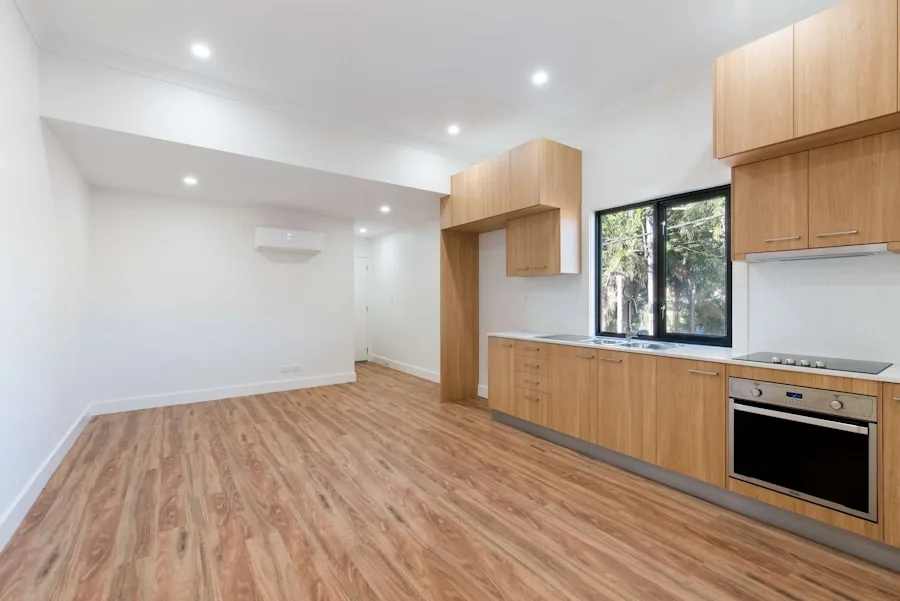
Deco Hardwood Floor screens and recoats hardwood floors for homeowners in Philadelphia and within 50 miles of it, abrading the existing finish with a buffer and applying one fresh coat over it. A screen and recoat removes no wood and does not sand to bare wood. It is the right call when the finish is dull or lightly scratched and still continuous. It is the wrong call where wear has reached bare wood or where there are pet stains, and those floors need a full refinish.
At a glance
- What it is
- Abrading the existing finish and adding a coat over it
- Right when
- The finish is dull or lightly scratched and the wood is untouched
- Wrong when
- Wear has reached bare wood anywhere, or there are pet stains
- Wood removed
- None. The wear layer is not consumed
- Material
- Finish only
When a recoat is the right answer, and when it is a waste of money
It works when the damage stops at the finish, and it fails the moment wear has reached bare wood anywhere in the room.
The test is simple and you can do it yourself. Find the traffic lane, the path from the door to the kitchen, and look at it in raking light. If the finish is dull and scratched but still continuous, a recoat will restore it. If you can see wood that has gone gray or darkened where the coating is gone, a recoat will seal that damage in permanently.
Pet stains are the other disqualifier. Urine goes through the finish into the wood, and sometimes into the subfloor. Coating over it traps it.
Recoating is the lowest ticket work we do. We tell you when it is the right call because a floor we recoat today is a floor we refinish properly in five years, and a floor we refinish badly today is a floor somebody replaces.
Why adhesion decides whether it lasts
The new coat is bonding to the old one, so anything sitting on that old finish has to come off first.
Acrylic waxes, oil soaps and some cleaning products leave a residue that a new finish will not stick to. The failure is not immediate. It shows up as peeling in the traffic lanes a few months later, and the fix at that point is a full sand.
We test adhesion before committing, and there are floors we decline to recoat for exactly this reason. A recoat that peels costs the customer more than the refinish they avoided.
Signs your floor needs a screen and recoat, not a refinish
A screen and recoat fits a floor whose finish is tired and whose wood has not been touched. If every sign below describes your floor and you see no gray wood, ask for the recoat before the refinish.
The floor is dull but the color is even
The shine is gone from the middle of the room and the color underneath has not changed. That is wear in the coating, and the coating can be renewed.
Fine scratches that do not catch a nail
Light scratching from chairs, shoes and grit sits in the finish, not in the wood. A fresh coat fills and disguises it. Deeper cuts stay visible.
Traffic lanes look flatter than the edges
The path from the door to the kitchen is duller than the floor along the walls, and in raking light the finish there is still unbroken. That is the right time.
Years since the last refinish
The floor was sanded and finished some years ago and has had nothing since. A recoat before the coating wears through spares the wood a sanding.
Not much wood left to sand
An old floor that has been sanded several times, or an engineered floor with a thin wear layer, has little to give. A recoat renews it and removes no wood.
You need the rooms back quickly
A sale, a new tenant or a family that cannot give up the rooms for long. There is no sanding to bare wood and one coat to cure.
How the work runs
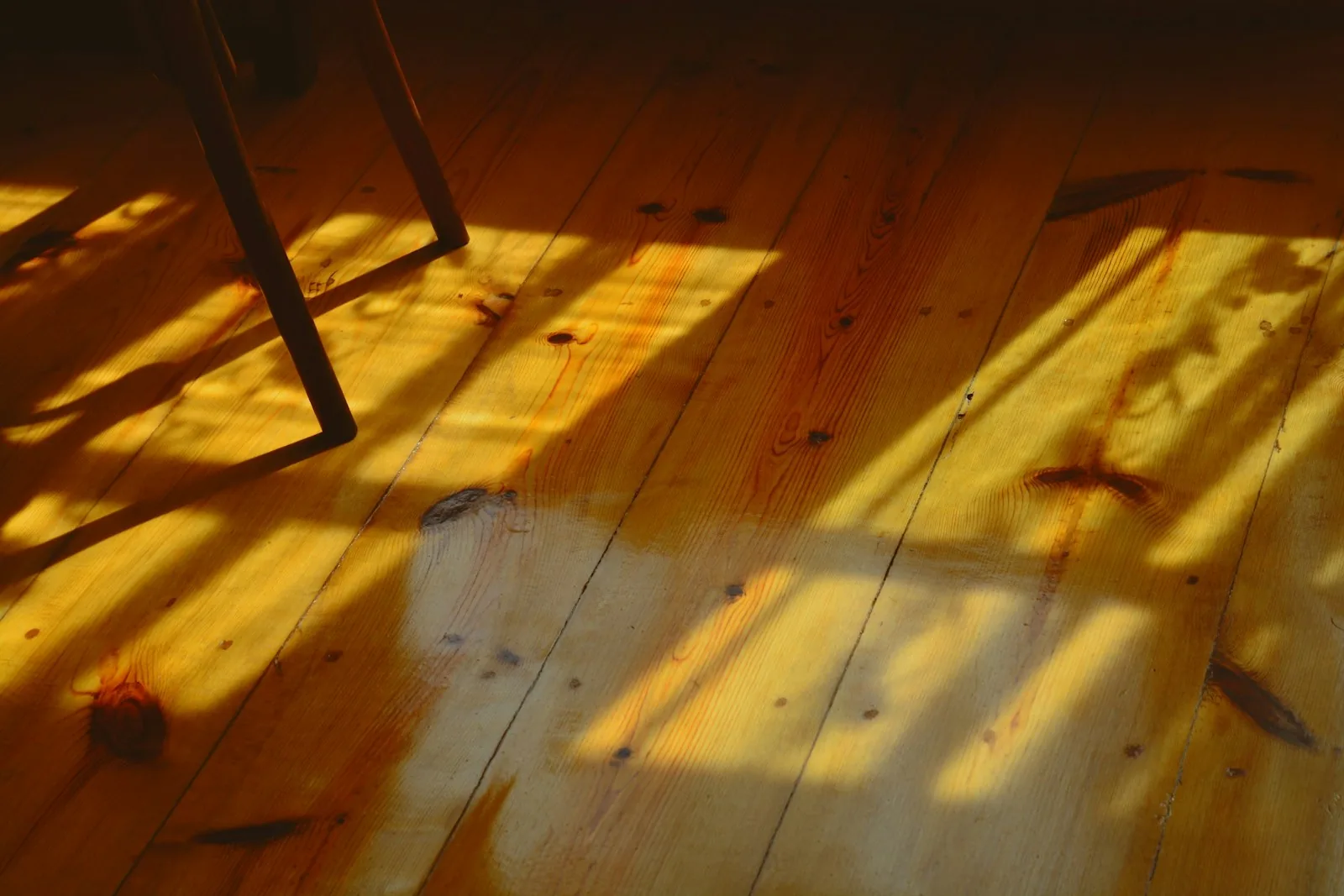
We test the floor
Traffic lanes checked for wear through, and adhesion tested where residue is likely.Room cleared and cleaned
The surface has to be genuinely clean or the coat will not bond.Screening
A buffer with abrasive opens the existing finish so the new coat can key into it.Coat applied
One coat of the specified finish.
What a screen and recoat includes
It includes the tests that decide whether the floor qualifies, the cleaning, the screening and one coat of finish. It does not change the color, remove damage in the wood, or go ahead on a floor that fails the adhesion test.
Included
- A look at the floor in person, in raking light, before anything is quoted.
- Checking the traffic lanes for wear that has reached bare wood.
- An adhesion test wherever wax, polish or oil soap residue is likely.
- Clearing the room and cleaning the surface so the coat can bond.
- Screening the existing finish with a buffer and abrasive.
- One coat of the finish specified in the quote.
Not included, or quoted separately
- A color change. Stain needs bare wood, and a recoat leaves the old finish in place.
- Removing deep scratches, dents, gray wood or pet stains. Nothing is sanded away.
- Flattening cupped or uneven boards. That takes a sander, not a buffer.
- Coating a floor that fails the adhesion test. We decline those instead of covering the problem.
What changes the cost of a screen and recoat
We price a screen and recoat after seeing the floor. It is the lowest cost work we do, and what moves it is the area, the state of the existing finish and whether that finish was applied on site or at a factory.
| What changes it | How it moves the price | Example |
|---|---|---|
| Floor area | More floor is more cleaning, more time on the buffer and more finish. The work scales closely with the area. | A whole first floor coated in one visit is a larger job than a single bedroom. |
| State of the existing finish | Residue from wax, oil soap or polish means more cleaning and testing, and it can rule the recoat out altogether. | A floor cleaned for years with an acrylic polish may fail the adhesion test and need a full sand instead. |
| Site finished or prefinished | Factory finishes with aluminum oxide are hard and need more abrasion before they accept a new coat. | A prefinished floor with beveled edges is a different job than a site finished oak floor of the same size. |
| Finish product | The coat is one product, named in the quote. Different finishes carry different material costs and different cure times. | A waterborne coat puts the room back in use sooner than an oil-modified one. |
| Layout and room contents | Hallways, closets and rooms that cannot be fully emptied slow the buffer down and add work at the edges. | Three connected rooms with clear floors go faster than the same area broken up by built-ins and narrow halls. |
What to ask before you pay for a screen and recoat
A recoat is cheap and fast, which makes it easy to sell on a floor that will not hold it. These six questions find out whether the contractor has checked the two things that make a recoat fail.
Have you checked the traffic lanes for wear to bare wood?
A good contractor looks at the lanes in raking light before quoting. Coating over gray or darkened wood seals that damage in, and the only repair afterward is a full sand.
Will you test adhesion before coating the whole floor?
The right answer is yes, in the places where residue is likely. Without a test, peeling in the traffic lanes a few months later is the first sign anything was wrong.
Do you want to know what I have cleaned this floor with?
A contractor who asks about oil soap, wax and polish understands why recoats fail. One who does not ask is counting on the new coat to stick to whatever is there.
Which finish goes down, by product name?
A named product can be looked up and compared. It also tells you how long the room stays closed, because the cure time belongs to the product, not to the contractor.
Which scratches will still show when you are done?
An honest answer points at the deep ones and says they stay. A recoat fills fine surface scratching and removes nothing that has cut into the wood.
Would you tell me if this floor needs a full refinish instead?
The answer should come with a reason you can see for yourself in the traffic lane. A contractor who recoats every floor that is offered is selling the coat, not the result.
Why homeowners hire Deco Hardwood Floor
Deco Hardwood Floor is owner operated: the person who quotes screen & recoat is the person responsible for it, and the material comes with the labor in one number.
Material and labor in one number
We buy the flooring direct from the distributor and pass the store price through, so you are not sourcing wood on your own between quotes.
Samples come to your house
Samples and larger offcuts come to you, so the color gets chosen in your own light instead of under a showroom lamp.
Stairs and railings built in house
Treads, risers, handrails and newel posts are drawn and built by our own crew. Most flooring crews subcontract stair work or decline it.
The owner quotes the job
The person who measures your floor is the person responsible for the work. There is no salesperson in between.
Measured before it is promised
Remaining thickness is measured at the edge of a board before we say a floor can be sanded, and no price is firm before we have seen the room.
Told straight, including the limits
Vacuum extraction catches most of the sanding dust and not all of it. We tell you that before the job instead of after.
More about who we are and what we will not claim on the About Deco Hardwood Floor page.
Questions about screen & recoat
How long does a screen and recoat last?
It depends on traffic, but it is maintenance rather than restoration. Done on the right schedule it postpones a full refinish considerably, because each recoat spares the wear layer that sanding consumes.
Can you recoat a floor that has waxed areas?
Usually not without addressing the wax first. New finish does not bond to wax, and the failure appears months later as peeling in the traffic lanes.
Will a recoat remove scratches?
It fills and disguises fine surface scratching. Anything that has cut into the wood stays visible, because nothing is being sanded away.
Can I recoat a prefinished floor?
Sometimes. Factory finishes with aluminum oxide are hard and need proper abrasion to accept a new coat, and some have a bevel that changes the look. It is a per-floor answer.
Screen and recoat or full refinish: how do I choose?
Choose by where the damage stops. A screen and recoat works when the wear is in the finish only: dull, lightly scratched, still continuous. A full refinish is needed when wear has reached bare wood anywhere, when there are pet stains, or when you want another color. Deco Hardwood Floor checks the traffic lanes in raking light and tells you which one the floor needs, even when it is the smaller job.
Is a screen and recoat worth it?
Yes, on a floor that qualifies. A screen and recoat is maintenance: it renews the coating that takes the wear and it removes no wood, so the floor can still be sanded properly later. It is not worth it on a floor with bare spots or residue, because the coat either seals damage in or peels, and then the full refinish you were avoiding has to be done anyway.
Can a screen and recoat change the color of my floor?
No. A screen and recoat leaves the old finish and the color under it in place, and stain only works on bare wood. A fresh coat does make the floor look deeper and more even, because a dull, scratched surface scatters light. If you want the floor lighter, darker or less orange, that is a full sand, with the color chosen on samples made on your own floor.
How long does a screen and recoat take?
Much less time than a full refinish, because there is no sanding to bare wood and only one coat to cure. How long a screen and recoat takes on your floor depends on the area, on how much cleaning the surface needs, and on the cure time of the product. Deco Hardwood Floor gives you the walk-on and furniture schedule for the specific finish before starting.
What can go wrong with a screen and recoat?
Two things, and both are decided before the coat goes down. The first is peeling: a screen and recoat over wax, oil soap or polish residue does not bond, and it lifts in the traffic lanes months later. The second is coating over wood that is already gray, which locks the damage under new finish. In either case the repair is a full sand.
How do I get my floor ready for a screen and recoat?
Stop using oil soap, polish and any product that promises shine, and tell us what has been on the floor. For a screen and recoat the surface has to be clean in the literal sense, so plain cleaning helps and anything that leaves a film hurts. Clear the room completely, closets included. Keep pets and children off the floor until the coat has cured.
Screen & Recoat terms, defined
- abrasion
- The light scuffing of an existing finish with a buffer and an abrasive screen or pad. It dulls and opens the surface so a new coat has something to grip. No wood is removed.
- buff and coat
- Another trade name for a screen and recoat: the existing finish is abraded with a buffer and a fresh coat of finish is applied over it.
- adhesion
- The bond between a new coat of finish and the old one beneath it. It depends on a clean, abraded surface, and when it fails the new coat peels.
- contaminant
- Any residue on the old finish that stops a new coat from bonding. Acrylic wax, oil soap and some cleaning products are the usual ones.
The rules behind this work
From the blog
How long refinishing takes, and when you can walk on it
Sanding is the predictable part. The calendar is set by the finish, and walkable is not the same day as cured.How to clean hardwood floors without damaging the finish
You are cleaning a coating, not a piece of wood. Most damage we are called to fix was done with a mop and a product that promised shine.
Related work
Send a photo and we will tell you what you are looking at
Screen & Recoat starts with someone reading the house. We quote every job ourselves, with no salesperson in between, and a photo of the floor gets you a straight answer faster than a form does.
