Stairs & Railings
Stair Refinishing in Philadelphia, PA
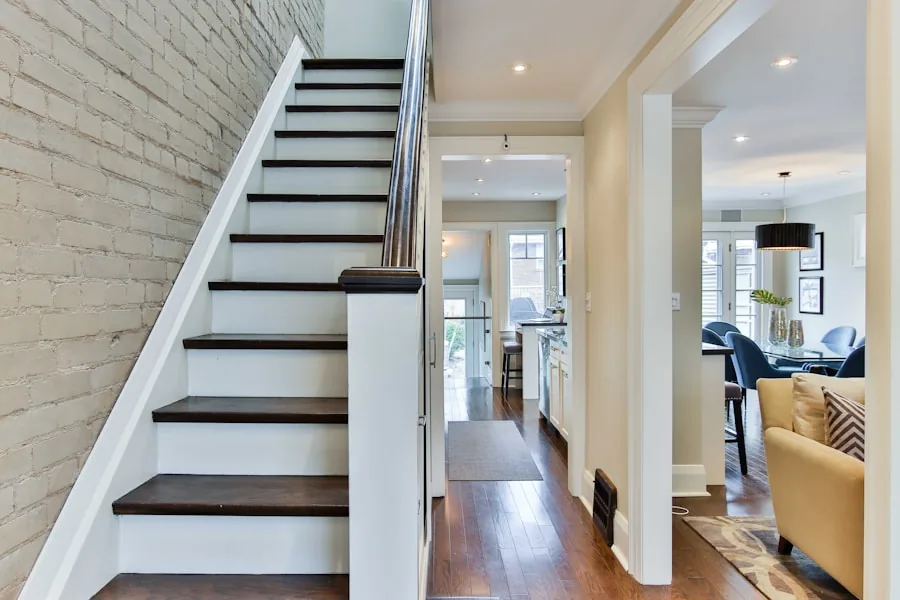
Stairs wear faster than any floor in the house, because every trip through it lands on the same fourteen surfaces. Refinishing them is mostly hand work: a drum sander cannot reach a tread, and the nosing, the return and the corner where the tread meets the skirt all get done by hand. It takes longer per square foot than a floor, and it is worth doing before the wear reaches bare wood.
In short
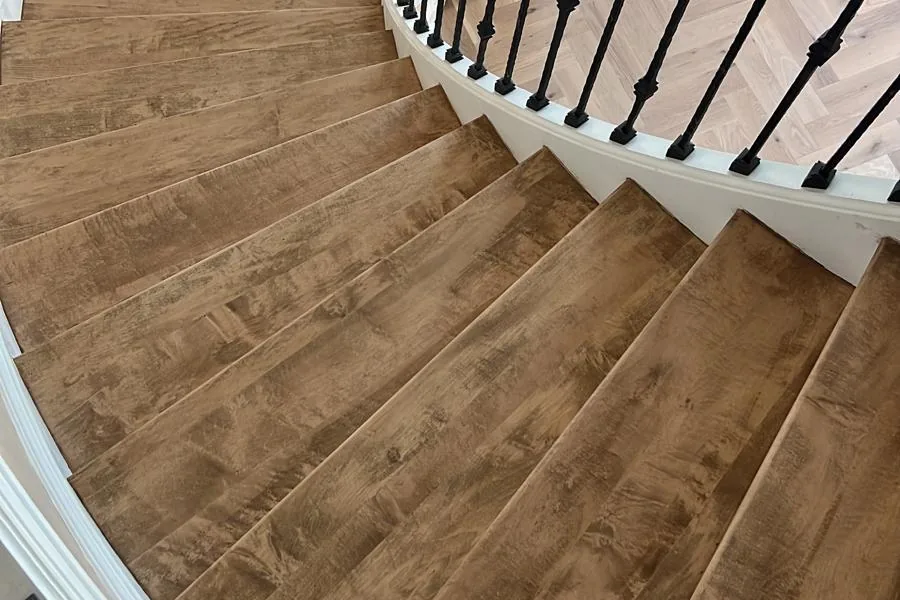
Deco Hardwood Floor refinishes hardwood stairs for homeowners in Philadelphia and within 50 miles of it, sanding treads, risers and nosings mostly by hand. Stair refinishing removes the worn finish from a sound stair and replaces it with new stain and new coats. It is the right call while the wear is still in the finish and has not flattened the nosing into bare wood. The result is the same staircase with its profile intact, matched to the floor on a sample before any stain goes on the treads.
At a glance
- What it is
- Sanding and refinishing treads, risers and the visible stringer
- Mostly
- Hand work. Machines do not reach most of a staircase
- Wear point
- The nosing, which is where every footfall lands
- Right when
- The finish is worn but the treads are sound
- Access
- The staircase is out of service while coats cure
Why stairs wear out before floors do
Every trip between levels concentrates on the same narrow strip of each tread, so a staircase absorbs traffic that a floor spreads out.
A hallway distributes footfall across its whole width. A staircase does not: people land in the same place on every step, and that place is the nosing, the rounded front edge that takes the impact.
So the failure pattern is predictable. The nosing goes first, then the middle of the tread, while the risers and the edges still look new. Catching it at the nosing stage is the difference between refinishing and retreading.
What hand sanding actually means here
The machines used on a floor cannot reach a tread, a return or the corner where the tread meets the skirt board, so most of the surface is worked by hand.
A drum sander is designed to run across an open floor. On a staircase there is no open floor: there are fourteen small horizontal surfaces, fourteen vertical ones, and a great many inside corners. Orbital sanders and scrapers reach some of it and hands reach the rest.
That is why stair refinishing costs what it costs relative to its square footage, and why the price per square foot of a floor is a misleading way to think about it.
Living in the house while it happens
The staircase is unavailable while coats cure, which is a bigger imposition than a room being unavailable.
A floor being refinished means one room is closed. A staircase being refinished means the second floor is closed, and that is a genuinely different thing to ask of a household.
Where the house has only one staircase we plan around it: staging the work, scheduling around the cure times of the specific finish, and telling you the schedule before we start rather than discovering it together.
How do you know when stairs need refinishing?
Stairs need refinishing when the finish has worn through in the walking path and the wood underneath is still sound. The signs show first at the front edge of each tread, and each one below can be checked by eye or with a drop of water.
A dull path up the middle
The center of each tread looks flat and gray while the edges near the wall still shine. The finish is thinning where feet land, and the wood is next.
Pale nosings
The rounded front edge of the tread has gone lighter than the rest. That is finish worn away at the point of impact, and it is the stage to act at.
Water darkens the wood
A drop of water on the worn area soaks in and leaves a dark spot instead of beading. The finish is no longer sealing the wood in that place.
Scratches that catch a fingernail
Surface scuffs sit in the finish. Scratches you can feel have reached the wood, and only sanding takes them out before new coats go on.
A stair that no longer matches
The floors were refinished and the stair was not, so the two meet at the landing in different colors or sheens. Stairs can be refinished on their own.
Finish gone dark or yellow
Old oil finishes amber with age, and layers of polish hold dirt. If cleaning does not bring the wood back, the color is in the finish and it has to come off.
How the work runs
We look at the nosings
That is where wear shows first, and it decides refinish versus retread.Structure checked
Loose treads and squeaks addressed before finishing, because finish does not fix movement.Sanding, mostly by hand
Machines where they reach, hand work everywhere else.Finish applied
Coats on the cure schedule of the specified product.Staged so you can use the house
Where there is only one staircase, the schedule is built around that.
What stair refinishing includes, and what it does not
Stair refinishing covers checking the structure, sanding the treads, risers and visible stringer, and applying stain and finish. It does not put wood back where the nosing has worn away, and balusters are a separate decision because each one is done by hand.
Included
- A look at every nosing, to confirm the treads can be refinished.
- Loose treads and squeaks addressed before any finish is applied.
- Sanding of treads, risers and the visible stringer, by machine where it reaches and by hand elsewhere.
- A stain sample tested against your existing floor before the stair is stained.
- Finish coats applied by hand, on the cure schedule of the product.
- A schedule built around access when the house has only one staircase.
Not included, or quoted separately
- New treads. If the nosing is worn into the wood, that is retreading and a different quote.
- Balusters, unless you ask for them. Each one is sanded by hand, and it adds real time.
- A promise of a house without dust. Vacuum extraction catches most of it, not all of it.
What changes the price of stair refinishing
The price is set after we see the stair, not from its square footage. It moves most with the number of steps, with whether the balusters are refinished too, and with what has to come off the wood before new finish can go on.
| What changes it | How it moves the price | Example |
|---|---|---|
| Number of steps | Each step is a tread, a riser and several inside corners worked by hand, so the count of steps drives the hours. | A flight of fourteen risers has fourteen horizontal surfaces, fourteen vertical ones and a corner at every joint. |
| Balusters in or out | Refinishing balusters means sanding and coating each one by hand. Painting them, or leaving them alone, removes most of that time. | Treads and handrail refinished, with risers and balusters painted, is a common and faster version of the same job. |
| What is on the wood | Paint, old carpet staples and tack strip holes take more work to deal with than a worn clear finish, and all of it comes before stain. | A hardwood stair that was painted or carpeted over needs more preparation than one with a tired coat of polyurethane. |
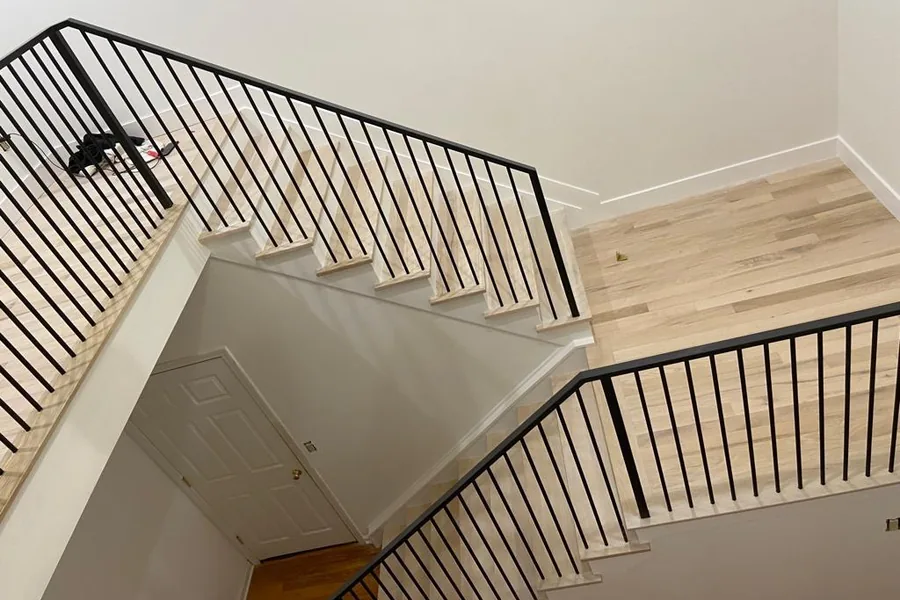
| Open or closed stair | An open side adds the tread returns and the outside face of the stringer, plus more edges to work around the balusters. | A stair between two walls has fewer surfaces than one open to a hallway with balusters set into every tread. |
| Color change and finish type | Changing the color adds stain and sample work. The finish chosen sets the cure time between coats, which sets how the job is staged. | Waterborne finish lets you back on the stair far sooner than oil-modified polyurethane, so the two are scheduled differently. |
What to ask before hiring a stair refinishing contractor
Ask these six questions of anyone who quotes your stairs, including us. Stair refinishing is hand work on a part of the house you cannot do without, so the answers that matter are about method, access and what happens if the treads are too far gone.
How will you sand the nosings and the corners?
A drum sander cannot reach a tread. A good answer describes orbital sanders, scrapers and hand work. A vague one usually means old finish left in the corner where the tread meets the skirt board.
Can these treads be refinished, or do they need replacing?
If the nosing is worn into the wood, sanding flattens its profile. A contractor who checks each nosing before quoting keeps you from paying to refinish treads that needed retreading.
How long will we be off the stairs, and when?
The honest answer depends on the finish and its cure time, and it comes with a plan for a house with one staircase. A single number given before seeing the stair is a guess.
Will you test the stain on a sample first?
Stair treads can take stain differently from the floor next to them. A sample held against the existing floor shows the match before the stain is on every tread.
My house was built before 1978. How does that change the sanding?
In houses built before 1978 the federal lead rule, EPA RRP at 40 CFR 745.85, governs how a sander runs. A contractor who has not heard of it is not following it.
What do you do about squeaks before finishing?
Finish does not fix movement. Loose treads and squeaks should be addressed before sanding, because fastening a tread afterwards means marking the new surface.
Why homeowners hire Deco Hardwood Floor
Deco Hardwood Floor is owner operated: the person who quotes stair refinishing is the person responsible for it, and the material comes with the labor in one number.
Material and labor in one number
We buy the flooring direct from the distributor and pass the store price through, so you are not sourcing wood on your own between quotes.
Samples come to your house
Samples and larger offcuts come to you, so the color gets chosen in your own light instead of under a showroom lamp.
Stairs and railings built in house
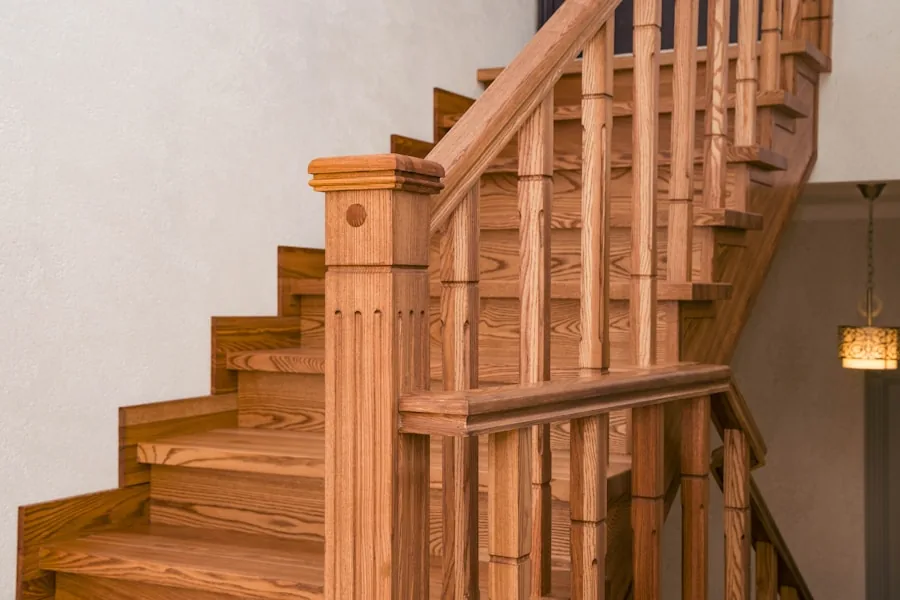
Treads, risers, handrails and newel posts are drawn and built by our own crew. Most flooring crews subcontract stair work or decline it.
The owner quotes the job
The person who measures your floor is the person responsible for the work. There is no salesperson in between.
Measured before it is promised
Remaining thickness is measured at the edge of a board before we say a floor can be sanded, and no price is firm before we have seen the room.
Told straight, including the limits
Vacuum extraction catches most of the sanding dust and not all of it. We tell you that before the job instead of after.
More about who we are and what we will not claim on the About Deco Hardwood Floor page.
Questions about stair refinishing
Can you refinish stairs without doing the whole floor?
Yes, and it is common. Matching the new stair finish to an existing floor finish is the part that takes care, and it gets tested on a sample first.
My treads are worn through at the front edge. Can they still be refinished?
If the wear has gone into the wood at the nosing, sanding it flat removes the profile. At that point retreading, which is fitting new hardwood treads over the existing structure, is usually the better answer.
How long will the stairs be out of use?
It depends on the finish. Waterborne products let you back on far sooner than oil-modified polyurethane. Where the house has one staircase we tell you the schedule before starting.
Do the balusters get refinished too?
They can be, and it adds real time, because each one is done by hand. Many customers paint the risers and balusters and refinish only the treads and handrail, which looks good and moves much faster.
Is it worth refinishing stairs, or should we replace the treads?
Refinishing is worth it when the treads are sound hardwood and the wear is in the finish. Stair refinishing keeps the stair you have and is less work than building over it. Replacement, called retreading, makes sense once the nosing is worn into the wood or the treads are cracked. Deco Hardwood Floor checks the nosings first, because they decide which of the two you need.
Waterborne or oil-modified polyurethane for stairs?
Either works on stairs, and the choice mostly changes the schedule and the color. Waterborne finish stays clearer and lets you back on the stair sooner. Oil-modified polyurethane adds an amber tone, takes longer between coats and smells stronger while it cures. For stair refinishing in a house with one staircase, cure time is usually what decides it.
Can the risers be painted and the treads stained?
Yes. Stair refinishing does not have to treat every surface the same way. Many customers have the treads and handrail refinished as wood and the risers and balusters painted. Surfaces that will be painted do not need to be sanded back to clean bare wood, which shortens the hand work. Say so at the estimate, so the quote covers the right surfaces.
Is stair refinishing safe around pets and children?
Keep pets and children off the stair and away from the work until the last coat has cured. Stair refinishing makes sanding dust, and vacuum extraction catches most of it, not all of it. Wet finish keeps paw prints and footprints. In a house built before 1978 the federal lead rule governs how the sander runs, which is one more reason to keep them clear.
What can go wrong with stair refinishing?
The common failures in stair refinishing are a flattened nosing, old finish left in the corners, and a stain that does not match the floor. The first comes from sanding a tread that should have been replaced. The second comes from skipping hand work. The third comes from skipping the sample. All three show on the finished stair, and none is corrected without sanding again.
What should we do before the crew arrives to refinish the stairs?
Clear the stair and both landings, and decide which floor each person will be on while coats cure. Before stair refinishing starts, take down pictures on the stair wall and move what you need for the day to the right level. Close off rooms that open onto the stair. Deco Hardwood Floor tells you the schedule before starting, so the closed periods are not a surprise.
Stair Refinishing by Philadelphia neighborhood
Stair Refinishing in the towns around Philadelphia
- Radnor, PA
- Wayne, PA
- Malvern, PA
- West Chester, PA
- Ardmore, PA
- Bryn Mawr, PA
- Villanova, PA
- Newtown, PA
- Media, PA
- Broomall, PA
- Upper Darby, PA
- King of Prussia, PA
- Conshohocken, PA
- Willow Grove, PA
- Horsham, PA
- Harleysville, PA
- Montgomeryville, PA
- Warminster, PA
- Doylestown, PA
- Cherry Hill, NJ
- Robbinsville, NJ
- Hamilton, NJ
- West Windsor, NJ
- Pike Creek, DE
- Hockessin, DE
- Greenville, DE
- Wilmington, DE
Stair Refinishing terms, defined
- hand sanding
- The removal of old finish with scrapers, sanding blocks and small sanders held in the hand, used wherever a floor machine cannot reach. On a staircase that is most of the surface.
- nosing
- The rounded front edge of a tread, projecting past the riser below it. Every footfall lands there, so its finish wears through before any other part of the stair.
- traffic wear
- The thinning of a finish where feet land again and again. On stairs it shows as a dull strip up the center of the treads and pale front edges, while the sides still shine.
- spindle
- Another name for a baluster, one of the upright members between the handrail and the treads or shoe rail. Refinishing them is slow because each is sanded by hand.
- newel post
- The heavy post at the bottom, top or turn of a stair that anchors the handrail. It is refinished together with the handrail so the two match.
From the blog
Refinishing and staining hardwood stairs
A staircase is the smallest floor in the house and the slowest one to refinish. What is under the carpet decides whether it can be done at all.Stair railing height: the code in PA, NJ and Delaware
Handrail and guard are two requirements on one railing, and the edition of the code that applies depends on which side of the river the house is on.
Related work
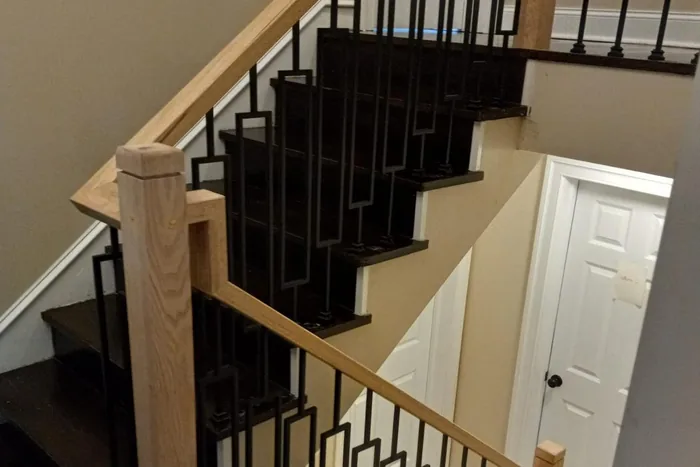
Custom Stair Installation
Treads, risers, stringers and skirt board, built to a drawing instead of a catalog page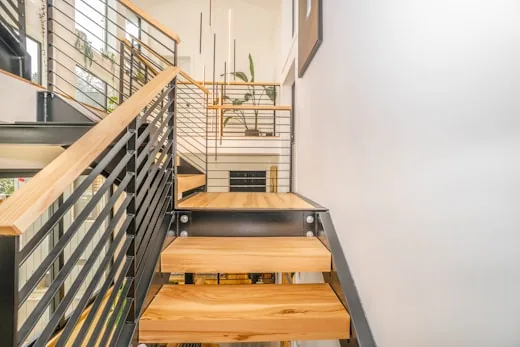
Carpet to Hardwood Stairs
Pulling carpet off a staircase and finding out what is underneath
Hardwood Floor Refinishing
Sand the old finish off, repair what needs repairing, and put a new finish down
Send a photo and we will tell you what you are looking at
Stair Refinishing starts with someone reading the house. We quote every job ourselves, with no salesperson in between, and a photo of the floor gets you a straight answer faster than a form does.
