
Flooring Materials
Prefinished vs Site-Finished Floors in Philadelphia, PA
Prefinished boards arrive already coated, with the finish applied and cured in a factory. Site finished boards arrive bare and are sanded flat and coated in your house. Most people are told the difference is dust and drying time. The difference that actually shows up in the floor is the seams, and whether the floor can ever be matched.

In short
Deco Hardwood Floor installs both prefinished and site finished hardwood floors for homeowners within 50 miles of Philadelphia, supplying the wood either way and sanding and coating on site with its own crew. Prefinished boards are coated in a factory, and site finished boards are sanded flat and coated in the house. Site finished is the right call when the new floor has to match an existing one, and prefinished is reasonable when the whole floor is new and the schedule is short. The lasting difference is a bevel at every board or one continuous plane.
At a glance
- Prefinished
- Coated in a factory, installed and walked on the same week
- Site finished
- Sanded flat in the room, then coated, then cured
- The real difference
- Micro bevel seams, and the ability to match a floor
- Dust
- Reduced by vacuum extraction, never zero, on either one
- Material
- Supplied by us either way, direct from the distributor
Prefinished floors have a seam at every board, by design
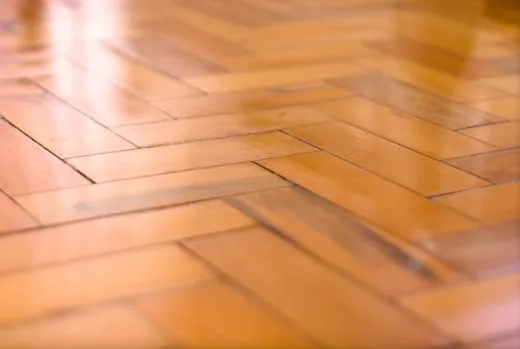
Because factory boards cannot be sanded flat as one surface after installation, each one carries a small bevel at the edge, and that bevel is a visible line and a place dirt collects.
The bevel is not a defect, it is the solution to a real problem: boards are never perfectly level with each other, and a factory finish cannot be sanded to hide the difference. The bevel makes the height change look intentional.
The consequence is a floor made of individual boards rather than one continuous plane. Some people prefer that look and choose it deliberately. Others do not notice until the floor is down and the light comes across it in the afternoon.
A site finished floor has no bevel, because the whole floor is sanded flat as one surface and then coated. The seams disappear, and the plane is continuous from wall to wall.
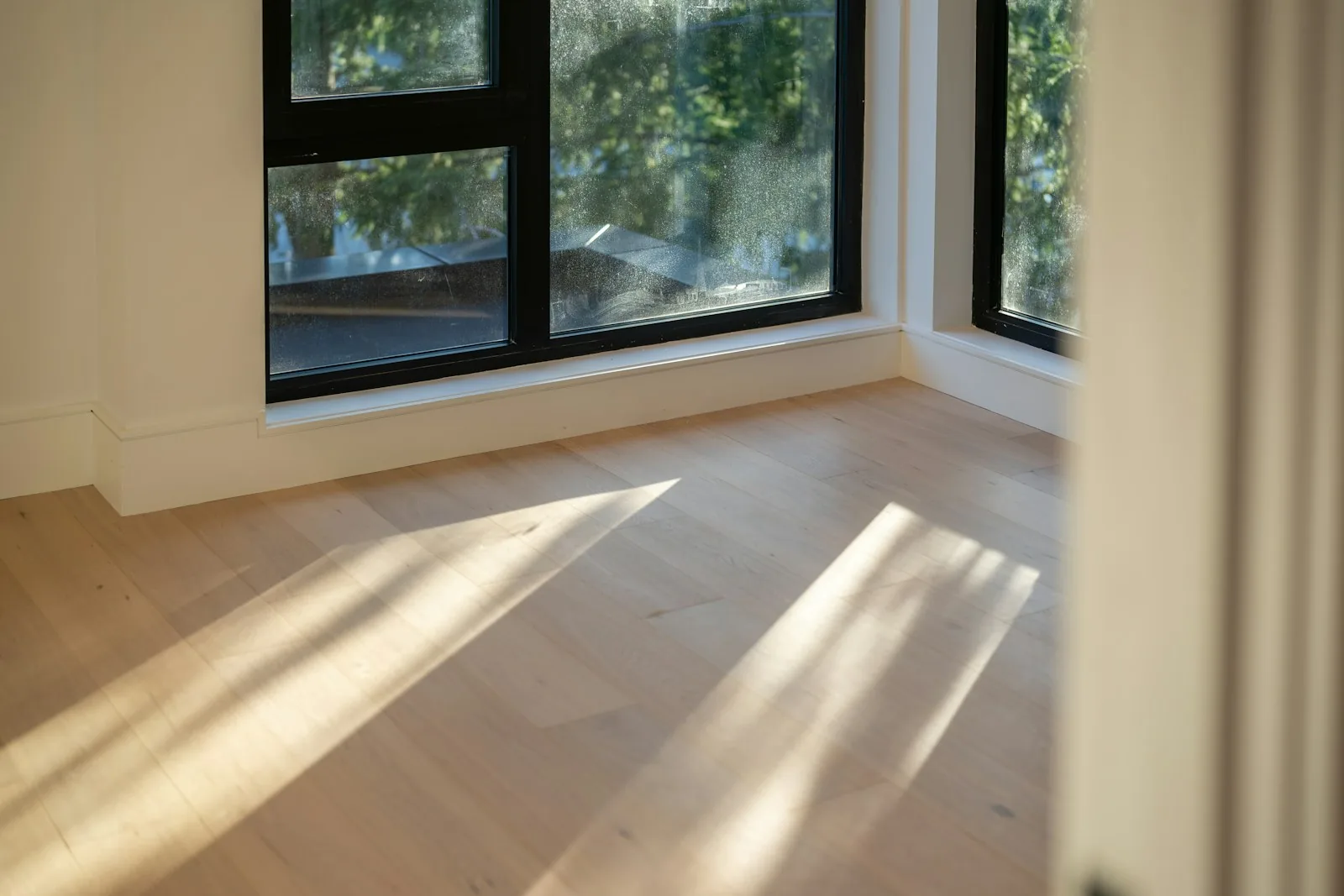
Look at a prefinished sample with light raking across it, not flat on. The bevel is the thing that will or will not bother you, and it only shows at a low angle.
Only one of the two can match a floor you already own
Matching an existing floor means sanding old and new together and finishing them as one, which is only possible when the new wood arrives bare.
This is the case that settles the question for most of the houses here. If you are extending a floor into a new room, opening up a wall, or repairing a section, a factory finished board will always read as a different floor beside the old one, no matter how close the color is.
Site finishing puts the old and the new under the same sander and the same coat, and the joint disappears. It is the only path to a floor that looks like it was always there.
Where the whole floor is new and nothing has to match, that advantage does not apply, and prefinished becomes a reasonable choice on its own terms.
Time and dust are the arguments people lead with, and they are the smaller ones
Prefinished is walkable sooner, and site finishing makes dust that vacuum extraction reduces but never eliminates, and both of those are days rather than years.
A prefinished floor is done when the last board goes down. A site finished floor needs sanding, coating and cure time before furniture comes back, and the schedule is real and worth planning around.
On dust, the honest line is that vacuum extraction catches most of it and not all of it. Anyone promising a dustless sanding job is selling a word, not a process, and we say so on the sanding page as well.
But both of those are inconveniences measured in days. The bevel and the ability to match are permanent properties of the floor you will live with. Weighing a week against twenty years is how people end up regretting the choice.
Prefinished or site finished: which is right for your floor?
Site finished is right when anything has to match or when you want one flat plane. Prefinished is right when the whole floor is new and the house cannot be given up for sanding and cure time. These six situations settle most cases.
You are adding to an existing floor
Choose site finished. Old and new boards go under the same sander and the same coat, which is the only way the joint between them disappears.
You want one flat surface
Choose site finished. Sanding the whole floor as one plane removes the height differences between boards, so there is no bevel for light or dirt to find.
You need a custom color or sheen
Choose site finished. The stain is tested on your own boards, and you pick the sheen and the product instead of taking what the factory made.
The house cannot be emptied for long
Choose prefinished. The floor is done when the last board goes down, with no sanding, no coats and no cure time before the furniture returns.
The whole floor is new
Either works. With nothing to match, prefinished stands on its own terms, and the choice comes down to whether the bevel bothers you in raking light.
The floor is engineered
Most engineered boards arrive prefinished, and a thin wear layer leaves little wood to sand on site. Here the factory finish is usually the practical answer.
How to choose between the two
Ask if anything has to match
If yes, site finished is the only real answer.Look at a sample in raking light
The bevel of a prefinished board only shows at a low angle.Count the days you can be out
Site finishing needs sanding, coating and cure time.Think about the whole floor
One continuous plane, or a floor made of individual boards.Decide on the finish
Site finishing lets you pick the sheen and the product.Plan the schedule
Either way, we give you the dates before we start.
What you get from us with either kind of floor
We supply the wood either way, bought direct from the distributor at the store price, and the same crew installs it. What differs is where the finish happens. Here is what both paths cover and what neither one solves.
Included
- Bare or prefinished boards bought direct from the distributor, at the store price.
- Samples brought to your house, to look at in raking light.
- An in person quote from the owner, after seeing the floor.
- On site finished floors: sanding flat, stain if wanted, and the finish coats.
- Vacuum extraction on the sander, which catches most of the dust.
- The dates for the work, given to you before we start.
Not included, or quoted separately
- A sanding job without any dust. Extraction catches most of it, not all.
- A prefinished floor without bevels. The seam at every board is part of the product.
- A factory board that blends into an existing floor. It reads as a different floor.
- A site finished floor that takes furniture the same day. Cure time is real.
What changes the price of prefinished vs site finished
The price is set after the owner sees the floor. With prefinished, the finish is inside the material cost. With site finishing, it is labor in your house: sanding, stain and coats. Which one comes out lower depends on the product and the room.
| What changes it | How it moves the price | Example |
|---|---|---|
| Where the finish is applied | Prefinished boards cost more as material and less as labor. Bare boards cost less as material and add sanding and coating labor. | The same species can carry a higher material line or a higher labor line, depending on the path. |
| Stain and number of coats | On site, a stained floor takes more steps than a natural one, and each extra coat adds time. | A natural finish on new oak is fewer steps than a dark stain that needs a sample approved first. |
| Matching an existing floor | Sanding the old floor together with the new one adds the old rooms to the job, which prefinished never requires and never achieves. | Extending a floor into an addition usually means refinishing the adjoining room as well. |
| Finish product | Site finishing lets you choose the product and the sheen, and finish systems differ in cost and in cure time. | A waterborne finish and an oil based finish are different products with different costs and different waits. |
| Factory finish quality | Among prefinished floors, a tougher factory finish and a cleaner bevel raise the cost of the material. | Two prefinished oak floors of the same grade can differ in price only because of the finish applied at the factory. |
What to ask before you choose prefinished or site finished
These six questions work with any contractor or store, not only with us. They are about the things that stay in the floor for decades, not the week of inconvenience during the work.
Does this new floor have to meet an existing one?
If it does, only bare wood sanded together with the old floor will match. An installer who says a prefinished board will blend in is describing the showroom, not your doorway.
Can I see this prefinished sample in raking light?
The bevel only shows at a low angle. A good seller lets you take the sample home and look across it toward a window. A bad one shows it flat on a counter.
What finish will you use on site, and what sheen?
A good answer names the product type, such as waterborne or oil based, and the number of coats. 'Poly' with no detail tells you nothing about cure time or color.
How is the dust handled during sanding?
The honest answer is vacuum extraction that catches most of it, not all. In a house built before 1978, the federal lead rule also governs how the sander runs.
When can we walk on it, and when can furniture go back?
Dry and cured are different stages. A good answer gives separate dates for walking, for furniture and for rugs. One date for all three hides the cure time.
Can this prefinished floor be sanded later?
Solid prefinished usually can. Engineered prefinished depends on the wear layer. Ask also what it takes to get through the factory finish, which is harder to sand off than a site finish.
Why homeowners hire Deco Hardwood Floor
Deco Hardwood Floor is owner operated: the person who quotes prefinished vs site-finished is the person responsible for it, and the material comes with the labor in one number.
Material and labor in one number
We buy the flooring direct from the distributor and pass the store price through, so you are not sourcing wood on your own between quotes.
Samples come to your house
Samples and larger offcuts come to you, so the color gets chosen in your own light instead of under a showroom lamp.
Stairs and railings built in house
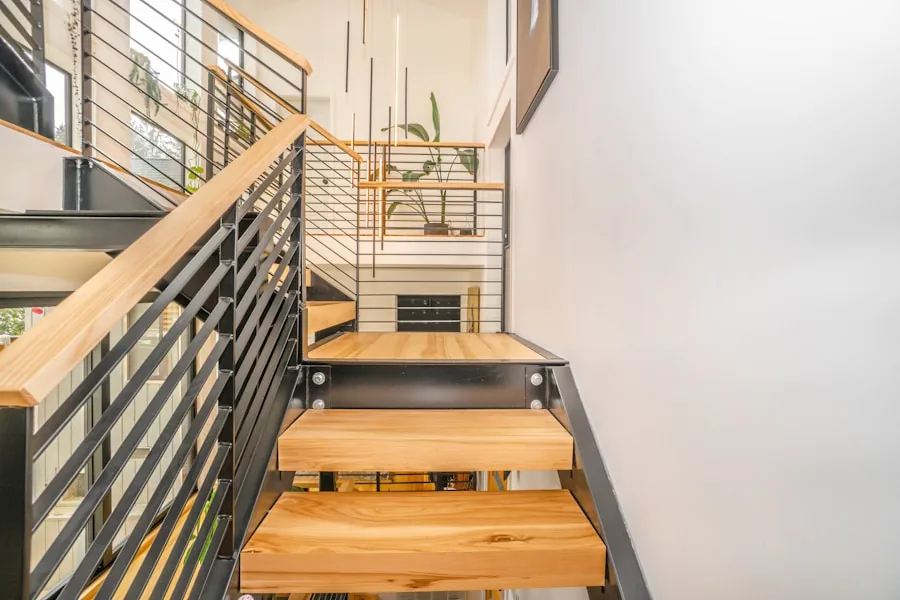
Treads, risers, handrails and newel posts are drawn and built by our own crew. Most flooring crews subcontract stair work or decline it.
The owner quotes the job
The person who measures your floor is the person responsible for the work. There is no salesperson in between.
Measured before it is promised
Remaining thickness is measured at the edge of a board before we say a floor can be sanded, and no price is firm before we have seen the room.
Told straight, including the limits
Vacuum extraction catches most of the sanding dust and not all of it. We tell you that before the job instead of after.
More about who we are and what we will not claim on the About Deco Hardwood Floor page.
Questions about prefinished vs site-finished
Which one lasts longer?
Factory finishes are cured under conditions a house cannot reproduce and are usually harder. A site finished floor can be recoated without replacing anything, which over decades matters more than the initial hardness.
Can prefinished floors be refinished later?
Solid prefinished, usually yes, and the bevel disappears when it is sanded flat. Engineered prefinished depends entirely on the wear layer.
Is site finishing really dusty?
There is dust. Vacuum extraction catches most of it and not all of it, and anyone promising zero is selling a word.
I am adding a room to an existing floor. Which one?
Site finished, with the old and the new sanded and coated together. A factory board will read as a different floor no matter how close the color is.
How long until we can walk on it?
Prefinished, the same day the last board goes down. Site finished depends on the coating, and we give you the actual dates rather than an average.
Is site finishing worth the extra time?
It is worth it when something has to match or when the bevel would bother you. A site finished floor costs you days of sanding, coating and cure time, and gives you one continuous plane and a color chosen on your own boards. When the whole floor is new and neither of those matters to you, prefinished is a reasonable choice.
Can we live in the house while a floor is site finished?
Often, with planning. The rooms being site finished are closed while they are sanded and coated and until the finish can take foot traffic. The question is whether you can reach a bedroom, a bathroom and the kitchen without crossing them. Deco Hardwood Floor gives you the dates before the work starts so that can be planned.
Is prefinished or site finished better with pets and children?
Neither is immune. A prefinished factory finish is usually harder, but the bevels collect grit and spills at every seam. A site finished floor has no bevels to hold dirt, and it can be recoated when it dulls. During site finishing, pets and children have to stay off the floor until it is ready for traffic.
Does a prefinished floor cost less than a site finished one?
Not reliably. A prefinished floor puts the finish into the price of the material and removes the sanding and coating labor. A site finished floor does the opposite. Which total is lower depends on the product, the stain and the room. Deco Hardwood Floor does not quote a firm price before seeing the floor, and supplies the wood at the distributor's store price either way.
Can a damaged board be repaired on each type of floor?
Yes on both, with different results. On a prefinished floor the damaged board is cut out and a new factory board goes in, and it only blends if the same product is still available. On a site finished floor the new board goes in bare and is sanded and coated in place, which usually means recoating the area around it.
Prefinished vs Site-Finished terms, defined
- micro-bevel
- A small angled edge milled on each prefinished board. It hides slight height differences between boards and leaves a visible line at every seam.
- aluminum oxide
- A hard mineral added to factory applied finishes to resist abrasion. It is one reason a prefinished surface is usually harder than a site finish, and harder to sand off.
- flush joint
- A seam where two boards meet at the same height with no bevel. On a site finished floor it comes from sanding the whole floor as one surface.
- cure time
- The period a finish needs to reach full hardness after it is dry to the touch. A floor can be walked on before it can take furniture or rugs.
From the blog
Solid or engineered, and why the basement decides
The choice is presented as taste. It is usually settled by what is under the room, before anyone gets to taste.Wide plank flooring, and what changes with the width
A seven inch plank moves about three times as much as a narrow strip. Everything about choosing and installing one follows from that.
Related work

Send a photo and we will tell you what you are looking at
Prefinished vs Site-Finished starts with someone reading the house. We quote every job ourselves, with no salesperson in between, and a photo of the floor gets you a straight answer faster than a form does.
