The short version
- Wood moves across its width, in proportion to the width. A seven inch plank shows about three times the seasonal gap of a two and a quarter inch strip.
- The installation guideline is stricter for plank: flooring and subfloor within two percentage points of moisture content for boards three inches and wider, against four for narrow strip.
- Engineered wide plank is more stable than solid and is the right choice over concrete, over radiant heat and in houses with no humidity control.
- Solid wide plank works on a wood subfloor above grade when the house holds steady humidity through the year.
- In our data at /data/, 216 of 635 places have a median home built in 1980 or later and 113 before 1950, and the right wide plank floor is different in each.
What counts as wide plank, and why width matters
Boards three inches and wider are treated as plank, and the wider the board, the more each one moves with the seasons.
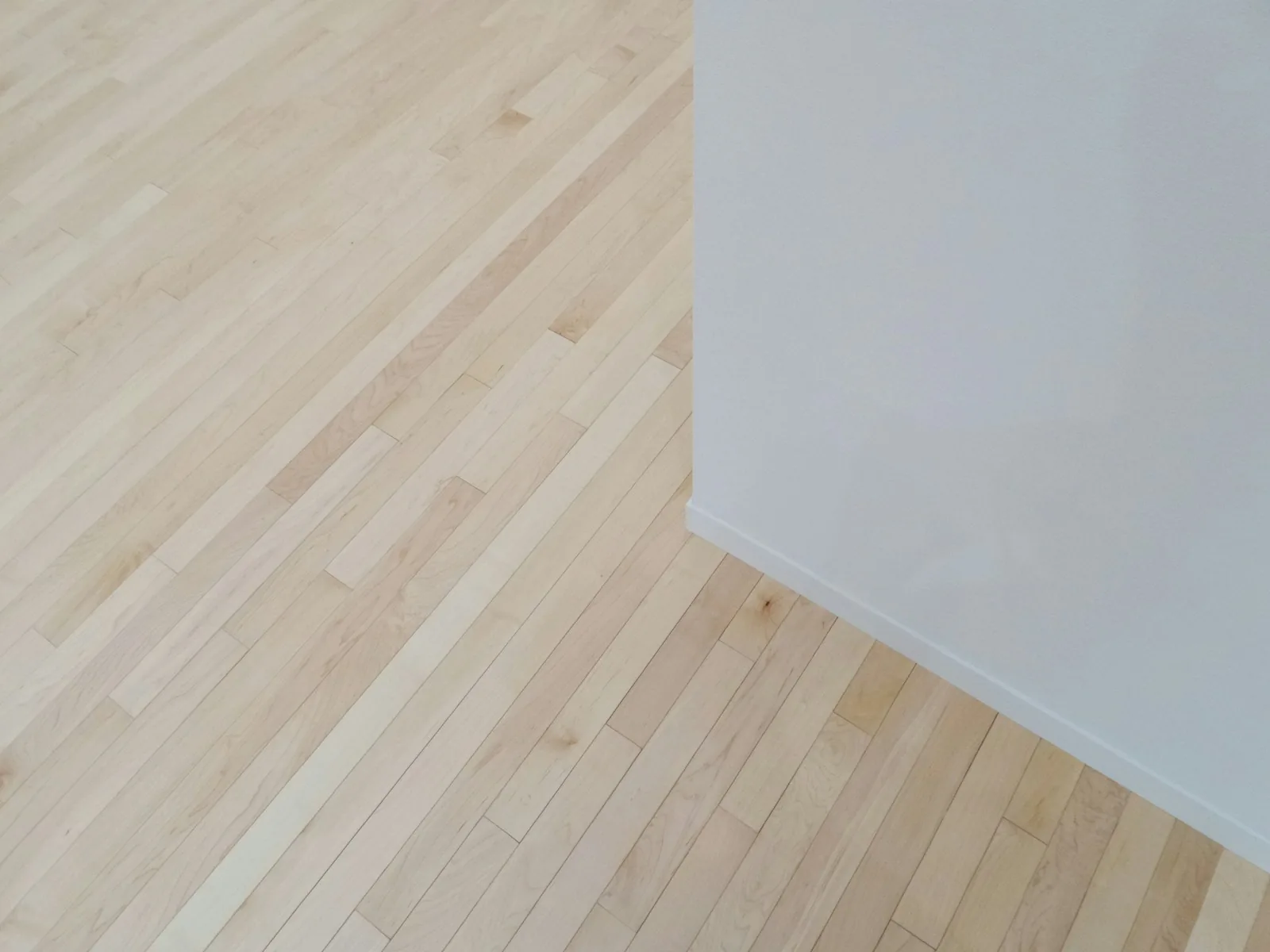
For most of the twentieth century the standard hardwood floor in this region was strip: two and a quarter inches wide, sometimes narrower. Today five, seven and even ten inch boards are common requests. The trade draws the line at three inches. Below it is strip, and at or above it is plank.
Wood takes on and gives up moisture with the air around it, and it swells and shrinks across the grain as it does. The amount of movement is a proportion of the width. A narrow strip moves a little, and that little is spread across many seams. A wide plank moves more, and there are fewer seams to share it.
The result is visible. In a dry winter a strip floor shows hairline gaps. A seven inch plank floor under the same conditions shows gaps about three times as wide. In a humid summer the same boards press against each other, and if they have nowhere to go, the edges rise.
The showroom sample is one board at one humidity. The floor is three hundred boards across four seasons.
The moisture rule is stricter for plank
Before installation, plank flooring and the subfloor should be within two percentage points of moisture content of each other, where narrow strip is allowed four.
This comes from the installation guidelines of the National Wood Flooring Association. For solid strip under three inches wide, the difference between the flooring and the subfloor should be no more than four percentage points. For solid plank three inches and wider, no more than two. The tolerance halves because the same error produces a larger gap in a wider board.
The guideline also asks for a minimum of twenty readings per thousand square feet. The average matters less than the outliers. One high reading in a corner means something is happening there, and a floor laid over it will show it.
Acclimation means the wood has reached the moisture content it will live at. Leaving boxes in the house for a set number of days does not prove that. With wide plank we meter the boards and the subfloor and install when the numbers agree.
| Board | Moisture difference allowed, flooring to subfloor | What it means in practice |
|---|---|---|
| Solid strip, under 3 inches | No more than 4 percentage points | The most forgiving floor to install and to live with |
| Solid plank, 3 inches and wider | No more than 2 percentage points | Metered carefully. Seasonal gaps are part of the floor. |
| Engineered wide plank | Per the manufacturer of the product | More stable. The right choice over concrete or radiant heat. |
Solid or engineered in a wide board
Engineered wide plank moves less because its core is cross laid, and solid wide plank can be sanded more times, so the choice depends on what is under the room and how the house is conditioned.
An engineered plank has a layer of real wood on top of a core built from plies with the grain running in alternating directions. Each layer restrains the next, so the board stays flatter and gaps less than a solid board of the same width.
That stability is why engineered is the answer over a concrete slab, below grade, over radiant heat, and in any house that swings between very dry and very humid. The limit is the wear layer. A thick one can be sanded a few times over the life of the floor. A thin one cannot be sanded at all, and that is worth deciding on purpose.
Solid wide plank is one piece of wood through its full thickness. It can be refinished four or five times, and it has a presence underfoot that some people want. It needs a wood subfloor, above grade, in a house that keeps its humidity within a reasonable range all year.
How wide plank is installed differently
Wide solid planks are commonly fastened with nails and adhesive together, over a subfloor that has been checked for flatness and moisture more carefully than for strip.
A narrow strip is held well by nails alone, since there is a fastener every couple of inches across the floor. A seven inch plank has the same nails at its edge and a wide unsupported middle. Adding flooring adhesive under the board, a method the trade calls glue assist, holds the plank flat across its width and reduces cupping.
The subfloor matters more as boards get wider. A dip that a strip floor bridges without complaint shows as a rocking plank. So the subfloor is checked with a straightedge and corrected, and loose panels are fastened before the first row goes down.
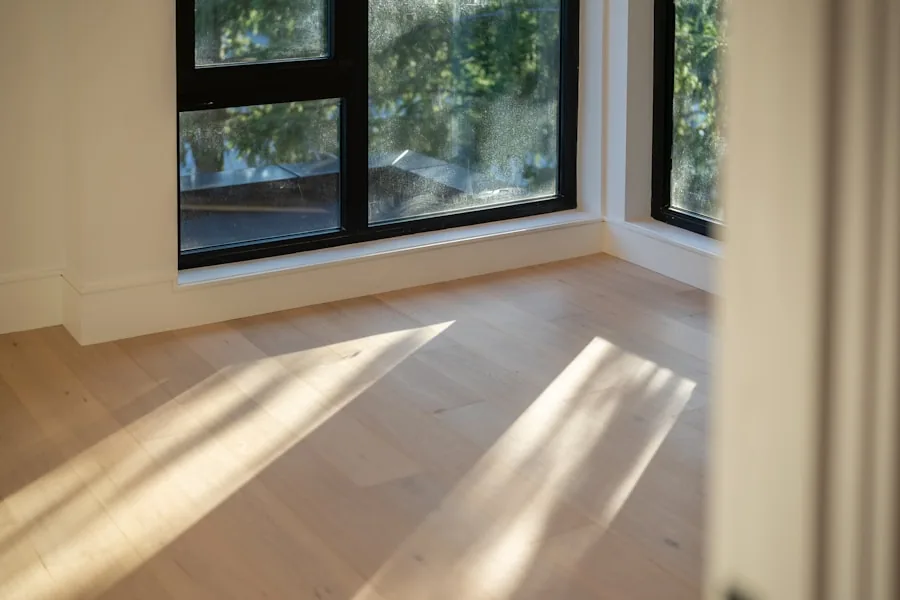
Expansion space is left at the walls and covered by the baseboard. With wide plank this is not optional. A floor fitted tight to the walls has nowhere to move in July, and it lifts.
The cut of the board changes how it behaves
Quartersawn and rift sawn boards move less across their width than plain sawn boards, which makes them a better fit for wide plank where stability matters.
Most flooring is plain sawn. The log is cut straight through, which gives the familiar arched grain and the most yield. It also gives the most movement across the face of the board.
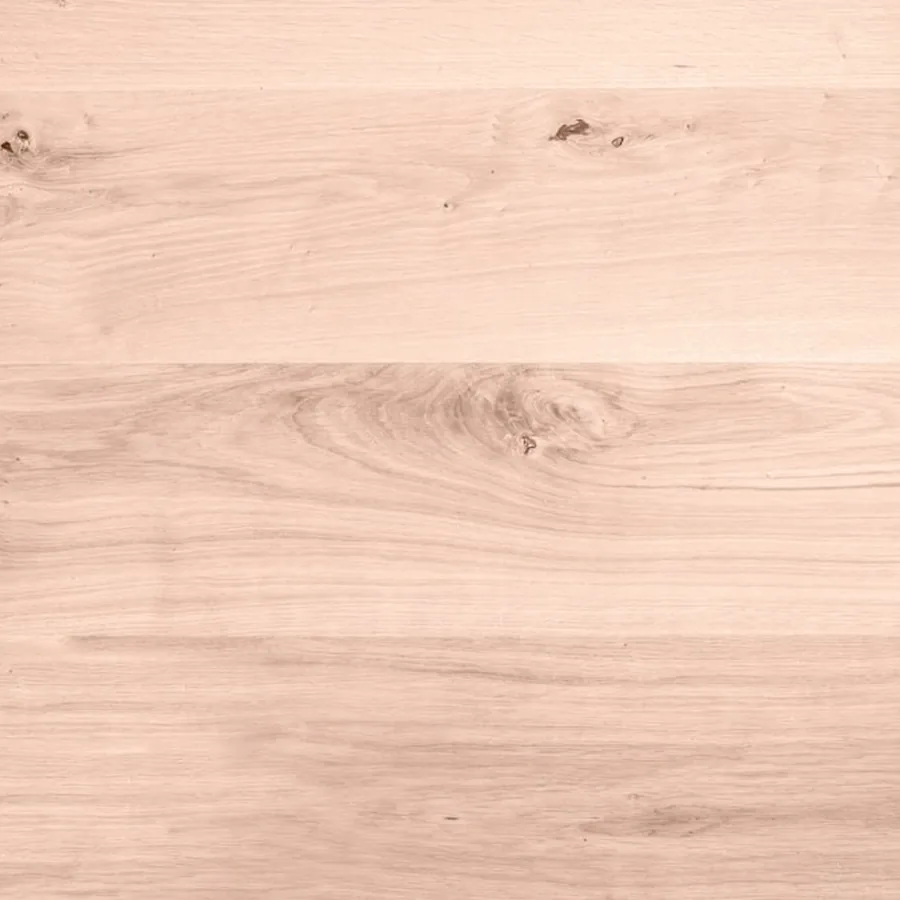
Quartersawn and rift sawn boards are cut so the growth rings stand closer to vertical. They show straighter grain, and in oak the flecked figure many people recognize from old furniture. They move noticeably less in width, and they cost more because the cutting wastes more of the log.
For a wide plank floor in a house with marginal humidity control, a rift and quartered board is one way to get the look with less movement. Species matters as well. White oak is more stable than hickory or maple, which is one reason it has become the default for wide plank.
Wide boards in old houses
The widest floors in the region are in its oldest houses, where they were laid as plain pine boards and face nailed, and they are restored differently from oak strip.
Before narrow strip oak became standard, floors were wide softwood boards, often pine, nailed through the face straight into the joists. They survive in the oldest houses, and on the upper floors of later ones, where builders kept using wide pine after the main rooms had moved to oak.
The dataset we publish at /data/ covers 635 towns and Philadelphia neighborhoods. In 138 of them, 35 percent or more of the housing predates 1940, and those are the places where we most often find original wide boards under carpet or paint.
Restoring them is its own job. Pine is soft and dents easily, the gaps between boards are part of the floor and are not all filled, and the face nails are set below the surface before any sanding. It takes stain unevenly, so the color is tested first. Done well, it is a floor no new product imitates.
Living with a wide plank floor
Seasonal gaps are normal in a wide plank floor, and keeping indoor humidity steady is the single thing that reduces them most.
A wide plank floor that shows small gaps in February and closes in July is behaving correctly. Gaps that appear in winter should not be filled, since the filler is crushed when the boards swell again.
What can be controlled is the range. A humidifier through the heating season and air conditioning or a dehumidifier in summer keep the boards from swinging between extremes. In a house with no humidity control at all, wide solid plank is a harder floor to keep looking the way it did on day one.
This is the conversation to have before choosing the board. If the house is a shore property closed up for the winter, or an old rowhouse with radiators and no humidifier, engineered plank or a narrower board will be the better floor to live with.
Choosing by the house you have
The right wide plank floor follows from the subfloor, the heating and the age of the house, and those are checked before a product is chosen.
In the 216 places in our data at /data/ where the median home dates from 1980 or later, ground floors are often concrete slab. Wide plank there means engineered, glued or floated over a slab that has been tested for moisture.
In the 113 places where the median home predates 1950, the floors are wood framed and the heating is often radiators, which makes very dry winter air. Solid plank can work on those subfloors. It needs humidity control, a moderate width and careful acclimation. A five inch board is far more forgiving than an eight inch one.
We look at the subfloor, meter it, ask how the house is heated and cooled, and bring samples to see in your own light. The estimate is free, and it is the point at which changing your mind about the width costs nothing.