Flooring Materials
Vinyl Plank & Tile Flooring in Philadelphia, PA
Vinyl plank is waterproof all the way through, not just on the surface. That is the entire case for it, and in the rooms where it matters it is a strong one. It is also not wood, it will never be wood, and we would rather say that plainly than sell it as one.
In short
Deco Hardwood Floor supplies and installs luxury vinyl plank and tile for homeowners within 50 miles of Philadelphia, buying the material direct from the distributor and preparing the subfloor before any plank goes down. Vinyl plank is a waterproof plank printed and textured to look like wood, and it is not wood. It is the right call in bathrooms, laundry rooms, finished basements and other floors that take water. The result is a surface that standing water will not swell, which cannot be refinished and is replaced when it wears out.
At a glance
- What it is
- A waterproof plank, printed and textured to look like wood
- Where it wins
- Bathrooms, laundry, basements, and floors that take spills
- Where it loses
- It cannot be refinished, and it does not add what wood adds
- Still matters
- The subfloor. Vinyl telegraphs every ridge under it
- Material
- Supplied by us, direct from the distributor
Waterproof is a real advantage, and it is narrower than the ads suggest
Waterproof means the plank itself will not swell if water sits on it, which solves the bathroom and the laundry room, and does nothing about water that gets underneath it.
A vinyl plank can sit in a puddle and be fine. That is genuinely useful and it is why this material took over bathrooms, laundry rooms and finished basements in a decade.
What waterproof does not mean is that the floor assembly is waterproof. Water that runs down a wall or comes up through a slab travels under the planks, where it has nowhere to go and nothing to dry it. The plank survives; what is under it may not.
So the honest version is: vinyl removes the risk of the surface being destroyed by water, and does not remove the need to find out where the water came from.
If a floor keeps getting wet, the material is the second question. The first one is why.
The subfloor matters more here, not less
Vinyl plank is thin and flexible, so it takes the shape of whatever is under it, and a ridge or a high seam telegraphs through as a visible line within months.
A solid board is stiff enough to bridge a small imperfection. A vinyl plank is not: it lies down onto the substrate and shows what is there. Old adhesive, a proud fastener, a seam in the underlayment, a dip where a wall used to be.
That means the preparation is the job. Flattening, skim coating where needed, and getting the substrate clean is most of the labor, and it is the part that separates a floor that still looks right in three years from one that shows every line of the room below.
It is also why a price that sounds too good usually is: what got left out is almost always the preparation, and it is invisible on the day the floor goes down.
What it does not do
It cannot be refinished, it does not gain character with age, and it does not carry the value that a wood floor carries in this housing stock.
A wood floor is repairable indefinitely. A vinyl floor is replaceable, and when it wears or a plank is damaged the answer is a new plank, which will not have aged the way its neighbours did.
In a region where most of the housing is old and most buyers expect wood on the main floor, that matters beyond looks. Putting vinyl where wood is expected can read as a downgrade even when the product itself is good.
Where the room is wet, below grade, or hard on a floor in a way wood cannot answer, none of that applies and vinyl is simply the right material. We will tell you which situation you are in.
When is luxury vinyl plank the right choice?
Vinyl plank is the right choice when water is the main risk to the floor and refinishing does not matter to you. It solves a wet surface. It does not solve a wet room. Six situations point to it.
The room gets wet every day
Bathrooms and laundry rooms put water on the floor as a matter of routine. A vinyl plank can sit in a puddle without swelling, which no wood floor can.
It is a finished basement
Below grade, moisture comes up through the slab all year. A vinyl plank does not swell or cup from it, though the slab still has to be looked at first.
A rental or a room that takes abuse
Where tenants, pets or a mudroom entrance are hard on the floor, a material that takes spills and is replaced plank by plank makes sense.
The subfloor can be made flat
Vinyl takes the shape of whatever is under it. It is the right call only where the substrate can be flattened and cleaned before the planks go down.
Refinishing is not part of the plan
Vinyl is replaced, never sanded. If you want a floor to bring back in twenty years, this is the wrong material. If not, that limit costs you nothing.
The budget rules out wood for now
Vinyl usually costs less to buy than a wood floor. That saving is real only if the subfloor preparation stays in the quote instead of being left out.
How to decide if vinyl is the right call here
Name the reason
Water, a slab, or a budget. Each points somewhere different.Look at the room's future
Main floor of an old house is where wood pays back.Inspect the substrate
Vinyl shows what is under it. This is where the labor goes.Flatten and clean
Skim coat where needed. The preparation is the job.Choose the thickness
Thicker planks bridge more and feel less hollow.Install and trim
Expansion gap at the walls, covered by base or quarter round.
What you get when we supply your vinyl plank
We supply the vinyl plank together with the labor, bought direct from the distributor at the store price, and we prepare the subfloor the way we would for wood. Here is what that covers and what vinyl does not solve.
Included
- Vinyl plank or tile bought direct from the distributor, at the store price.
- Samples brought to your house, seen against your own walls and light.
- An in person quote from the owner, after seeing the room and the substrate.
- A look at the subfloor before the material is chosen.
- Flattening, skim coating where needed, and cleaning of the substrate.
- Installation with an expansion gap at the walls, covered by base or quarter round.
Not included, or quoted separately
- A firm price before we have seen the subfloor.
- A waterproof room. Water can still travel under the planks and sit there.
- Finding and fixing the leak or the damp slab that is wetting the floor.
- Refinishing, ever. A worn or damaged plank is replaced, not sanded.
What changes the price of vinyl plank flooring
The price is set after the owner sees the room and the subfloor. Preparation of the substrate moves it most, because vinyl shows everything under it. The thickness of the plank and of its wear layer move the material side.
| What changes it | How it moves the price | Example |
|---|---|---|
| Subfloor preparation | Flattening, skim coating and removing old adhesive are most of the labor on a vinyl floor, and the amount depends on what is found. | A kitchen with ridges of old adhesive under the previous floor takes more preparation than clean, flat plywood. |
| Plank thickness and core | Thicker planks cost more, bridge more and feel less hollow. The type of rigid core changes the cost as well. | A thin flexible plank and a thick rigid core plank are different lines at the distributor. |
| Wear layer | A thicker clear wear layer, measured in mil, costs more and takes more traffic before the printed layer shows wear. | A plank chosen for a rental hallway usually carries a thicker wear layer than one chosen for a guest bathroom. |
| Removing the old floor | Taking up the existing flooring, and whatever is glued under it, adds labor before the preparation can start. | Old flooring that was fully glued down leaves adhesive that has to come off or be covered. |
| Room layout and trim | Many doorways, closets, toilets and cabinets mean more cuts. Base or quarter round to cover the expansion gap is part of the job. | A small bathroom with a toilet, a vanity and a tub edge has more cutting per square foot than an open basement. |
What to ask before you buy vinyl plank flooring
These six questions work with any seller or installer, not only with us. Most of them are about what is under the floor, because that is where a vinyl job goes right or wrong.
What preparation of the subfloor is in this price?
Preparation is most of the labor and it is invisible on installation day. A good answer lists flattening, skim coating and cleaning. A price that sounds too low usually left this out.
How thick is the wear layer, in mil?
The wear layer is the clear layer that takes the traffic. A good answer is a number from the specification sheet. Total plank thickness is a different number and does not answer this.
Is the core SPC or WPC?
The two rigid cores behave differently. SPC is denser and resists dents. WPC is softer and quieter underfoot. A seller who cannot say which one it is has not read the specification.
Does the plank have an attached pad?
An attached pad changes what may go under the floor. Most manufacturers do not allow a second underlayment beneath it, and stacking the two can make the joints flex.
What happens if water gets under the floor?
The plank is waterproof and the assembly is not. A good answer admits that water under the planks stays there, and talks about where it would come from in your room.
Can a single damaged plank be replaced later?
It depends on how the floor locks together and on having spare material. A good answer tells you to keep a box from the same production run, because later batches can differ in color.
Why homeowners hire Deco Hardwood Floor
Deco Hardwood Floor is owner operated: the person who quotes vinyl plank & tile is the person responsible for it, and the material comes with the labor in one number.
Material and labor in one number
We buy the flooring direct from the distributor and pass the store price through, so you are not sourcing wood on your own between quotes.
Samples come to your house
Samples and larger offcuts come to you, so the color gets chosen in your own light instead of under a showroom lamp.
Stairs and railings built in house
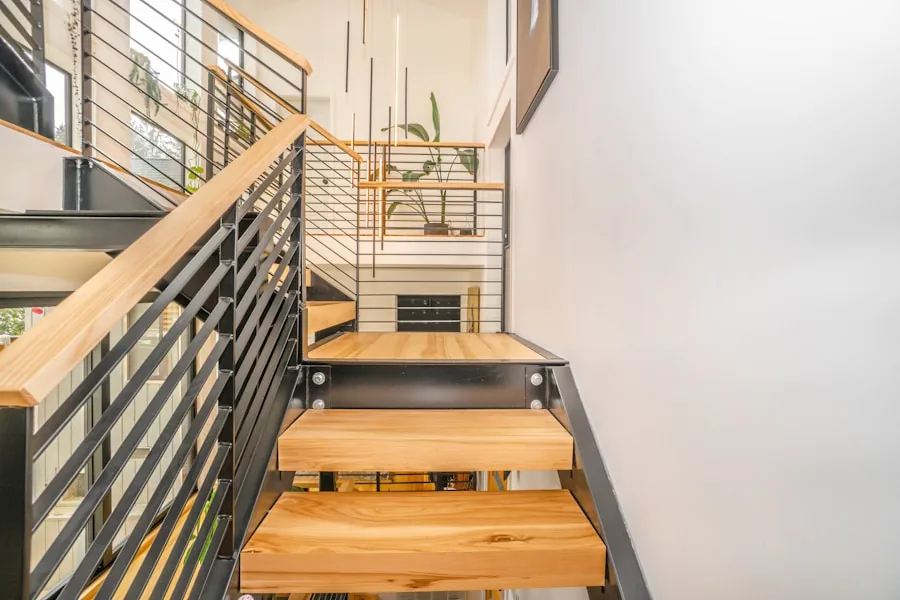
Treads, risers, handrails and newel posts are drawn and built by our own crew. Most flooring crews subcontract stair work or decline it.
The owner quotes the job
The person who measures your floor is the person responsible for the work. There is no salesperson in between.
Measured before it is promised
Remaining thickness is measured at the edge of a board before we say a floor can be sanded, and no price is firm before we have seen the room.
Told straight, including the limits
Vacuum extraction catches most of the sanding dust and not all of it. We tell you that before the job instead of after.
More about who we are and what we will not claim on the About Deco Hardwood Floor page.
Questions about vinyl plank & tile
Is vinyl plank really waterproof?
The plank is. The assembly is not: water can still travel underneath it and sit there. It solves a wet surface, not a wet room.
Can vinyl plank be refinished?
No. When it wears out it gets replaced. That is the main trade against wood.
Why does my vinyl floor show lines from the old floor?
Because it is thin and flexible enough to take the shape of what is under it. That is a substrate preparation problem, not a product defect.
Is it a bad choice for the main floor?
Not bad, but worth thinking about. In this housing stock buyers expect wood on the main floor, and wood is the floor that can be brought back rather than replaced.
Do you install it?
Yes, with the same preparation we would do for wood, which on vinyl matters more rather than less.
Vinyl plank or engineered hardwood: which is better for a basement?
Both can go below grade, and they answer different questions. Vinyl plank will not swell if water sits on it, so it suits a basement that sees a damp floor or holds the laundry. Engineered hardwood gives you real wood and wants a slab that tests dry. If the basement has ever taken water, vinyl plank is the safer material.
How long does vinyl plank flooring last?
It lasts until the wear layer is worn through, and then it is replaced. How soon that happens depends on the thickness of the wear layer, the traffic and grit in the room, and how flat the substrate was made. Vinyl plank cannot be sanded or recoated the way a wood floor can, so its first life is its only one.
Can vinyl plank go over my existing floor?
Sometimes, if the existing floor is flat, firmly attached and dry. Vinyl plank takes the shape of what is under it, so grout lines, seams and ridges show through unless they are filled first. Soft or loose flooring has to come up. Deco Hardwood Floor decides this in person, because it cannot be judged from a photo of the surface.
Is vinyl plank a good floor with pets and children?
Yes, for spills and accidents. Liquid sits on top of a vinyl plank without swelling it, and the surface wipes clean. It is not indestructible. Grit and claws wear the clear layer over time, sharp objects can gouge it, and heavy furniture can dent the softer cores. A thicker wear layer buys more time.
What can go wrong with a vinyl plank floor?
Most problems come from under the planks. Ridges and seams in the substrate show through as lines, an uneven floor makes the joints flex and separate, and water that gets underneath stays there. Strong direct sun can also make vinyl plank expand. Deco Hardwood Floor treats the preparation as the job, which is where these problems are prevented.
Vinyl terms, defined
- SPC
- A rigid vinyl plank core made of limestone powder and plastic, short for stone plastic composite. It is dense and thin, and it resists dents better than a foamed core.
- WPC
- A rigid vinyl plank core made with a foamed plastic composite. It is thicker, lighter and softer underfoot than SPC, and it dents more easily under heavy furniture.
- rigid core
- A stiff center layer in a vinyl plank, either SPC or WPC, that lets the planks click together and float. It bridges small flaws better than flexible vinyl does.
- wear layer mil
- The thickness of the clear protective layer on top of a vinyl plank, stated in mil. One mil is one thousandth of an inch, which is not a millimeter.
- attached pad
- A layer of underlayment bonded to the back of each plank at the factory. It softens sound and footfall and usually takes the place of a separate underlayment.
From the blog
Solid or engineered, and why the basement decides
The choice is presented as taste. It is usually settled by what is under the room, before anyone gets to taste.Wide plank flooring, and what changes with the width
A seven inch plank moves about three times as much as a narrow strip. Everything about choosing and installing one follows from that.
Related work

Send a photo and we will tell you what you are looking at
Vinyl Plank & Tile starts with someone reading the house. We quote every job ourselves, with no salesperson in between, and a photo of the floor gets you a straight answer faster than a form does.
