

Refinishing a floor in a house that is older than the advice you are reading
The question everyone opens with is what refinishing costs. The question that actually decides the job is whether there is enough wood left to sand, and in this housing stock that is not a formality. Philadelphia is 82.8 percent pre-1978 and 40.0 percent pre-1940, which means most floors here have already been sanded at least once by somebody, and some have been sanded three times.
The short version
- Only the wood above the tongue can be sanded, roughly a quarter inch on a traditional solid floor.
- In the 635 towns and neighborhoods in our data at /data/, 60.5 percent of all housing predates 1978, and in 45 of Philadelphia's 132 neighborhoods it is above 90 percent.
- Pre-1978 housing brings the federal lead rule into the job, and that rule is about the equipment, not about tidiness.
- Dustless is a description of a vacuum system, not a promise of zero dust.
- A screen and recoat renews the finish without removing wood, and it is the right answer more often than people are offered it.
How much floor is actually left
Only the wood above the tongue can be removed, which is roughly a quarter inch on a traditional solid floor, and that quarter inch is the entire budget for every sanding the floor will ever get.
A solid board is milled with a tongue on one edge and a groove on the other, and the fastener goes through the tongue. Everything above that line is wear layer. Everything below it is structure, and cutting into it means the floor stops holding.
That budget buys four or five sandings across the life of the floor. In a house built in 1925 that has changed hands four times, some of those sandings have already been spent, and nobody left a record. So the measurement happens at the edge of a board, usually at a doorway or a heat register where the edge is exposed, before anyone quotes a full sanding.
This is the single most common place where a cheap quote turns expensive. A crew that does not measure and sands anyway can take a floor that had one refinish left and end it.
A floor that has already given up two sandings is a different job from one that has given up none, and the difference is invisible from standing height.
Why the age of the housing changes the work
Pre-1940 stock is usually narrow strip oak nailed straight to the joists with no plywood in between, and pre-1978 stock brings a federal rule that governs how the sander is allowed to be built.
The data we publish at /data/ puts numbers on this rather than leaving it as a feeling. Across the 635 towns and Philadelphia neighborhoods in our dataset, 60.5 percent of 3,899,409 housing units predate 1978. Philadelphia itself is 82.8 percent, and 45 of its 132 residential neighborhoods are above 90 percent.
In practice that means two things. The first is construction: older floors are frequently narrow strip oak, sometimes heart pine on upper floors, laid directly over joists. There is no subfloor to absorb error, and squeaks are structural rather than cosmetic.
The second is regulatory. Paid work that disturbs painted surfaces in pre-1978 housing falls under 40 CFR Part 745, and floor sanding reaches painted surfaces more often than people expect, because the edger runs to the baseboard and the shoe molding. That rule specifies containment and vacuum equipment at the point of generation. It is a description of how a machine has to be assembled, not a suggestion about cleanliness.
| Area | Share built before 1978 |
|---|---|
| City of Philadelphia | 82.8 percent |
| Philadelphia neighborhoods above 90 percent | 45 of 132 |
| Whole service area, 3,899,409 units | 60.5 percent |
Dustless, and what the word actually covers
Vacuum extraction catches most of the dust and never all of it, and any crew promising zero is selling a word rather than describing a process.
A modern sanding setup connects the machine to a vacuum that collects at the point where the dust is made. It changes the job substantially. It does not make the job dust free, and the fine airborne fraction is the part no shroud captures completely.
We say this in writing because the alternative is an argument on day two. What you should expect is containment at the doorways, a machine with extraction attached, and a house that needs cleaning afterwards anyway, just far less of it.
In pre-1978 housing the same equipment is doing double duty, because it is also what the federal rule requires. That is a good thing to understand as a homeowner: the dust control is not a premium upgrade in an old house, it is the baseline the law describes.
Ask what the machine is connected to, not whether the job is dustless. The first question has an answer.
The option most people are not offered
When the finish is worn but the wood underneath is not, a screen and recoat renews the surface without removing any wood, and it costs a fraction of a full sanding.
Screening abrades the existing finish just enough for a new coat to bond, and then a new coat goes down. No wood comes off, so the sanding budget is untouched and the floor keeps every refinish it had left.
It works when the damage is in the finish: dullness, light scratching, traffic paths. It does not work when the damage is in the wood, which is why deep gouges, pet stains and cupping are outside its range.
The reason it is under-offered is straightforward: it is a smaller job. We would rather do the small one when the small one is correct, because a floor that gets recoated every several years is a floor that may never need a full sanding again.
Questions
How do I know if my floor can be sanded again?
It gets measured at the edge of a board, usually at a doorway or a heat register. What matters is the wood remaining above the tongue, and a floor that looks fine can be at the end of its budget.
Is dustless sanding real?
Vacuum extraction is real and it makes a large difference. Zero dust is not. Anyone promising it is describing a word rather than a process.
Does my house being old change the price?
It changes the job. Pre-1978 housing brings the federal lead rule into how the equipment has to be set up, and older floors are more likely to need repair before sanding.
What is a screen and recoat?
Abrading the existing finish and putting a new coat on, without removing wood. It renews a worn finish and leaves the sanding budget intact, and it is the right answer more often than it is offered.
Where do your housing numbers come from?
The American Community Survey 2023 five year estimates, which we aggregated for 635 towns and Philadelphia neighborhoods and published at /data/ under CC BY 4.0. You can download it and check.
Sources and references
- Deco Hardwood Floor, housing stock of the Philadelphia region (CC BY 4.0). https://decohardwoodfloor.com/data/
- 40 CFR 745.85, EPA lead renovation work practice standards. https://www.law.cornell.edu/cfr/text/40/745.85
- US Census Bureau, ACS 2023 5-Year, tables B25034 and B25035. https://www2.census.gov/programs-surveys/acs/summary_file/2023/
Keep reading
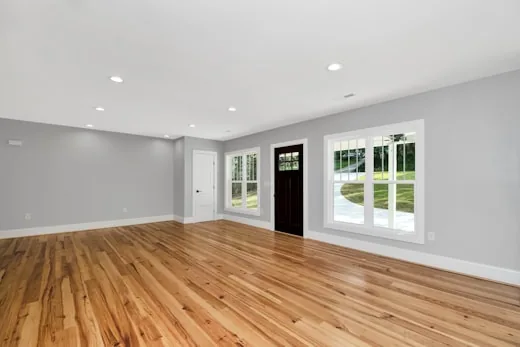 Code ExplainerThe lead rule decides how your sander is builtIn a region that is 60.5 percent pre-1978, this is not an edge case. It is the default condition of the work.
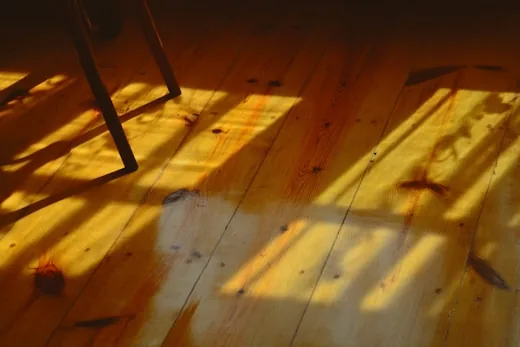 ComparisonPrefinished or site-finishedYou will be told the difference is dust and drying time. The difference that lasts is the bevel and whether the floor can ever be matched.
 Decision GuideSolid or engineered, and why the basement decidesThe choice is presented as taste. It is usually settled by what is under the room, before anyone gets to taste.
Send a photo and we will tell you what you are looking at
Sanding & Refinishing starts with someone reading the house. We quote every job ourselves, with no salesperson in between, and a photo of the floor gets you a straight answer faster than a form does.
