The short version
- Prefinished boards carry a micro bevel at every edge, because a factory finish cannot be sanded flat after installation.
- A site finished floor is sanded as one surface, so the plane is continuous and the seams disappear.
- Only site finishing can match new wood into an existing floor, because old and new get sanded and coated together.
- Dust and schedule are real differences measured in days; the bevel and matching are permanent.
- In this region matching comes up constantly: 60.5 percent of housing in our dataset at /data/ predates 1978.
Why prefinished floors have a seam at every board
Because boards are never perfectly level with each other and a factory finish cannot be sanded flat after installation, so each board carries a small bevel that makes the height change look intentional.
The bevel is a solution, not a defect. Without it, tiny height differences between adjacent boards would read as a fault. With it, they read as a design line.
The consequence is a floor made of individual boards rather than one continuous plane, and a small channel at every seam where dirt collects. Some people prefer the look and choose it deliberately. Others do not notice until the afternoon light comes across the floor at a low angle.
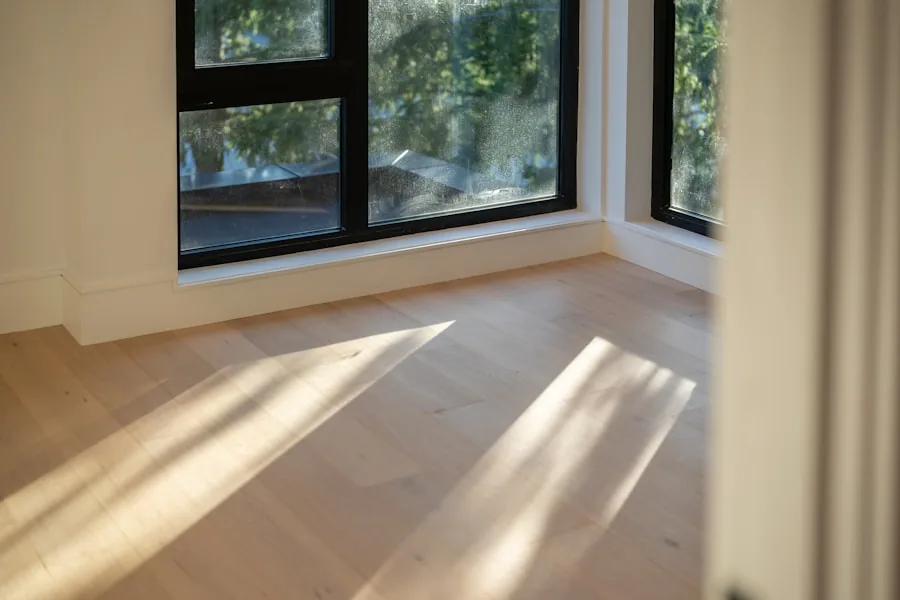
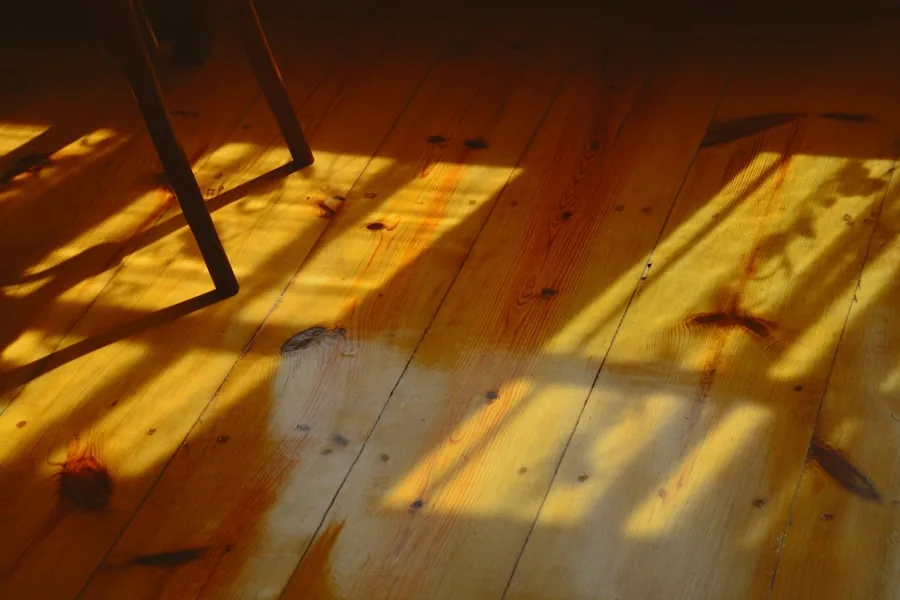
Look at a sample with light raking across it rather than flat on. The bevel only shows at a low angle, which is exactly how you will see it in your own room.
Ask to see the sample on the floor, with the light from a window across it. Held in the hand at eye level, a bevel is invisible.
The case that settles it for most houses here
If anything has to match an existing floor, site finishing is the only path, because matching means sanding old and new together and coating them as one surface.
Extending a floor into a new room, opening up a wall, or repairing a section all produce the same requirement: a joint that disappears. A factory finished board will read as a different floor beside an older one no matter how close the color is, because the two were finished at different times under different conditions and are ageing on different curves.
Site finishing puts old and new under the same sander and the same coat. That is the whole mechanism, and there is no substitute for it.
In this housing stock the question comes up constantly. Our dataset at /data/ has 60.5 percent of the region built before 1978, which means most projects here are meeting an existing floor somewhere.
| Situation | Answer | Reason |
|---|---|---|
| Anything has to match existing wood | Site finished | Old and new sanded and coated as one |
| Whole floor new, nothing to match | Either | Now it is a preference about the bevel |
| House cannot be empty for long | Prefinished | Walkable when the last board goes down |
| You want one continuous plane | Site finished | No bevel, sanded flat as one surface |
Dust and schedule, honestly
Prefinished is walkable immediately and site finishing needs sanding, coating and cure time, and no sanding job is dust free regardless of what it is called.
A prefinished floor is done when the last board goes down. A site finished floor needs a schedule, and the schedule has two dates on it: the day you can walk on it, and the day it has finished curing. The second one is the one that protects the floor.
On dust, extraction catches most of it and not all of it. Anyone promising a dustless job is selling a word rather than describing a process, and we say the same thing on our sanding pages.
Both of these are inconveniences measured in days. The bevel and the ability to match are permanent properties of the floor you will live with for twenty years. Weighing a week against twenty years is how people end up regretting the choice.
The factory finish is harder, and that cuts both ways
A factory finish resists wear better than any finish applied in a house, and the same hardness makes it more difficult to recoat and to sand later.
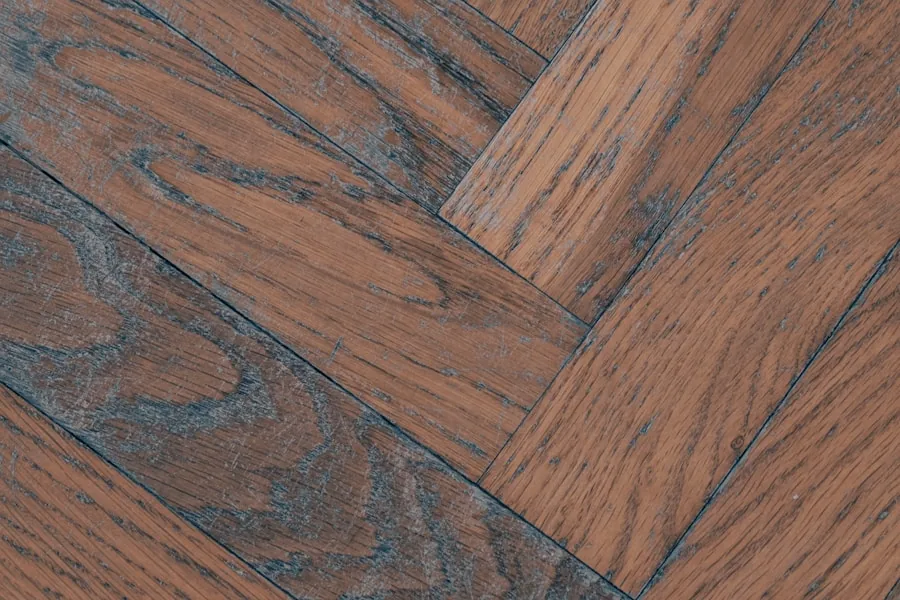
Prefinished boards are coated on a production line, in several layers cured under ultraviolet light, usually with aluminum oxide in the wear coats. The result is a very hard, very even surface that holds up well under traffic.
That hardness is a drawback when the floor eventually dulls. A new coat of finish has to grip the old one, and a factory finish gives it little to hold. The surface has to be abraded thoroughly first, and a recoat applied without that preparation peels in the traffic lanes.
A site applied finish is softer and easier to renew. It can be screened and recoated every several years with little fuss, which keeps the floor looking fresh and puts off a full sanding.
Color and sheen: a catalog or a sample on your floor
Prefinished flooring offers the colors in the manufacturer's line, exactly as shown, and site finishing lets you mix a color and test it on your own wood.
With prefinished, what you see on the sample is what arrives, board after board. That consistency is its strength. The limits are the colors and sheens the manufacturer chose to make.
With site finishing the stain is applied to your sanded floor, so the color can be adjusted, lightened, warmed or mixed. Samples are made on the floor itself and viewed in the room's own light, at the time of day you use it most.
For a room that has to sit beside existing wood, or for an owner with a specific color in mind, that control is the reason to finish on site. For a new house where a catalog color suits, prefinished delivers it without the wait.
| Point | Prefinished | Site finished |
|---|---|---|
| Surface | Bevel at every board edge | One flat, continuous surface |
| Finish hardness | Very hard factory coating | Softer, easier to renew |
| Color | The manufacturer's range | Mixed and tested on your floor |
| Matching existing wood | Difficult, and rarely exact | Old and new sanded and finished together |
| Time out of the room | Usable when the last board is down | Sanding, coats and cure time |
| Repair years later | Needs matching boards from the same line | Woven in and refinished with the room |
Repairs ten years later
A prefinished floor is repaired by replacing boards with the same product, which depends on that product still being made or on spare boxes kept from the installation.
When a board in a prefinished floor is damaged, the replacement has to arrive already matching in color, sheen and bevel. If the line has been discontinued, the nearest available board will be close and visibly different.
The practical advice is simple and usually ignored: keep an unopened box or two from the original installation, stored flat inside the house. A matching board in a closet turns a difficult repair into an easy one.
A site finished floor does not have this problem. New boards of the right species and width are woven in, and the room is sanded and finished as one surface.
What happens when a prefinished floor is finally sanded
Sanding removes the bevels along with the factory finish, so a prefinished floor that has been refinished becomes a flat, site finished floor.
The bevel is shallow. A full sanding takes the surface below it, and the seams between boards close up into a continuous plane. Many owners prefer the result. A few are surprised by it, so it is worth knowing in advance.
The factory coating takes more abrasive and more time to remove than an old site finish. That is reflected in the work, and a crew that has not sanded a factory finish before tends to underestimate it.
If the floor is engineered, the wear layer decides whether sanding is possible at all. That is measured at a board edge before the job is offered.
Why the subfloor matters more with prefinished
A site finished floor is sanded flat after installation, which hides small differences in board height, and a prefinished floor cannot be, so the subfloor has to be flatter to begin with.
No subfloor is perfectly flat and no two boards are exactly the same thickness. On a site finished floor, the sanding that follows installation levels those differences, and the finished surface is one plane.
On a prefinished floor there is no sanding afterwards. Whatever unevenness exists between boards stays, softened by the bevel. A dip or a ridge in the subfloor shows as a line of boards sitting slightly high or low.
So the preparation is different. For prefinished the subfloor is checked with a straightedge and corrected before the first board goes down. In older housing, where floors have settled, that step can be a significant part of the job.
Which one fits the houses in this region
Older houses usually call for site finishing because something has to match, and newer houses can take either.
The dataset we publish at /data/ covers 635 towns and Philadelphia neighborhoods. In 113 of them the median home was built before 1950. Projects there almost always join an existing floor somewhere, at a doorway, a hall or a stair landing, and site finishing is what makes that joint disappear.
In the 216 places where the median home dates from 1980 or later, whole floors are more often being replaced at once, frequently carpet giving way to wood. With nothing to match, prefinished is a sound choice, and it lets a family stay in the house.
We bring samples of both to the estimate and lay them on your floor in your light. Seen that way, most people know within a minute which one they want.