Stairs & Railings
Stair Refinishing in Pennypack, Philadelphia
Stairs take more wear per square foot than any floor in the house, and they are sanded almost entirely by hand. In Pennypack, Philadelphia the median home dates to 1961 and 4.7% of the housing predates 1940, which changes what Deco Hardwood Floor expects to find before the work starts.
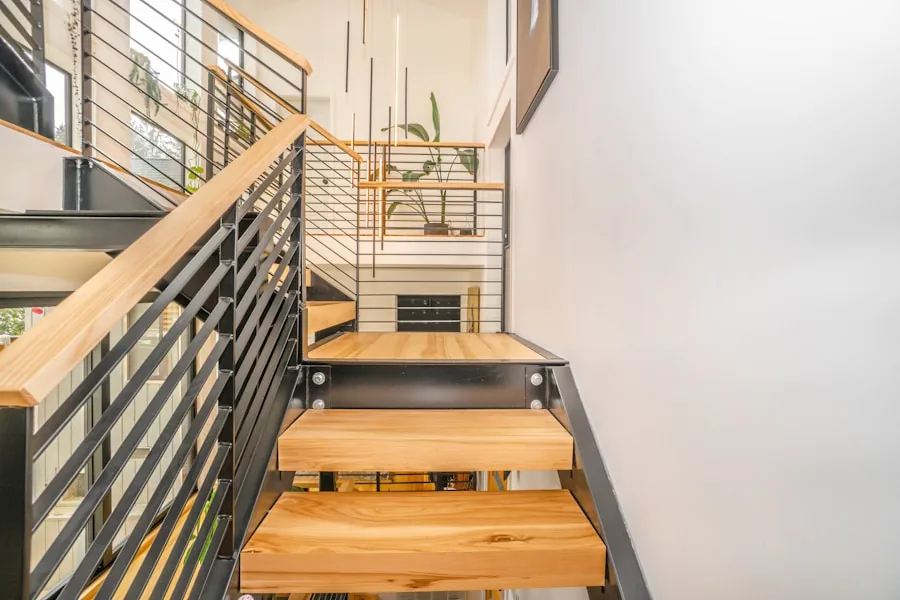
Changing the color of a builder oak stair
In Pennypack stairs are commonly oak with a finish that has yellowed, and the usual request is to bring them in line with new or refinished floors.
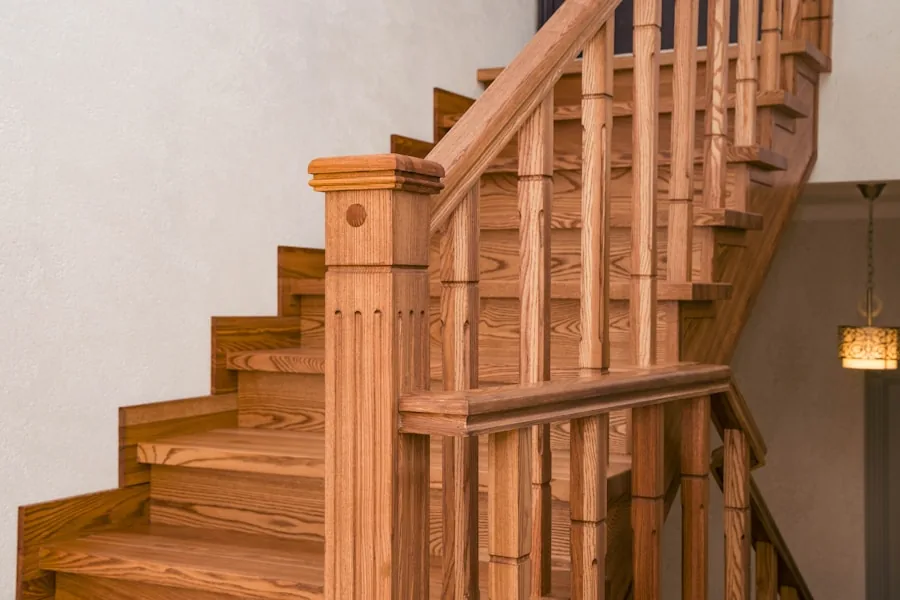
The treads in these houses are solid and take sanding well. The time goes into the parts around them: the handrail, the newel and the balusters, each with profiles that have to be sanded by hand before they will accept a new color evenly.
A common result is stained treads and handrail with painted risers and balusters. It suits houses of this period, and it limits the hand sanding to the parts where the wood grain is meant to show.
Before you get a quote
A handrail holds oils from years of hands. It is cleaned and sanded more thoroughly than the treads, or the new finish does not grip where it is touched most.
How the housing in Pennypack compares
Of the 5,694 housing units in Pennypack, roughly 270 were built before 1940 and approximately 4,700 before 1978.
That makes the housing here close to the average for the 132 Philadelphia neighborhoods in our data taken together, where approximately 82.8% of 733,961 units predate 1978, and above the 60.5% figure for our whole service area. By the share built before 1940, Pennypack ranks 121st of those 132. The full table is published as open housing data.
Within Philadelphia, the oldest housing in our data is in Cedar Park, with a median year of 1925, and the newest is in Kensington, Old, at 1997.
| Place | Median year built | Built before 1940 |
|---|---|---|
| Pennypack | 1961 | 4.7% |
| Pennypack Woods | 1951 | 4.9% |
| Aston-Woodbridge | 1962 | 2.3% |
| Lexington Park | 1961 | 0.8% |
| Academy Gardens | 1961 | 6.2% |
| Holmesburg | 1954 | 12.8% |
| Rhawnhurst | 1959 | 6.7% |
For stair refinishing, the pre-1978 share is the figure that matters. Painted risers and balusters in those houses are sanded under the federal lead rule.
What is usually under the floor here
Prefinished solid or engineered wood, and whether it can be sanded at all depends on the wear layer.
Housing from the 1980s and 1990s brought factory-finished floors and engineered construction into the mainstream. Both look like wood because they are wood, and both behave differently under a sander than the site-finished floors that came before.
Engineered flooring has a real wood layer over a plywood core, and that layer can be anything from a generous four millimeters to under two. Under two, sanding is not on the table. This gets measured, not assumed, and the answer decides whether the conversation is about refinishing or about replacement.
Worth knowing here
Factory finishes are usually aluminum oxide, which is harder than anything applied on site. It does not accept a new coat without proper abrasion, and skipping that step is why recoats peel.
The federal lead rule applies to most of the housing here
Approximately 83.3% of the homes here were built before 1978, which is the line the EPA rule draws.
Paid work that disturbs painted surfaces in pre-1978 housing falls under 40 CFR Part 745, and floor sanding reaches painted surfaces more often than people expect: the edger runs to the baseboard, the shoe molding and the door casing, and in older housing those carry many layers.
The part that matters for the equipment is 745.85(a)(3), which prohibits high speed machines that strip a coating on painted surfaces unless they carry containment and a HEPA vacuum collecting dust at the point of generation. That is a description of how the sander has to be assembled, not a suggestion about tidiness.
How stair refinishing runs
We look at the nosings
That is where wear shows first, and it decides refinish versus retread.Structure checked
Loose treads and squeaks addressed before finishing, because finish does not fix movement.Sanding, mostly by hand
Machines where they reach, hand work everywhere else.Finish applied
Coats on the cure schedule of the specified product.Staged so you can use the house
Where there is only one staircase, the schedule is built around that.
What stair refinishing includes, and what it does not
Stair refinishing covers checking the structure, sanding the treads, risers and visible stringer, and applying stain and finish. It does not put wood back where the nosing has worn away, and balusters are a separate decision because each one is done by hand.
Included
- A look at every nosing, to confirm the treads can be refinished.
- Loose treads and squeaks addressed before any finish is applied.
- Sanding of treads, risers and the visible stringer, by machine where it reaches and by hand elsewhere.
- A stain sample tested against your existing floor before the stair is stained.
- Finish coats applied by hand, on the cure schedule of the product.
- A schedule built around access when the house has only one staircase.
Not included, or quoted separately
- New treads. If the nosing is worn into the wood, that is retreading and a different quote.
- Balusters, unless you ask for them. Each one is sanded by hand, and it adds real time.
- A promise of a house without dust. Vacuum extraction catches most of it, not all of it.
What changes the price of stair refinishing
The price is set after we see the stair, not from its square footage. It moves most with the number of steps, with whether the balusters are refinished too, and with what has to come off the wood before new finish can go on.
| What changes it | How it moves the price | Example |
|---|---|---|
| Number of steps | Each step is a tread, a riser and several inside corners worked by hand, so the count of steps drives the hours. | A flight of fourteen risers has fourteen horizontal surfaces, fourteen vertical ones and a corner at every joint. |
| Balusters in or out | Refinishing balusters means sanding and coating each one by hand. Painting them, or leaving them alone, removes most of that time. | Treads and handrail refinished, with risers and balusters painted, is a common and faster version of the same job. |
| What is on the wood | Paint, old carpet staples and tack strip holes take more work to deal with than a worn clear finish, and all of it comes before stain. | A hardwood stair that was painted or carpeted over needs more preparation than one with a tired coat of polyurethane. |
| Open or closed stair | An open side adds the tread returns and the outside face of the stringer, plus more edges to work around the balusters. | A stair between two walls has fewer surfaces than one open to a hallway with balusters set into every tread. |
| Color change and finish type | Changing the color adds stain and sample work. The finish chosen sets the cure time between coats, which sets how the job is staged. | Waterborne finish lets you back on the stair far sooner than oil-modified polyurethane, so the two are scheduled differently. |
The full method, the equipment and what we will and will not promise are on the service page: Stair Refinishing.
Also in Pennypack
Hardwood Floor Refinishing
Sand the old finish off, repair what needs repairing, and put a new finish down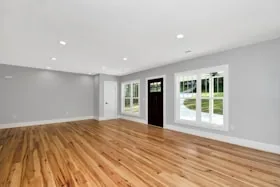
Dustless Floor Sanding
Vacuum-extraction sanding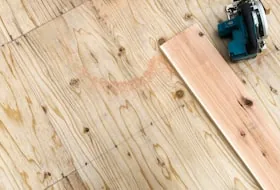
Solid Hardwood Floor Installation
Solid wood, nailed down over a wood subfloor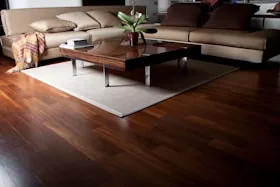
Engineered Hardwood Installation
Real wood over a stable core
Luxury Vinyl Plank (LVP) Installation
Waterproof, quiet, and it does not care about a wet basement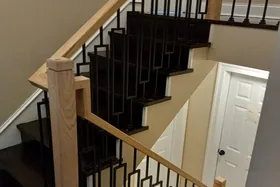
Custom Stair Installation
Treads, risers, stringers and skirt board, built to a drawing instead of a catalog page
Hardwood Floor Repair
Board replacement, weaving in new wood, squeaks, gaps and cupping
Why homeowners hire Deco Hardwood Floor
Deco Hardwood Floor is owner operated: the person who quotes stair refinishing in Pennypack is the person responsible for it, and the material comes with the labor in one number.
Material and labor in one number
We buy the flooring direct from the distributor and pass the store price through, so you are not sourcing wood on your own between quotes.
Samples come to your house
Samples and larger offcuts come to you, so the color gets chosen in your own light instead of under a showroom lamp.
Stairs and railings built in house
Treads, risers, handrails and newel posts are drawn and built by our own crew. Most flooring crews subcontract stair work or decline it.
The owner quotes the job
The person who measures your floor is the person responsible for the work. There is no salesperson in between.
Measured before it is promised
Remaining thickness is measured at the edge of a board before we say a floor can be sanded, and no price is firm before we have seen the room.
Told straight, including the limits
Vacuum extraction catches most of the sanding dust and not all of it. We tell you that before the job instead of after.
More about who we are and what we will not claim on the About Deco Hardwood Floor page.
Questions about stair refinishing in Pennypack
Is stair refinishing safe around pets and children?
Keep pets and children off the stair and away from the work until the last coat has cured. Stair refinishing makes sanding dust, and vacuum extraction catches most of it, not all of it. Wet finish keeps paw prints and footprints. In a house built before 1978 the federal lead rule governs how the sander runs, which is one more reason to keep them clear.
What can go wrong with stair refinishing?
The common failures in stair refinishing are a flattened nosing, old finish left in the corners, and a stain that does not match the floor. The first comes from sanding a tread that should have been replaced. The second comes from skipping hand work. The third comes from skipping the sample. All three show on the finished stair, and none is corrected without sanding again.
What should we do before the crew arrives to refinish the stairs?
Clear the stair and both landings, and decide which floor each person will be on while coats cure. Before stair refinishing starts, take down pictures on the stair wall and move what you need for the day to the right level. Close off rooms that open onto the stair. Deco Hardwood Floor tells you the schedule before starting, so the closed periods are not a surprise.
Can you refinish stairs without doing the whole floor?
Yes, and it is common. Matching the new stair finish to an existing floor finish is the part that takes care, and it gets tested on a sample first.
Can you tell me what my floor needs over the phone?
We can tell you what is likely, and this page is most of that answer. What we cannot do is quote a floor we have not seen, because remaining thickness and what is under the covering both decide the job and neither is visible in a description.
Do you bring the material?
Yes. We buy direct from the distributor and the material lands in the same number as the labor. Samples and larger offcuts come to the house so you choose in your own light.
How do I know if my engineered floor can be refinished?
By measuring the wear layer, which is the real wood on top of the core. Above about three millimeters there is room to work. Below two there is not, and no amount of care changes that.
Stair Refinishing near Pennypack
Send a photo and we will tell you what you are looking at
Stair Refinishing in Pennypack starts with someone reading the house. We quote every job ourselves, with no salesperson in between, and a photo of the floor gets you a straight answer faster than a form does.
