
Sanding & Refinishing
Dustless Floor Sanding in Hartranft, Philadelphia
Vacuum-extraction sanding. It is not magic and it is not zero dust, and this page says exactly how much it does catch. In Hartranft, Philadelphia the median home dates to 1940 and 49.9% of the housing predates 1940, which changes what Deco Hardwood Floor expects to find before the work starts.
Why extraction matters more in housing this old
In Hartranft most houses were built before 1978, so the containment and the vacuum are not an upgrade: they are what the federal lead rule describes for paid work that disturbs old paint.
A floor sander does not stop at the floor. The edger runs against baseboards, shoe molding and door casings, and in a house this old those carry many layers of paint. That is the reason the work area is sealed at the doorways and the machines are connected to a vacuum that collects at the point where the dust is made.
Old houses also make containment harder. Open stairwells, pocket doors that no longer close and radiators with gaps around the pipes all give dust a way out of the room, so the sealing gets planned at the estimate, not improvised on the first morning.
Before you get a quote
Extraction catches most of the dust and never all of it. Expect a house that needs a light cleaning afterwards, and be wary of anyone who promises none.
How the housing in Hartranft compares
Of the 10,201 housing units in Hartranft, roughly 5,100 were built before 1940 and approximately 7,500 before 1978.
That makes the housing here newer than the 132 Philadelphia neighborhoods in our data taken together, where approximately 82.8% of 733,961 units predate 1978, and above the 60.5% figure for our whole service area. By the share built before 1940, Hartranft ranks 55th of those 132. The full table is published as open housing data.
Within Philadelphia, the oldest housing in our data is in Cedar Park, with a median year of 1925, and the newest is in Kensington, Old, at 1997.
| Place | Median year built | Built before 1940 |
|---|---|---|
| Hartranft | 1940 | 49.9% |
| Stanton | 1936 | 54.0% |
| Franklinville | 1936 | 54.3% |
| Kensington, West | 1937 | 52.1% |
| McGuire | 1930 | 64.6% |
| Glenwood | 1935 | 56.5% |
| Yorktown | 1983 | 9.1% |
For sanding, the pre-1978 share is the figure that matters. It is the line the federal lead rule draws, and it decides whether containment is a legal requirement on a given job or only good practice.
What is usually under the floor here
Housing this old normally holds narrow strip oak laid straight over joists, and often it has only one sanding left.
In a place where a large share of the housing predates 1940, the floor under the carpet is usually the original one. That means narrow strip oak, sometimes heart pine on upper floors, nailed straight to the joists with no plywood in between. It also means the floor has probably been sanded before, possibly more than once.
Only the wood above the tongue can be sanded, roughly a quarter inch on a traditional floor. A floor that has already given up two of those sandings is a different job from one that has given up none, and the difference is not visible from standing height. We measure at the edge of a board before quoting.
Worth knowing here
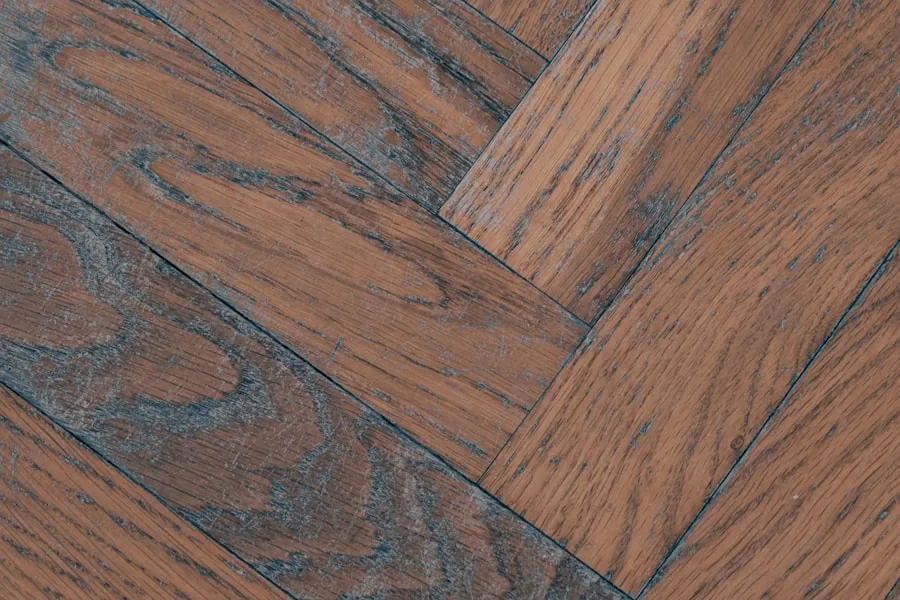
Parquet and herringbone turn up under carpet in this stock more often than people expect, and they sand differently: the grain runs in two directions at once, so a drum sander used the normal way tears them.
The federal lead rule applies to most of the housing here
Approximately 73.4% of the homes here were built before 1978, which is the line the EPA rule draws.
Paid work that disturbs painted surfaces in pre-1978 housing falls under 40 CFR Part 745, and floor sanding reaches painted surfaces more often than people expect: the edger runs to the baseboard, the shoe molding and the door casing, and in older housing those carry many layers.
The part that matters for the equipment is 745.85(a)(3), which prohibits high speed machines that strip a coating on painted surfaces unless they carry containment and a HEPA vacuum collecting dust at the point of generation. That is a description of how the sander has to be assembled, not a suggestion about tidiness.
How dustless floor sanding runs
We check the age of the house
Pre-1978 changes how the work is set up before anything else is decided.Containment goes up
Work area sealed, vents and returns covered.Extraction at the machine
The vacuum collects dust where it is generated, not after it travels.Sanding in passes
Coarse to fine, edger and hand work at the perimeter.Cleanup and verification
Surfaces wiped and checked before the containment comes down.
What dustless floor sanding includes, and what it does not
It includes the containment, the extraction at the machine, the sanding itself and the cleanup. It does not include a promise that nothing settles afterward, and it is not lead abatement.
Included
- Checking the age of the house and the painted trim before the setup is decided.
- Sealing the work area and covering the vents and returns.
- A HEPA vacuum collecting dust at the machine, where it is generated.
- Sanding in passes from coarse to fine, with edger and hand work at the perimeter.
- Wiping and checking the surfaces before the containment comes down.
- Telling you before the job that some fine dust will settle for a day or two.
Not included, or quoted separately
- A sanding job that leaves nothing to wipe. Extraction captures most of the dust, and fine particles still escape.
- Lead abatement. The lead rule controls dust from our own work. It does not remove lead paint from the house.
- Dust from other trades. Extraction handles what our machines produce, not drywall or demolition dust already in the house.
- A firm price before we have seen the room and the trim.
What changes the cost of dustless floor sanding
The price is set after we see the house. The age of the house, the painted trim at the floor line and the number of openings to seal move it most, because they decide how much setup the job requires.
| What changes it | How it moves the price | Example |
|---|---|---|
| Age of the house | Pre-1978 housing brings the federal lead rule into the setup wherever painted surfaces are disturbed, and that setup takes longer. | A 1925 twin is treated as covered by the rule unless lead has been ruled out by an approved determination. |
| Painted trim at the floor | The edger works against baseboard, shoe molding and door casings. Painted trim there decides whether the rule applies to the job. | A door casing carrying many layers of old paint is a different job than clear-finished trim in a newer house. |
| Openings to seal | Every doorway, vent and return in the work area has to be closed off. Open plans take more material and more time. | A bedroom with one door seals quickly. A living room open to the kitchen and the stair does not. |
| Floor area | More floor is more time on the machines with the extraction running, and more surface to wipe and check at the end. | A whole first floor is quoted differently than one bedroom, even when the containment is the same kind. |
| Condition of the old coating | A heavy old coating or cupped boards need more work at the coarse grit, which means more dust produced and more machine time. | A floor carrying several old layers of finish takes longer to cut through than one refinished recently. |
The full method, the equipment and what we will and will not promise are on the service page: Dustless Floor Sanding.
Also in Hartranft
Hardwood Floor Refinishing
Sand the old finish off, repair what needs repairing, and put a new finish down
Solid Hardwood Floor Installation
Solid wood, nailed down over a wood subfloor
Engineered Hardwood Installation
Real wood over a stable core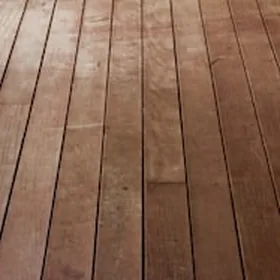
Luxury Vinyl Plank (LVP) Installation
Waterproof, quiet, and it does not care about a wet basement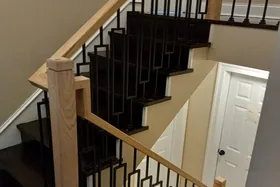
Custom Stair Installation
Treads, risers, stringers and skirt board, built to a drawing instead of a catalog page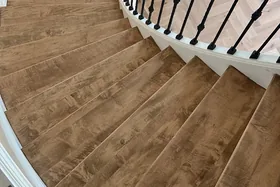
Stair Refinishing
Stairs take more wear per square foot than any floor in the house, and they are sanded almost entirely by hand
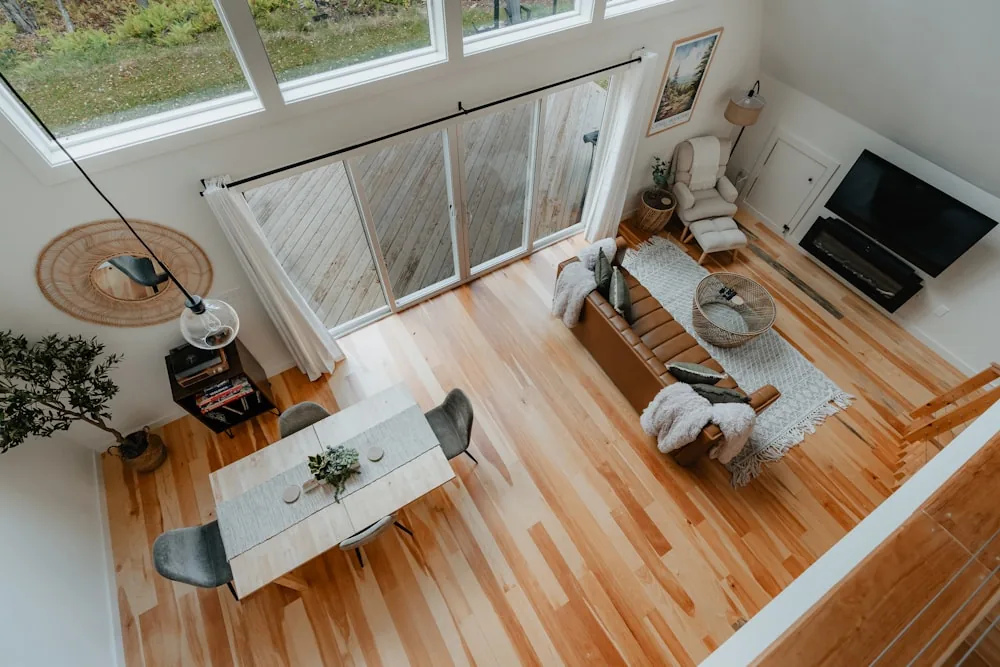
Hardwood Floor Repair
Board replacement, weaving in new wood, squeaks, gaps and cupping
Why homeowners hire Deco Hardwood Floor
Deco Hardwood Floor is owner operated: the person who quotes dustless floor sanding in Hartranft is the person responsible for it, and the material comes with the labor in one number.
Material and labor in one number
We buy the flooring direct from the distributor and pass the store price through, so you are not sourcing wood on your own between quotes.
Samples come to your house
Samples and larger offcuts come to you, so the color gets chosen in your own light instead of under a showroom lamp.
Stairs and railings built in house
Treads, risers, handrails and newel posts are drawn and built by our own crew. Most flooring crews subcontract stair work or decline it.
The owner quotes the job
The person who measures your floor is the person responsible for the work. There is no salesperson in between.
Measured before it is promised
Remaining thickness is measured at the edge of a board before we say a floor can be sanded, and no price is firm before we have seen the room.
Told straight, including the limits
Vacuum extraction catches most of the sanding dust and not all of it. We tell you that before the job instead of after.
More about who we are and what we will not claim on the About Deco Hardwood Floor page.
Questions about dustless sanding in Hartranft
Is dustless floor sanding worth it?
Yes, in any house where people are living during the work, and in a pre-1978 house with painted trim it is not a choice. Dustless floor sanding does not leave a clean house, but the difference from a bagged sander is obvious in the room and in the cleanup. Deco Hardwood Floor quotes the job with the setup the house requires, not as an optional extra.
How long does the fine dust keep settling after sanding?
For a day or two after the machines stop. Dustless floor sanding captures most of what the sander produces, and the lightest particles stay in the air long enough to travel before they land. Plan to wipe horizontal surfaces near the work area once the settling is over. It is also worth looking at the furnace filter if the heating or cooling ran during the job.
Is sanding dust dangerous for children and pets?
It can be, which is why they stay out of the work area until the cleanup is done. Wood and finish dust irritates lungs and eyes. The serious case is a house built before 1978, where the edger can disturb lead paint on the trim. Dustless floor sanding, with containment and a HEPA vacuum at the machine, is the setup the federal lead rule describes for that work.
What should I do before a dustless floor sanding job starts?
Empty the rooms being sanded, closets included, and decide which rooms you will live in. For dustless floor sanding the work area gets sealed, so anything you need from it has to come out first. Cover or put away open shelves in the rooms next door if you would rather not wipe them. Tell Deco Hardwood Floor the age of the house when you ask for the estimate.
Can you tell me what my floor needs over the phone?
We can tell you what is likely, and this page is most of that answer. What we cannot do is quote a floor we have not seen, because remaining thickness and what is under the covering both decide the job and neither is visible in a description.
Do you bring the material?
Yes. We buy direct from the distributor and the material lands in the same number as the labor. Samples and larger offcuts come to the house so you choose in your own light.
My house is from the 1920s. Can the floor still be sanded?
Often, but it is a measurement rather than an assumption. Only the wood above the tongue can be sanded, and a floor that has been refinished twice already may have one pass left. We check at the edge of a board before quoting.
Dustless Sanding near Hartranft
Send a photo and we will tell you what you are looking at
Dustless Floor Sanding in Hartranft starts with someone reading the house. We quote every job ourselves, with no salesperson in between, and a photo of the floor gets you a straight answer faster than a form does.
